ISIS has released another piece of violent propaganda, this time urging supporters to attack places where people gather to pray. The message is disturbing, but the details require careful handling because some early reports went further than the available primary evidence.
The confirmed portion of the message explicitly calls for arson attacks against synagogues in the United States, Europe, and other regions. Several media outlets reported that churches were also named, although an independent review of the available Arabic text has not publicly confirmed that separate claim. In other words, the synagogue threat is clearly documented, while the reported call against churches should still be treated with caution.
The message appeared in ISIS’s weekly propaganda publication
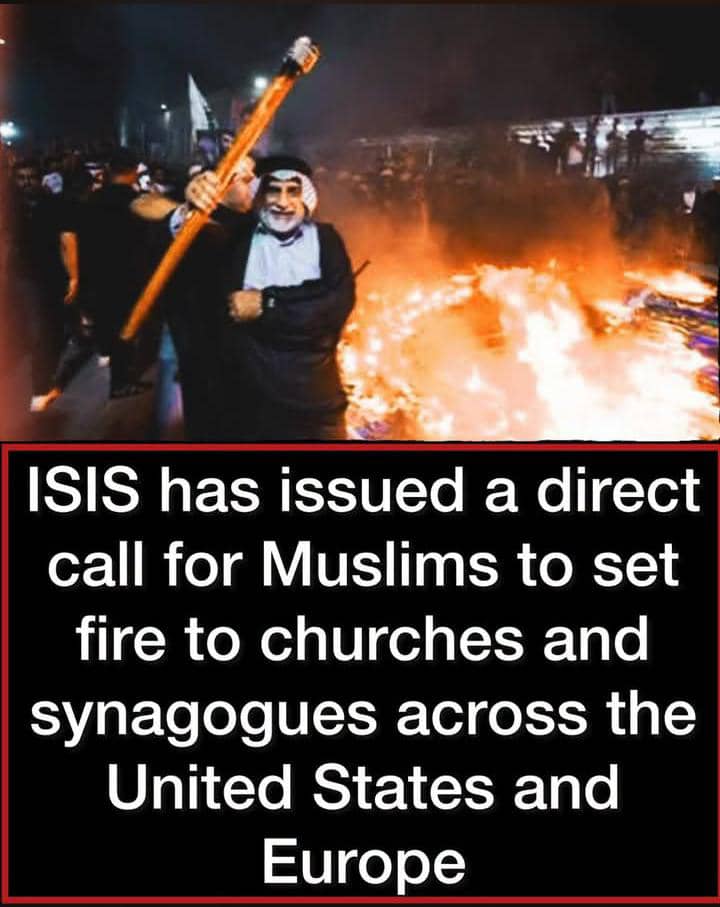
The incitement appeared on April 2 in an editorial published by Al-Naba, the weekly newsletter used by ISIS to celebrate attacks, spread its ideology and encourage violence by individuals who may have no direct contact with the organization.
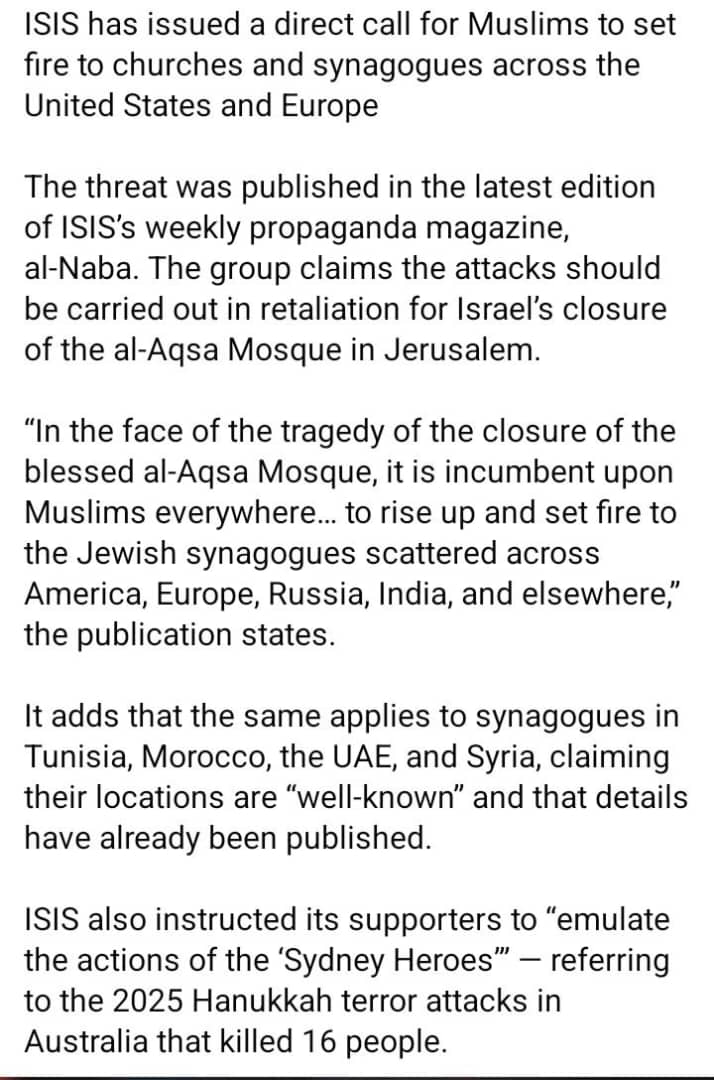
According to the Counter Extremism Project, the editorial told supporters to target synagogues around the world, especially during Passover. The propaganda instructed readers to “rise up and set fire to the Jewish synagogues” in the United States, Europe and elsewhere.
ISIS presented the threat as retaliation for Israel’s closure of the Al-Aqsa Mosque compound in Jerusalem. Israeli authorities had restricted access while citing the wider security situation, with limits reportedly affecting other major religious locations as well. ISIS then twisted that dispute into a justification for attacking Jewish civilians thousands of miles away.
Lucas Webber, a senior threat intelligence analyst at Tech Against Terrorism, said the editorial combined conflicts in Iraq and Palestine with apocalyptic language. He explained that the message portrayed violence “as an expression of faith rather than command,” a tactic designed to make an individual attacker feel personally obligated to act.
That is the grim trick behind modern extremist propaganda. The organization does not always need to supply money, weapons, or detailed instructions. Sometimes it simply throws violent language onto the internet and waits to see whether someone unstable, angry, or already radicalized decides to answer.
Reports about churches require an important correction
Numerous headlines stated that ISIS had called for churches and synagogues to be burned across America and Europe. Those reports appeared in outlets including the New York Post, The Sun, Homeland Security Today, and several European publications.
However, the independently documented wording from the Al-Naba editorial clearly identifies synagogues. A security analysis of the available primary passage found that the claim involving churches could not be independently verified from the Arabic text it examined.
That distinction does not make the confirmed threat any less serious. It simply prevents a frightening story from becoming broader than the evidence allows. ISIS benefits when its propaganda is repeated without qualification because exaggerated headlines can make the organization appear more powerful, coordinated and omnipresent than it really is.
There is also no public evidence in the material reviewed for this article that the editorial was connected to a specific, centrally organized ISIS plot against a named American or European religious institution. It was a direct incitement to violence, but an incitement is not automatically proof that an operational attack team has been deployed.
The difference matters. Authorities must take extremist propaganda seriously without presenting every online threat as evidence that an attack is imminent. Fear is part of the product ISIS is trying to sell.
Houses of worship are already operating in a dangerous environment
The message arrived as security organizations were warning about rising risks to religious institutions. In early April, the Faith-Based Information Sharing and Analysis Organization raised its general physical-threat assessment for U.S. houses of worship to “SEVERE.” The organization cited hostile rhetoric, recent attacks, global conflicts and the danger of low-warning incidents by lone actors or copycats.
That assessment covered churches, synagogues, mosques and other faith centers. It did not mean every congregation faced the same level of danger, but it urged religious institutions to review emergency plans, control access, coordinate with police and report suspicious behavior.
The concern is not theoretical. In March, a man attacked Temple Israel in West Bloomfield, Michigan. After reviewing digital evidence and conducting more than 100 interviews, FBI Detroit Special Agent in Charge Jennifer Runyan said investigators assessed the incident as “a Hizballah-inspired act of terrorism” deliberately targeting the Jewish community. The FBI said it found no evidence of co-conspirators or an ongoing active threat from that particular attacker.
The Temple Israel case was not linked to ISIS, but it demonstrated why inflammatory propaganda aimed at religious communities cannot be dismissed as empty internet noise. Different extremist movements may use different flags and slogans, yet they repeatedly encourage individuals to treat ordinary worshippers as substitutes for governments, armies or distant political conflicts.
An interfaith coalition representing Jewish, Muslim, Christian, Hindu and Sikh organizations later urged Congress to strengthen security assistance for religious institutions. Its message was simple: “Every American should be able to pray without fear for their safety.”
That united response is the opposite of what ISIS wants. The group’s propaganda depends on division, panic and collective suspicion. Treating all Muslims as responsible for an extremist organization’s message would hand ISIS precisely the religious conflict it is attempting to create.
The verified facts are alarming enough. ISIS explicitly encouraged attacks against synagogues across the United States, Europe and other parts of the world. Reports that the same editorial separately ordered attacks on churches remain less firmly established and should not be stated as confirmed without additional primary evidence.
The responsible response is vigilance without hysteria, accurate reporting without amplification, and solidarity among communities that extremists would rather see frightened and divided.