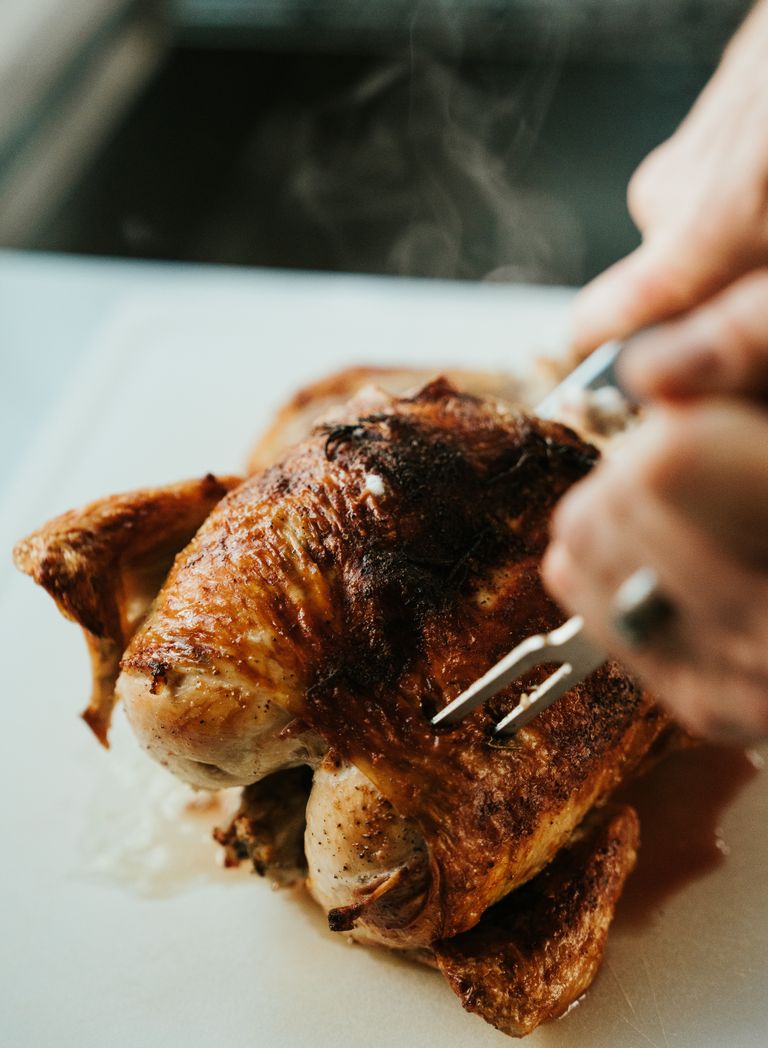
“Family Hold Back,” shortened to FHB, is a quiet instruction a Thanksgiving host can pass to immediate family so that a main dish stretches far enough for every guest. The Emily Post Institute’s Thanksgiving tips describe it this way: if a main food item runs short, the host asks relatives and household members to hold back so that each guest gets a full portion.
The signal is meant to be private. The institute says it should be whispered to immediate family only, and the same advice appears in an earlier Etiquette Today post dated Nov. 14, 2024, so the tip has been in the institute’s holiday advice for at least two seasons.

How the Whisper Works at the Table
The institute lists FHB among its host tips, and the logic is simple. Hosts cannot always predict how fast a favorite dish will disappear. Asking relatives to take less of the dish in short supply keeps portions fair for the people who came as visitors, and the family can still eat everything else on the table.
The page frames the phrase as a signal rather than a rule for guests. It does not ask relatives to skip the meal, only to hold back on the one item that is running short, a discreet kind of courtesy that sits close to the old-school etiquette rules that have disappeared. Thanksgiving falls on Nov. 26 in 2026, according to Wikipedia’s page on Thanksgiving in the United States, which lists turkey, stuffing, mashed potatoes and pumpkin pie among the traditional dishes, so a short supply of the turkey or a favorite side is the likeliest place for the signal to come up.
Planning So the Signal Is Rarely Needed
Hosts who plan a bigger menu rarely need to whisper anything. The institute’s page advises keeping the menu flexible, expecting a potluck-style meal and coordinating what guests bring, which makes it less likely that any one dish runs short.
The kitchen work behind a bigger menu starts days ahead. A host cooking for a crowd may want to free up the oven this Thanksgiving with a second appliance, and an early look at fridge and freezer checks before the big grocery run shows how much room a larger menu will take. Both are about making sure the table does not run short in the first place.
The institute also advises hosts to invite guests at least a month ahead, and earlier for anyone who is traveling, and to set a start and end date for houseguests, with three days given as the usual standard. For overnight visitors, a list of home checks to finish before houseguests arrive for Thanksgiving covers the practical side, and a set of simple etiquette tips for being the perfect houseguest covers the manners.

What Guests Are Asked to Do
The institute’s guest tips on the same page are the other half of the plan. Guests are asked to RSVP right away, to offer to contribute without choosing the menu, to arrive on time and to put phones away at the dinner table, so the host is not left guessing about the headcount or the dishes.
A more recent AARP article, published Nov. 6, 2026, quotes Lizzie Post, co-president of the Emily Post Institute, on holiday guest manners. It advises guests to RSVP promptly, to mention food restrictions when accepting, to arrive within about 10 to 20 minutes of the start time for formal dinners, and to keep portions reasonable for the size of the crowd. That last point is the guest-side match to the host’s FHB whisper.
The institute’s own page adds a host rule about order: serve young children and elderly guests first, an approach the page compares to airline boarding.
The Rest of the Institute’s Host Tips
The page lists eight host tips, and FHB is the seventh. Its host list opens with early invitations and ends with thanks, so the FHB whisper sits in the middle of a plan that runs from the first invitation to the last toast. The others include accepting extra guests if there is room, keeping the menu flexible and potluck-style, reviewing the guest list with the household, handing out jobs such as greeting people, taking coats, lighting candles and filling glasses, and thanking everyone who helped plan, cook and clean up, both in a toast and as guests leave.
The advice comes from a long line of etiquette writing. Wikipedia says Emily Post published her first etiquette book in 1922 and founded the Emily Post Institute in 1946, as laid out in the entry on Post. A host who keeps the whole list handy, including the FHB whisper, has a short script for the hardest moment of the meal, when a platter looks nearly empty and several people are still waiting.
Small quiet signals like this one change slowly, and FHB is one the institute is still publishing. A host who prefers not to whisper at all can lean on the other tip: plan a flexible menu and coordinate what guests bring.
This article was produced with AI assistance and edited for accuracy against the sources linked above.