Sen. Elizabeth Warren is pushing back against the decision, arguing that Haitian immigrants who have built lives in the United States should not suddenly lose their legal protections and face possible removal.
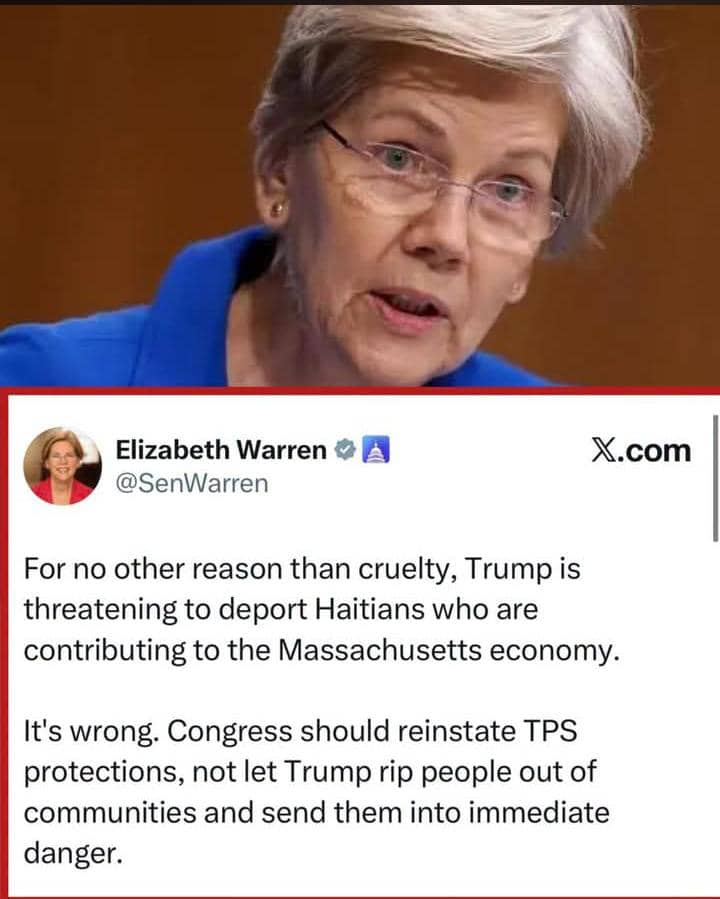
“For no other reason than cruelty, Trump is threatening to deport Haitians who are contributing to the Massachusetts economy,” Warren said. “It’s wrong. Congress should reinstate TPS protections, not let Trump rip people out of communities and send them into immediate danger.”
The senator’s comments came after the Supreme Court allowed the administration’s decision to end TPS protections for Haitians to move forward. The ruling removed a legal barrier that had temporarily prevented the policy from taking effect.
The issue has placed thousands of Haitian nationals, employers, and lawmakers at the center of a national debate over what happens when temporary immigration protections end.
Supreme Court ruling clears path for TPS termination
Temporary Protected Status was created by Congress in 1990 to allow people from countries facing war, natural disasters, or other dangerous conditions to remain in the United States temporarily.
Haiti was first granted TPS after the devastating 2010 earthquake that killed hundreds of thousands of people and caused widespread destruction. The protection was later extended multiple times as Haiti continued to experience political instability, natural disasters, and rising violence.
The Supreme Court’s decision did not determine whether Haiti is safe for people to return. Instead, the court focused on whether federal judges had the authority to block the Department of Homeland Security’s decision to end TPS.
In a 6-3 ruling, the justices concluded that immigration officials have broad authority over TPS decisions and that the legal challenge against the termination could not continue at that stage.
Following the ruling, Warren sharply criticized the outcome.
“This decision is a disaster for the rule of law and a disaster for thousands of families in Massachusetts,” she said.
The Trump administration defended the move, arguing that TPS was always intended to be temporary and should not become a permanent immigration pathway.
DHS officials have said the program must be reviewed based on current conditions and that the government has the authority to end protections when it determines they are no longer necessary.
The administration has also argued that continuing TPS indefinitely would undermine immigration enforcement policies.
Massachusetts leaders warn of workforce impact
While the debate has focused heavily on immigration policy, Massachusetts officials say the decision could also affect the state’s economy.
Gov. Maura Healey has warned that Haitian TPS holders are important members of the workforce, with many employed in healthcare, elder care, construction, hospitality, and other industries.
“Haitian TPS holders are essential contributors to our state’s workforce, filling roles that are vital to our economic stability and growth,” Healey said.
Healthcare organizations have been among the loudest voices raising concerns. Many facilities already struggle with staffing shortages, and leaders worry that losing experienced workers could make those challenges worse.
A report released by Warren, Sen. Ed Markey, and Rep. Ayanna Pressley highlighted concerns from Massachusetts employers who said uncertainty over TPS had already affected staffing.
One organization reported losing more than 100 Haitian employees and facing difficulties replacing them. The organization said the disruption increased pressure on remaining workers and created additional costs.
“Our care economy does not run on apps or algorithms, it runs on people,” Markey said. “And many of those people are the Haitian TPS holders in our communities.”
For families who rely on home health aides, nursing assistants, and other caregivers, the issue is not just political. A worker losing employment eligibility can directly affect patients who depend on consistent care.
Community organizations have also warned that families could face financial instability if workers are forced to stop working while waiting for another immigration solution.
Congress faces pressure as Haitian families await answers
With the Supreme Court allowing the termination plan to proceed, supporters of TPS protections are now turning their attention toward Congress.
Warren and other lawmakers have called for legislation that would restore protections for Haitian immigrants. Supporters argue that many TPS holders have spent years working, paying taxes, and raising families in American communities.
Opponents of extending TPS argue that the program was designed as a temporary measure and that immigration policy decisions should remain under federal authority.
The debate has also focused on Haiti’s current conditions.
The U.S. State Department continues to warn Americans about traveling to Haiti because of serious security concerns, including violent crime, kidnapping, and limited access to healthcare.
Critics of ending TPS say those warnings raise questions about whether Haiti is ready to receive thousands of returning residents.
The administration, however, maintains that immigration protections cannot continue indefinitely and that TPS decisions must be based on changing circumstances.
For Haitian families in Massachusetts, the outcome could determine whether they remain in the communities where they have established careers, friendships, and family connections.
The political fight over TPS is far from over. Congress now faces pressure to decide whether to restore protections or allow the termination process to continue.
For many Haitian immigrants, the debate is not about a policy deadline. It is about whether the lives they built in the United States can continue.