Milwaukee County Executive David Crowley clinched Wisconsin’s Democratic nomination for governor early Wednesday, edging democratic socialist state Rep. Francesca Hong by roughly 3,000 votes out of nearly 700,000 cast.
The margin landed under half a percentage point, a gap so thin it exposed how badly public polling had misjudged the contest. Crowley now advances to face Republican U.S. Rep. Tom Tiffany, who carries President Donald Trump’s endorsement, in a general election both parties expect to define the fall.
A campaign that came back from the dead
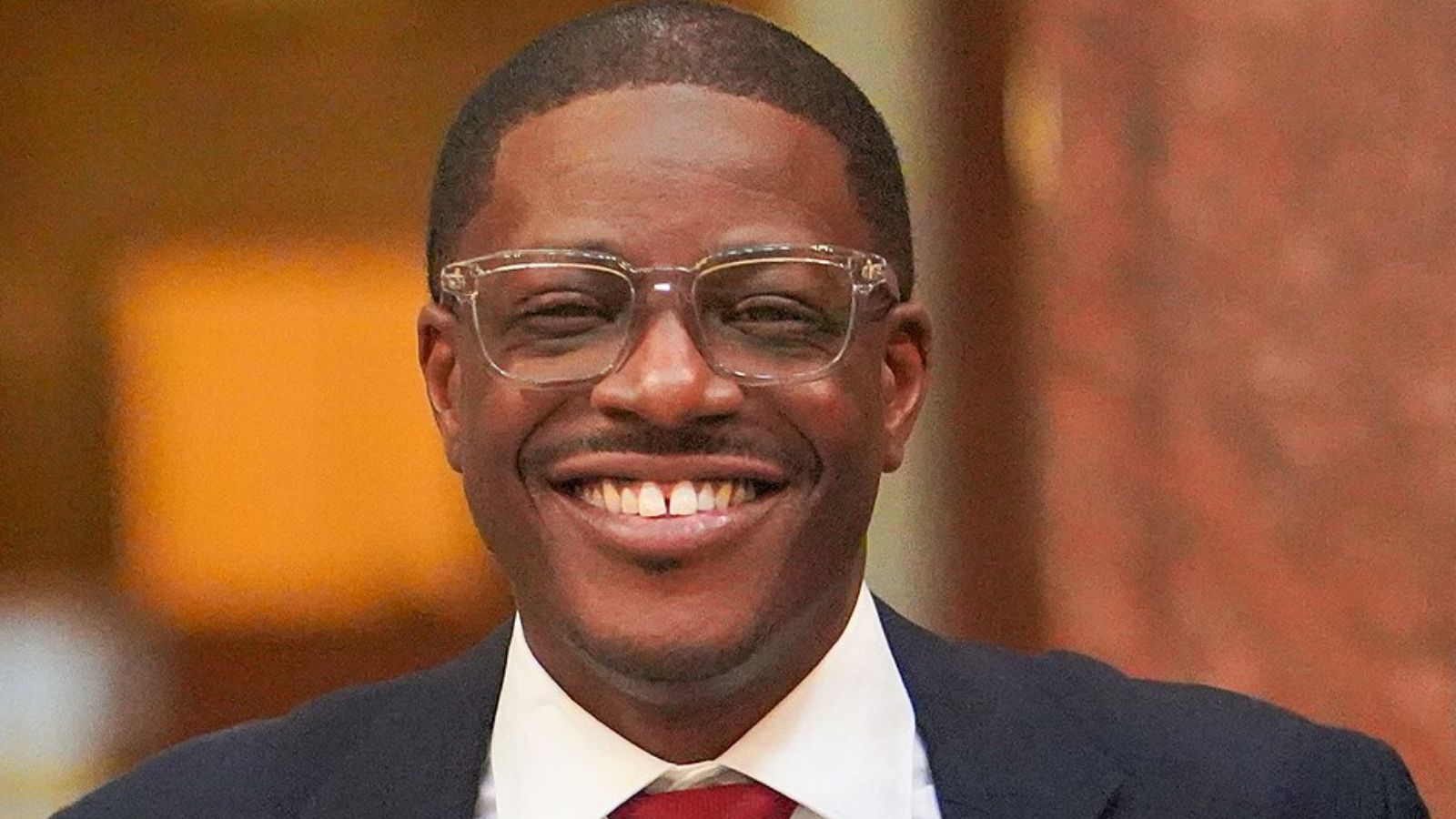
Crowley did not spend the summer running a conventional front-runner’s race. He suspended his campaign about a month before the primary, citing weak fundraising and stagnant polling. At one point, he was polling in the single digits.
He reversed course after outgoing Gov. Tony Evers threw his support behind him and the field around Hong failed to consolidate. Two rivals had already dropped out, Lt. Gov. Sara Rodriguez amid a campaign finance dispute in mid-July, then former Lt. Gov. Mandela Barnes weeks later. Crowley relaunched into the vacancy they left, pitching himself as the Democrat best positioned to hold the governor’s mansion against Tiffany in November.
The polls got it badly wrong
Every major survey heading into Tuesday showed Hong comfortably ahead. State Navigate’s final poll, fielded August 3 through 6 among 1,473 likely primary voters, had her at 44% to Crowley’s 22, with a margin of error of 2.3 points. Five consecutive Marquette University Law School polls told the same story, the most recent putting Hong at 38 percent in late July.
None of that held once ballots were counted. By 11 p.m. Tuesday, with 86% of the vote reported, Crowley led 40.0% to 39.6%, a difference of roughly 2,600 votes. Third-place candidate Kelda Roys, a former state legislator, pulled 7.6%, votes that never coalesced behind Hong the way her campaign needed.
Milwaukee’s flash drives held up the count
The final result hinged on a delay nobody anticipated. Milwaukee Election Commission Director Paulina Gutierrez confirmed that audit logs, rather than actual ballot results, had been uploaded onto flash drives, stalling the reporting of roughly 28,000 absentee ballots for more than an hour.
Those late-arriving ballots widened Crowley’s lead once processed after 1:30 a.m. With 98% of the statewide vote counted, Crowley’s edge settled at about 3,800 votes, wide enough to clear the 0.25 point threshold Wisconsin law sets before a losing campaign must pay for its own recount.
Hong’s stumbles opened a lane Crowley needed
Hong entered the race with real institutional muscle behind her, including backing from the Madison and Milwaukee chapters of the Democratic Socialists of America. She also carried distinction as the first Asian American elected to the Wisconsin Assembly.
Old social media posts criticizing Thanksgiving resurfaced during the campaign’s final stretch and dogged her through an uneven CNN interview, where she later said the remarks had been a joke. The episode gave establishment Democrats an opening. Evers’ endorsement and more than $3 million in outside spending flowed toward Crowley in the race’s closing weeks, according to CNN’s reporting on the contest.
Hong’s concession speech left little doubt about where she believes the fight goes next. ‘We have built something that will change politics forever,’ she told supporters as results still hung in the balance.
A national movement that stayed home this time
Progressive leaders with national reach mostly sat this one out. Vermont Sen. Bernie Sanders and Rep. Alexandria Ocasio-Cortez issued no endorsement in the race, a notable absence given their history of boosting democratic socialist candidates elsewhere.
The contrast with June’s New York City primaries is sharp, where two democratic socialist candidates and a progressive unseated sitting Democratic incumbents. Michigan delivered another data point the week before Wisconsin voted, when Abdul El-Sayed won his U.S. Senate primary. The result is widely read as the movement’s first breakthrough in a genuine purple state.
Wisconsin cuts the other direction. A democratic socialist came within a few thousand votes of the nomination in a state Trump carried twice, evidence establishment Democrats will cite as proof that electability concerns still shape primary outcomes even when progressive energy runs high.
Crowley’s biography becomes the general election pitch
Crowley, 40, grew up in inner-city Milwaukee and has spoken about experiencing eviction and drug addiction within his own family before entering politics. He worked on Sen. Russ Feingold’s 2010 reelection campaign, served in the state Assembly and became Milwaukee’s youngest and first Black county executive in 2020.
His campaign manager, Garren Randolph, framed the win as a starting point rather than a finish line. ‘Crowley is now grateful to Wisconsin voters,’ Randolph said in a statement released Wednesday morning, adding that the campaign would work to earn support across party lines.
That outreach faces an immediate test. Tiffany cleared the Republican primary easily over political outsider Andy Manske and enters the general election with Trump’s backing intact. Wisconsin has flipped party control in each of its last three open-seat governor’s races, a streak that leaves both campaigns with little room for error between now and November.