After a flood, the kitchen cleanup usually starts with a hard question at the pantry door: what can stay, and what has to go? Plenty of households guess, and the guesses tend to keep too much.
The CDC’s answer is specific. Food in screw-cap, snap-lid and cardboard containers gets thrown out once it has touched floodwater, along with crimped caps, twist caps and flip tops. Undamaged commercial cans and pouches can be saved, but only after a cleaning that includes a 15-minute soak in a bleach solution of 1 cup of unscented bleach per 5 gallons of water, or 2 minutes in boiling water.
The Containers That Go Straight in the Trash
The CDC’s guide to keeping food safe after a disaster or emergency lists the throwaways plainly. Any food that may have come in contact with floodwater or stormwater is out if it sits in a package that is not waterproof. That includes food in cardboard containers, such as juice, milk and baby formula boxes.
The list of lids is longer than most people expect: screw caps, snap lids, crimped caps, twist caps, flip tops and snap tops. A jar of pasta sauce, a bottle of ketchup, a squeeze bottle of mustard and a carton of broth all fall into that group, even when the outside looks clean.
The FDA’s flood tips explain the logic in one line: those containers cannot be effectively cleaned and sanitized once floodwater has reached them. The FDA’s version of the list also names pull tops.
For households that keep a deep pantry, the sorting job can be large. Frenz Hub’s guide to seasonal storage and its roundup of clever storage hacks are handy when rebuilding the pantry afterward. The FDA’s own advice for next time is to store emergency food on shelves that will be safely out of the way of floodwater.
Home-Canned Jars and Damaged Cans Are Out Too
Home-canned food that touched floodwater goes in the trash, no matter how carefully it was put up. The CDC also lists canned foods or food containers that are bulging, open or damaged.
The University of Nebraska-Lincoln’s food safety team spells out what “damaged” means: swelling, leakage, punctures, holes, fractures, extensive deep rusting, or crushing and denting bad enough to keep a can from stacking normally or opening with a manual, wheel-type can opener.
Timeless Dishes has covered the dented-can question before, in a piece on cans that never belong in the emergency pantry. CraftingYourHome.com also has a list of food items worth keeping on hand before a supply disruption, a good place to start restocking afterward.
How to Clean Cans and Pouches
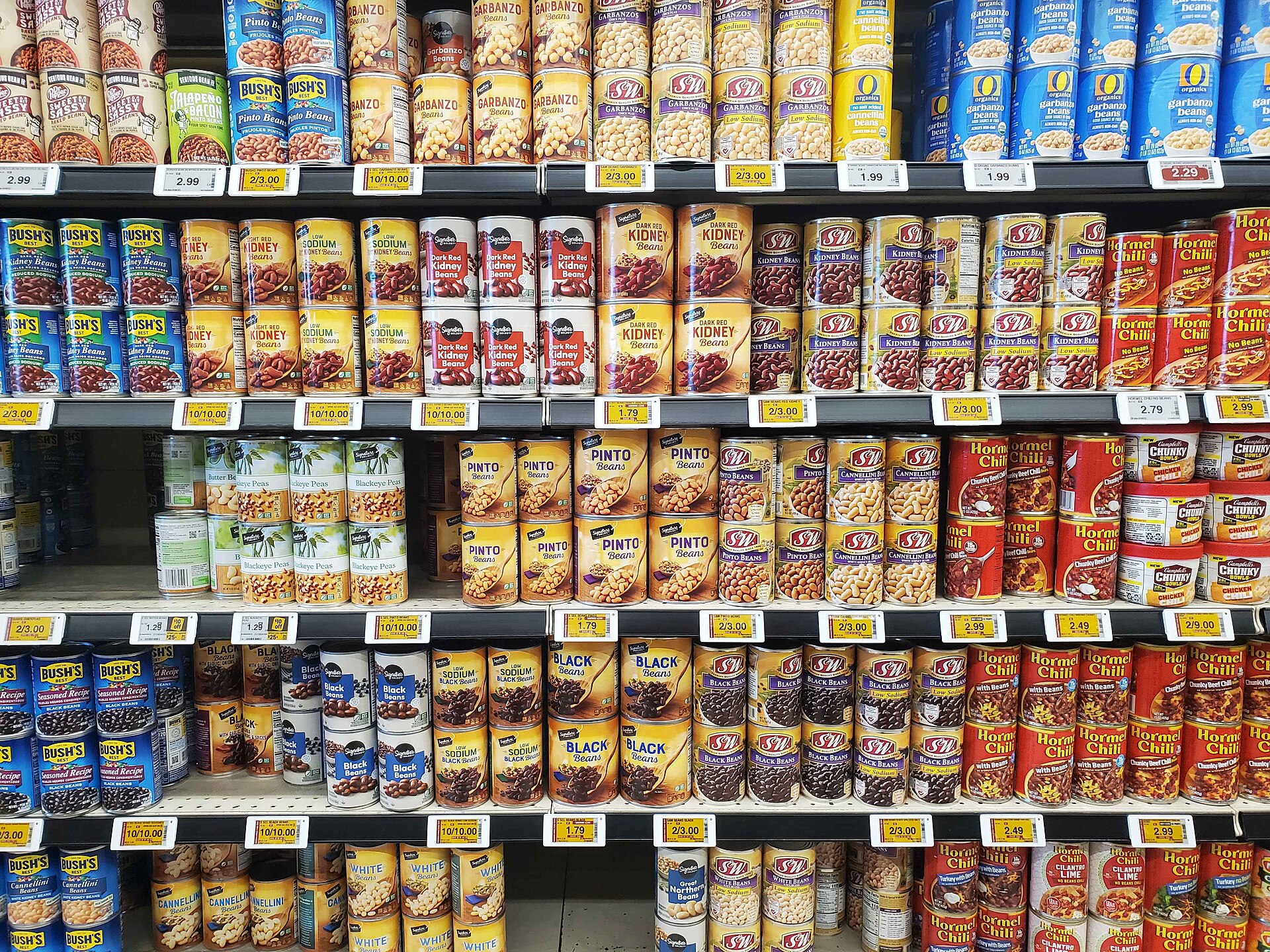
Undamaged, commercially prepared food in all-metal cans and retort pouches, such as shelf-stable juice or seafood pouches, can be kept. The CDC’s steps start simple: remove the labels if possible, brush or wipe away dirt, then wash the cans and pouches in hot, soapy water and rinse with clean, safe water.
Next comes one of two sanitizing options. The first is to place them in a solution of 1 cup (8 ounces) of unscented household bleach in 5 gallons of water for 15 minutes. The second is to put them in a pot of water, bring it to a boil and keep it boiling for 2 minutes.
University of Illinois Extension adds two practical steps. Let everything air dry for at least 1 hour before opening or storing, and if the labels came off, write the contents and the dates on each can with a marker, including sell-by, use-by and best-by dates.
A marker and a bucket are worth keeping with the emergency supplies for exactly this reason. CraftingYourHome.com’s look at why 72 hours of supplies may not be enough makes a similar point about planning past the first few days, and Frenz Hub’s piece on saving for an emergency fund covers the money side of replacing a ruined pantry.

Cutting Boards, Bottle Nipples and Utensils
Some kitchen items cannot be saved by any amount of scrubbing. The CDC says wooden cutting boards, baby bottle nipples and pacifiers that came into contact with floodwater should be thrown out, because sanitizing methods are not effective at removing floodwater contaminants from them.
Metal pans, ceramic dishes and utensils are a different story. The CDC’s routine is to wash them with hot, soapy water, rinse with clean water, then sanitize. Its bleach solution is the same ratio used for cans, 1 cup of unscented household chlorine bleach in 5 gallons of clean water, with items soaked for 1 minute and fully covered by the solution.
The Nebraska guidance adds a few bleach rules for the cleanup itself: never mix bleach with ammonia or any other cleaner, wear gloves and eye protection, and open windows and doors for fresh air.
The Fridge and Freezer Clock
Floods often come with power outages, and the cold-storage rules apply at the same time. The FDA’s power outage and flood guidance says an unopened refrigerator keeps food cold for about 4 hours, a full freezer holds its temperature for about 48 hours, and a half-full freezer for about 24 hours, as long as the doors stay closed.
The targets are 40 °F or below in the fridge and 0 °F or below in the freezer, and the FDA recommends appliance thermometers to check. The CDC says perishable food in the fridge should be thrown out after 4 hours without power or a cold source. For more on that timeline, Timeless Dishes has a breakdown of the federal power-outage food clock.
A Short Rule for a Long Cleanup
The CDC’s flood list boils down to one idea: if water could get inside, the food goes. Cardboard, screw caps, snap lids and home-canned jars are out. Sealed metal cans and retort pouches stay, after a wash and a 15-minute bleach soak or a 2-minute boil.
It is not a fun afternoon, but it is a clear one. A bucket, a gallon jug of unscented bleach and a permanent marker turn a waterlogged pantry into a sorted one.
This article was produced with AI assistance and edited for accuracy against the sources linked above.