A Georgia judge has scheduled a plea and sentencing hearing for Colt Gray, the teenager accused of carrying out the 2024 shooting at Apalachee High School. The hearing is expected to begin July 24, 2026, and will address both his plea and sentencing in a case that has drawn national attention because of the suspect’s age, the number of victims, and the legal questions surrounding accountability.
Gray, now 16, was 14 years old when authorities say he opened fire at Apalachee High School in Barrow County, Georgia. The attack killed two students and two teachers and injured several others. He was later charged as an adult with 55 criminal counts, including murder, aggravated assault, and cruelty to children.
The upcoming hearing will not be a traditional plea agreement between prosecutors and defense attorneys. Court records describe it as a “non-negotiated plea and sentencing hearing,” meaning there is no predetermined sentence arrangement between the two sides. Instead, the judge will ultimately decide the punishment after hearing arguments from prosecutors and the defense.
A courtroom moment years in the making
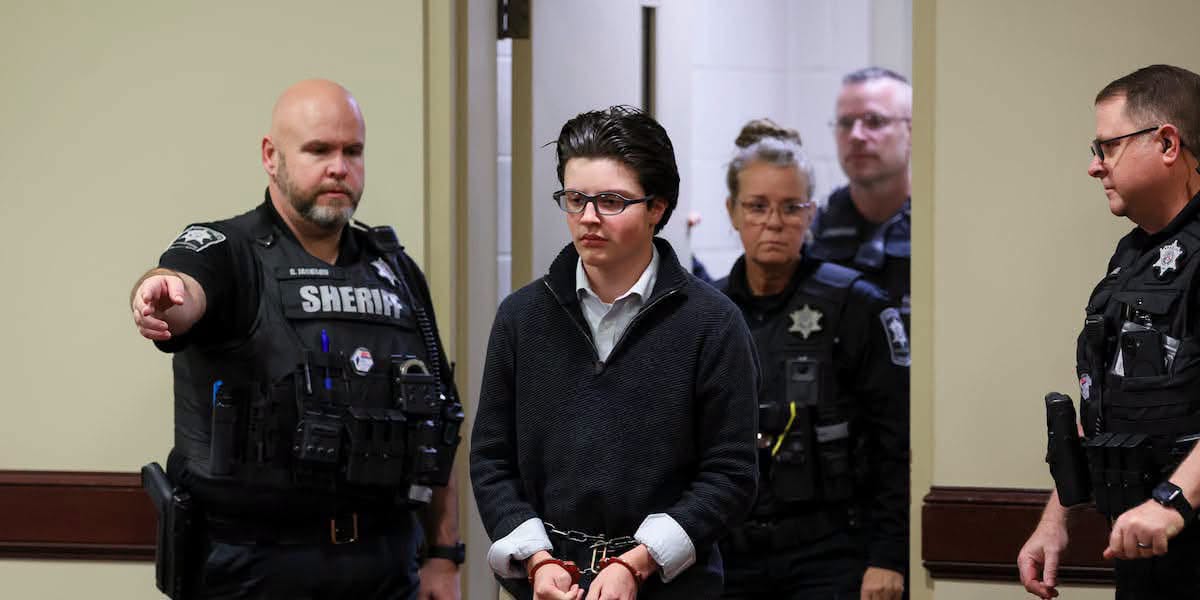
The Apalachee High School shooting became one of Georgia’s most painful school tragedies when gunfire erupted inside the school on Sept. 4, 2024. Authorities said Gray, then a freshman student, allegedly brought a rifle onto campus and opened fire, killing teachers Richard “Ricky” Aspinwall and Cristina Irimie, along with students Mason Schermerhorn and Christian Angulo, both 14.
The attack immediately sparked grief across Georgia and renewed national conversations about school safety, firearm access, and how warning signs involving troubled young people are handled. Families of victims were left facing an unimaginable loss while investigators worked to understand how the tragedy unfolded.
Gray initially pleaded not guilty to the charges. His case was later moved toward a possible plea after months of legal proceedings, including discussions with his defense team and evaluations expected to influence the case’s direction.
Because the plea is non-negotiated, the judge will have significant authority over the final sentence. Unlike a negotiated plea deal, where prosecutors and defense attorneys agree on terms, this process allows the court to consider recommendations from both sides before making a decision.
The case that also brought questions about parental responsibility
The legal fallout from the Apalachee shooting extended beyond Colt Gray. His father, Colin Gray, faced his own criminal case over allegations connected to the weapon used in the attack.
Prosecutors argued that Colin Gray’s actions contributed to the tragedy, while defense attorneys disputed those claims. In March 2026, a jury convicted Colin Gray on charges including second-degree murder and involuntary manslaughter, making the case one of the most closely watched examples of a parent being held criminally responsible after a child’s alleged mass shooting.
The father’s conviction added another layer to a national debate about responsibility when young people commit acts of extreme violence. It also raised broader questions about firearm storage, parental decisions, and whether adults should face consequences when authorities believe their actions contributed to a child gaining access to weapons.
For families affected by the Apalachee tragedy, however, the courtroom proceedings represent more than legal arguments. They mark another step in a long process of seeking accountability after a day that changed their lives forever.
A community still carrying the weight of loss.
The upcoming hearing will likely bring renewed attention to the victims whose lives were cut short. Teachers Richard Aspinwall and Cristina Irimie were remembered by their communities as educators who dedicated themselves to students. Mason Schermerhorn and Christian Angulo were remembered as young people whose futures ended far too soon.
While the legal process moves forward, the emotional impact of the shooting continues. Survivors, families, educators, and residents have spent nearly two years dealing with grief, recovery, and questions that may never have simple answers.
The case also highlights the difficult challenge courts face when dealing with juvenile defendants accused of serious crimes. Gray was only 14 at the time of the shooting, but prosecutors charged him as an adult because of the severity of the allegations.
As the hearing approaches, attention will focus on what sentence the judge considers appropriate and what it means for a case that has become part of a larger national conversation about school violence and accountability.
For the Apalachee community, the court date represents another chapter in a story defined by tragedy, loss, and a search for justice.