Denmark is taking another step toward tightening its rules on face coverings. Since August 2018, the country has prohibited clothing that conceals the face in publicly accessible places, including burqas and niqabs. Now, the government wants to extend those same restrictions to schools, universities, and other educational institutions.
The latest government proposal, introduced on October 7, 2026, could take effect on January 1, 2027, if Parliament approves it. The move has renewed debates about religious freedom, cultural integration, personal choice, and the government’s role in deciding what people can wear.
Denmark has enforced a public face covering ban since 2018
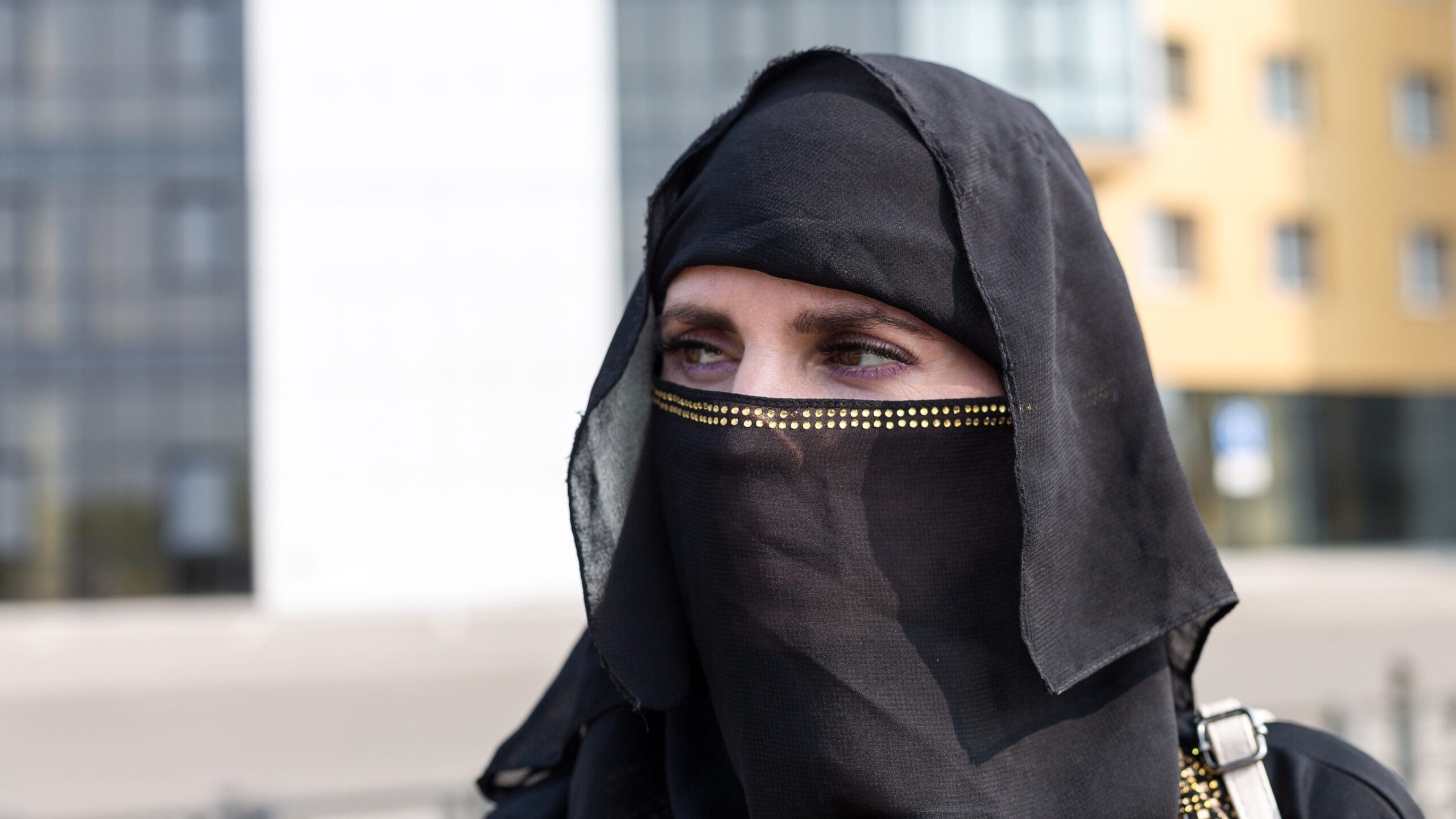
Denmark introduced its public face covering ban on August 1, 2018, after Parliament approved the legislation with 75 votes in favor and 30 against. The government argued that seeing another person’s face was an important part of communication, building trust, and maintaining social connections.
Although the legislation is commonly called the burqa ban, it applies to more than religious clothing. Masks, balaclavas, helmets, and other garments that conceal facial features can also fall under the restrictions.
The existing rules cover streets, shopping centers, public transportation, parks, railway stations, and other publicly accessible locations.
Schools and universities could face new restrictions
Under the proposed legislation, Denmark would extend its existing restrictions to educational institutions. This includes primary schools, private schools, international schools, boarding schools, colleges, and universities.
The restrictions would apply to students, teachers, employees, and visitors. They would also extend beyond classrooms to cafeterias, corridors, schoolyards, staff rooms, and administrative offices.
However, private residential rooms that serve as people’s homes while attending an institution would remain outside the proposed restrictions.
The government believes educational institutions should follow similar standards to those already operating in public spaces.
Danish officials want face-to-face communication
Government officials have made their position clear. They believe visible faces help create better learning environments and encourage communication between students and teachers.
In December 2025, Immigration and Integration Minister Rasmus Stoklund stated that burqas, niqabs, and other clothing that conceals people’s faces have no place in Danish classrooms.
Higher Education and Science Minister Christina Egelund also supported applying consistent rules across public spaces and educational settings.
Supporters argue that teachers should be able to read facial expressions, recognize students, and communicate with everyone in the classroom without unnecessary barriers.
Breaking the rules can become expensive
Denmark’s existing face covering law comes with financial consequences. A first violation generally carries a fine of 1,000 Danish kroner, approximately $146.
A second offense can cost around $293, while a third violation can result in a fine of approximately $732. People who violate the law four or more times can face fines of around $1,464 per offense.
Police can also instruct individuals to remove their face coverings or leave a public location.
However, despite claims circulating online, the face-covering legislation does not prescribe automatic deportation as punishment for violating these rules.
Not all Muslim clothing is prohibited
An important distinction often gets lost in discussions about Denmark’s restrictions. A hijab, niqab, and burqa are different garments, and the law does not treat them all the same.
A hijab covers the hair and typically the neck while leaving the face visible. A niqab covers the face except for the eyes, while a burqa covers the body and face, usually with a mesh panel over the eyes.
The existing law focuses on concealing the face, not religious identity. Muslim women can therefore wear ordinary hijabs and other modest clothing that leaves their faces visible under this provision.
Separate political discussions about school headscarves should not be confused with the existing face covering ban.
There are several exceptions to the law
Before anyone worries about pulling a scarf over their face during a freezing Danish winter, the legislation does allow exceptions.
People can cover their faces for legitimate purposes, including protection from cold weather, medical needs, certain sporting activities, workplace requirements, and motorcycle safety.
Halloween costumes, carnival masks, and other festive clothing may also be permitted in appropriate settings. Certain religious ceremonies, including weddings and funerals, can qualify for exceptions.
The circumstances and purpose of the face covering determine how the law applies.
Human rights organizations have raised concerns
While government officials believe the restrictions could strengthen integration and protect women from social pressure, human rights organizations have questioned that approach.
Amnesty International and Human Rights Watch have argued that broad face covering bans restrict religious expression and disproportionately affect Muslim women.
The Danish Institute for Human Rights has also warned that extending the restrictions to schools could discourage some women and girls from pursuing an education.
Its concern is that women experiencing family pressure could become even more isolated if they lose access to educational opportunities. The institute has recommended reviewing the proposed restrictions after two years to assess their actual effects.
Denmark is not alone in introducing restrictions
Several European countries have introduced their own rules concerning face coverings. France implemented a public face covering ban in 2011, while Austria introduced similar restrictions in 2017.
Switzerland introduced a nationwide prohibition in January 2025. The Netherlands has a more limited ban covering certain government buildings, educational institutions, healthcare facilities, and public transportation.
Norway introduced restrictions on face-concealing clothing in educational settings in August 2018.
Although these countries share some policy goals, their laws differ in scope, penalties, exemptions, and enforcement procedures.
The proposed school ban is not yet law
Despite the attention surrounding Denmark’s plans, the educational restrictions have not been established as enacted law as of November 25, 2026.
The latest available parliamentary record shows that the government proposal has completed its first reading and has been referred to a committee. Previous proposals introduced earlier in 2026 lapsed before becoming law.
January 1, 2027, remains the proposed implementation date, subject to parliamentary approval.
For now, Denmark’s existing public face covering restrictions remain in force, while the proposed educational extension continues through the legislative process. The debate highlights a difficult question facing lawmakers: how to balance shared public rules with individual freedom, religious expression, and equal access to education.