Uncooked stuffing should never be mixed ahead and stored in the refrigerator overnight, the U.S. Department of Agriculture’s Food Safety and Inspection Service says. Stuffing, whether it bakes in a dish or inside the bird, needs to reach 165 degrees Fahrenheit in the center, and a stuffed whole turkey should stand 20 minutes before the stuffing comes out.
Those rules are part of the agency’s guidance on stuffing and food safety, and they are worth a look the day before Thanksgiving, when many cooks are tempted to get a head start.

7 USDA Stuffing Rules for Thanksgiving
These rules come from FSIS’s guide to stuffing and food safety:
- Never refrigerate uncooked stuffing. Dry ingredients and wet ingredients can be prepared and chilled separately ahead of time, but they should be combined only just before stuffing the bird or baking. Uncooked stuffing can be frozen, but not refrigerated, and frozen stuffing should be cooked without thawing.
- Cook stuffing to 165 degrees Fahrenheit. That applies to stuffing baked in a casserole dish and stuffing cooked inside poultry. A food thermometer is the only reliable check.
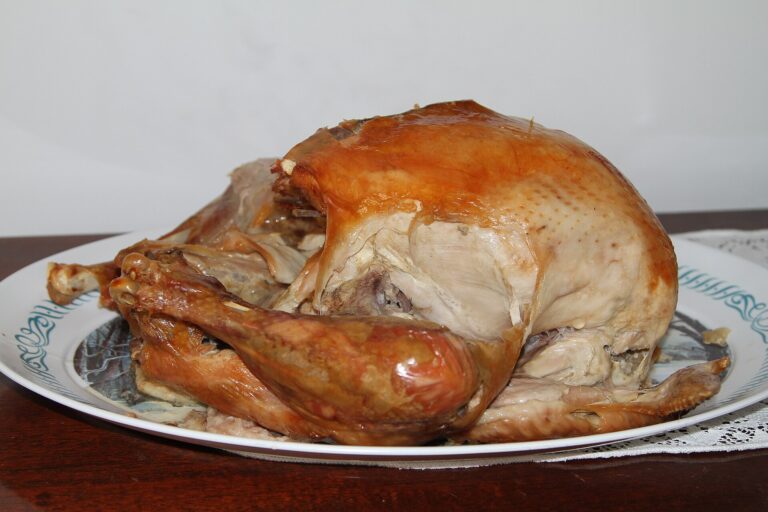
- Let a stuffed bird stand 20 minutes. After a whole stuffed turkey comes out of the oven, FSIS says to let it stand 20 minutes before removing the stuffing and carving.
- Use an oven set no lower than 325 degrees Fahrenheit. Stuffed poultry should go into the oven right after it is stuffed.
- Never thaw a commercially pre-stuffed frozen turkey. It should go straight from the freezer into the oven.
- Never refrigerate a whole cooked turkey with stuffing inside. Remove the stuffing from the cavity and store it separately in a sealed container.
- Refrigerate leftovers within 2 hours. Cooked stuffing should be used within 3 to 4 days and reheated to 165 degrees Fahrenheit.
Cooks with last-minute questions can reach the USDA Meat and Poultry Hotline on Thanksgiving Day, and anyone still working on the turkey can review the cold-water thawing method.
Why Baking Stuffing Separately Is Easier
FSIS says that for the best safety and most even doneness, stuffing should be cooked separately. Stuffing packed inside a turkey can lag behind the meat, so the turkey may be done while the center of the stuffing has not yet reached 165 degrees Fahrenheit.
For cooks who still want stuffing inside the bird, FSIS recommends packing it loosely, using about three-quarters of a cup per pound of turkey, and keeping it moist rather than dry. Stuffing cages, bags and cheesecloth are acceptable as long as the stuffing is loosely packed and cooked right away. The agency also advises checking the temperature in the innermost thigh, the innermost wing, the thickest part of the breast and the center of the stuffing.
The same cooking pressure shows up in every family’s kitchen this week. Freeing up oven space with a countertop appliance is one option, as this comparison of air fryers and toaster ovens for Thanksgiving shows. Stuffing, dressing and the debate over what to call it are among the many odd American traditions that confuse the rest of the world, and some families have even stranger holiday customs, as this list of strange Thanksgiving traditions shows.

Other Stuffing Practices FSIS Warns Against
The agency’s guide adds several more never-dos for the holiday kitchen:
- Do not deep-fry a stuffed turkey.
- Do not microwave a whole stuffed bird.
- Do not reheat a whole cooked turkey; carve it and reheat the pieces.
- Do not stuff a whole bird with leftover cooked stuffing.
- Do not buy uncooked premixed stuffing.
- Do not reheat leftovers in a slow cooker, and never put frozen stuffing or other frozen food in a slow cooker.
- Discard stuffing left at room temperature for more than 2 hours, or 1 hour when the temperature is above 90 degrees Fahrenheit.
Stuffing or Dressing
Whatever a family calls it, the dish has deep roots. Stuffing, a seasoned mixture of bread or other starches with vegetables, herbs and broth, has been cooked inside poultry for centuries, and in parts of the American South the same mixture baked in a pan is usually called dressing. The FSIS rules apply to both versions. A pan of dressing still needs to reach 165 degrees Fahrenheit, and leftovers from either one follow the same 2-hour rule. The FDA, in its guide to food safety during power outages, uses the same 2-hour limit for perishable food left at room temperature, or 1 hour when it is above 90 degrees Fahrenheit.
A Make-Ahead Plan That Follows the Rules
Cooks who want to save time can still prep stuffing on Wednesday without breaking any of the rules. Bread can be cubed and dried, onions and celery chopped and sauteed, and broth measured into a container, with the dry and wet ingredients stored separately in the refrigerator overnight. On Thanksgiving, the two get combined just before the stuffing goes into the oven or the bird.
A food thermometer settles the question of when it is done. Once the center of the stuffing reads 165 degrees Fahrenheit, it is ready to serve, and any leftovers can go into shallow containers in the refrigerator within 2 hours for the next few days of turkey sandwiches and leftover plates.
This article was produced with AI assistance and edited for accuracy against the sources linked above.
Image: Kimberly Vardeman – CC BY 2.0/Wikimedia Commons