After a storm, the pantry is often the first place families check: rows of soup, beans and tuna that were supposed to be the backup plan. When floodwater has reached those shelves, the natural question is whether any of it can still be used.
For undamaged, commercially canned food, the answer from the U.S. Food and Drug Administration is yes, with work. The FDA says flood-exposed cans and retort pouches can be saved by washing them, then sanitizing them either by boiling for 2 minutes or by soaking for 15 minutes in a solution of 1 cup of unscented household bleach mixed with 5 gallons of water. Much of the rest of a flooded pantry, the agency says, has to go.

Why This Matters Right Now
Flooding has been in the news again this month. An atmospheric river storm put about 30 million people along the California coast under a flash flood threat in mid-November, with water rescues and mudslide warnings reported, according to FOX Weather’s November 17 coverage. Winter storms can bring flooding to other parts of the country as well, and the cleanup questions in the kitchen are the same everywhere.
Families stocking up for the season can start by reviewing best practices for seasonal storage, and households building a cushion for surprises often pair a stocked pantry with a plan to save money for an emergency fund. Anyone driving through storm-soaked areas to reach family for Thanksgiving can run through a list of 10 car checks before a Thanksgiving road trip before leaving, and holiday hosts who lose power can compare what they have against standard fridge and freezer times for leftovers.
The FDA’s Step-by-Step Method for Saving Cans
The FDA’s guidance on food and water safety during power outages and floods covers undamaged, commercially prepared foods in all-metal cans and retort pouches, the flexible, shelf-stable pouches used for items like juice and seafood. Its steps are:
First, remove any labels that peel off. Second, thoroughly wash the cans or pouches with soap and water, using hot water if it is available. Third, rinse them with water that is safe for drinking, if available, because leftover dirt or soap makes the chlorine less effective. Fourth, sanitize them one of two ways: place them in water, bring it to a boil and keep boiling for 2 minutes, or soak them for 15 minutes in a solution of 1 cup (8 ounces) of unscented household bleach at 5.25 percent concentration mixed with 5 gallons of water.
After that, the FDA says to air dry the cans or pouches for at least 1 hour before opening or storing them. If labels came off, relabel each one with a permanent marker, including the expiration date, and use the food as soon as possible.
What Has to Be Thrown Out
The FDA draws a hard line for everything else. It says to discard any food and beverage that is not in a waterproof container if there is any chance it touched floodwater. That includes cardboard juice and milk boxes and home-canned foods, which the agency says cannot be effectively cleaned and sanitized. The Ready.gov food safety page gives the same direction for food that has come into contact with contaminated floodwater, and sums up its approach in one line: when in doubt, throw it out. Once the cleanup is done and the water is safe again, a guide on how to clean a dishwasher covers the appliance itself.

Damaged cans are also out, even if they look sealed. The FDA defines damaged cans as those with swelling, leakage, punctures, holes, fractures, extensive deep rusting, or crushing and denting severe enough that the can will not stack normally or open with a manual, wheel-type can opener.
Cleaning Dishes, Counters and the Refrigerator
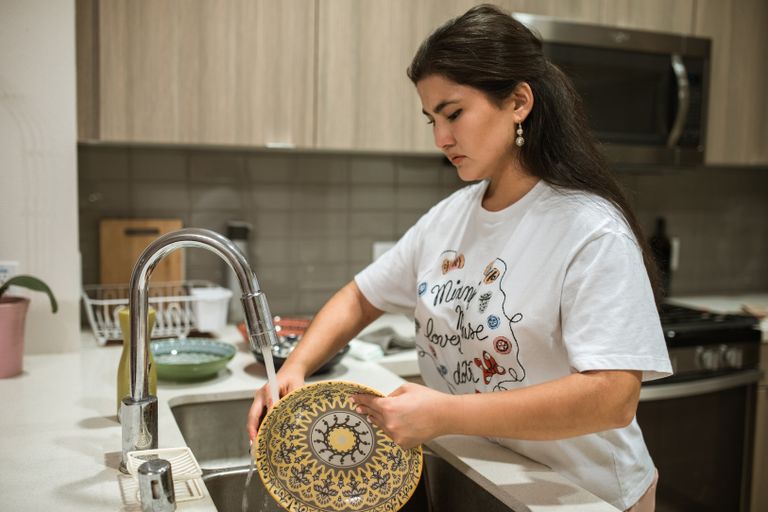
The FDA’s flood guidance extends to the rest of the kitchen. Metal pans, ceramic dishes and utensils, including can openers, should be washed with soap and hot water, rinsed, and then sanitized either by boiling in clean water or by soaking for 15 minutes in a solution of 1 tablespoon of unscented 5.25 percent bleach per gallon of water. Countertops get the same wash and rinse, followed by the 1-tablespoon-per-gallon bleach solution and time to air dry.
Storms that bring flooding often knock out power, too. The same FDA page says a refrigerator keeps food cold for about 4 hours if it stays closed, and a full freezer holds its temperature for about 48 hours, or 24 hours if half full. Perishable food such as meat, poultry, seafood, milk, eggs and leftovers that sat above 40 degrees for 4 hours or more should be discarded.
A Note on Bleach and Water
Every FDA measurement in this guidance is written for unscented household liquid bleach at 5.25 percent concentration, so checking the label before mixing matters. If tap water is unsafe, the agency says to use bottled water or to boil or disinfect water before using it. To disinfect drinking water with bleach, the FDA says to add 1/8 teaspoon, or about 8 drops, of unscented 5.25 percent liquid bleach to each gallon of water. If the water is cloudy, the agency says to filter it through clean cloths or let it settle first.
For a pantry that took on water, the rule of thumb is simple: sealed metal cans and pouches can usually be saved with soap, water and 15 minutes in bleach, while food in anything that is not waterproof belongs in the trash.
This article was produced with AI assistance and edited for accuracy against the sources linked above.
Image: Infrogmation – CC BY 2.5/Wikimedia Commons