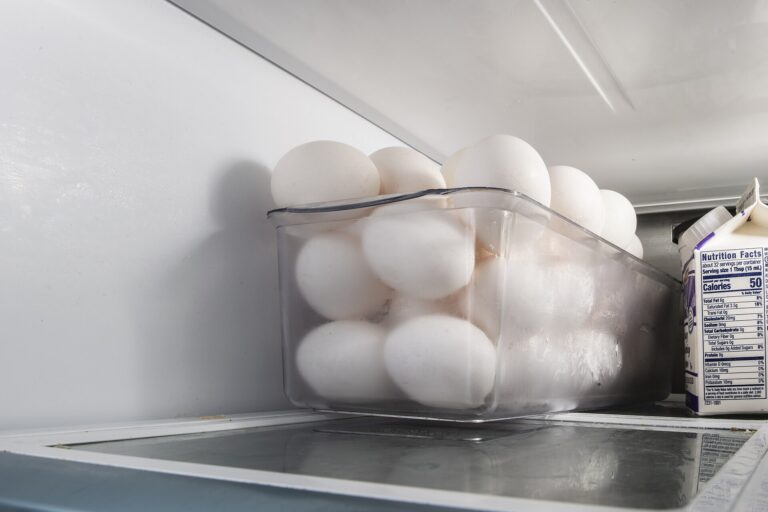
Holiday grocery runs have a way of filling the refrigerator before the holiday even arrives. A spiral ham gets picked up early to beat the crowds, a canned ham rides home as a backup, and by the weekend nobody remembers which one came first.
The federal cold storage chart sorts that out, and the gap between ham types is wider than most shoppers expect. According to FoodSafety.gov, an unopened canned ham labeled “Keep Refrigerated” keeps 6 to 9 months in the refrigerator, while a cooked, store-wrapped ham that is sliced, halved or spiral cut keeps just 3 to 5 days.

Why a canned ham outlasts a spiral ham by months
The FoodSafety.gov cold food storage chart, which draws on USDA guidance, lists the “Keep Refrigerated” canned ham at 6 to 9 months unopened, with a blunt note for the freezer column: do not freeze. Once a store slices or spirals a cooked ham and wraps it at the counter, the clock is measured in days instead.
Canned ham is also a nostalgia food for many families, the kind of dish that fits right in with roundups of foods from the ’60s most boomers loved with a passion, and the decade’s vocabulary is just as fun to revisit in this list of groovy slang words from the swinging ’60s.
Not every canned ham needs the fridge. The chart notes that an unopened, shelf-stable canned ham can be kept at room temperature for 2 years. The label is the deciding factor: a can that says “Keep Refrigerated” belongs on a refrigerator shelf, and a shelf-stable can belongs in the pantry until it is opened.
The full ham chart, side by side
Here is how the federal chart lists refrigerator and freezer times for the hams most families buy in November and December:
Canned, labeled “Keep Refrigerated,” unopened: 6 to 9 months in the refrigerator; do not freeze.
Canned, shelf-stable, opened: 3 to 4 days in the refrigerator; 1 to 2 months in the freezer.
Fully cooked, vacuum-sealed at the plant, unopened: 2 weeks or the “use by” date; 1 to 2 months frozen.
Cooked, store-wrapped, whole: 1 week; 1 to 2 months frozen.
Cooked, store-wrapped, slices, half or spiral cut: 3 to 5 days; 1 to 2 months frozen.
Country ham, cooked: 1 week; 1 month frozen.
Fresh, uncooked: 3 to 5 days; 6 months frozen.
Prosciutto, Parma or Serrano, cut: 2 to 3 months; 1 month frozen.
The chart adds that freezer times are for quality only, since food kept constantly at 0°F stays safe indefinitely. Freezing leftover spiral slices well inside their 3-to-5-day window keeps them at their best. Sorting out freezer shelves ahead of time, with tips like these best practices for seasonal storage, makes room for the ham bone and the leftover slices.
The old habit of keeping a canned ham tucked away “just in case” fits right in with the things Southern grandmothers kept in every kitchen, and the avocado-green fridges that once held them show up in this look at the appliance colors that filled 1970s kitchens.
Reading the date on the package
Ohio State University Extension in Wayne County points out that dates on ham packages are generally purchase dates, not safe home storage times, unless the ham was vacuum sealed at a USDA-inspected plant. That is why the chart gives the plant-sealed ham its own row: 2 weeks or the “use by” date, whichever the package shows.
University of Arkansas Cooperative Extension advice on holiday hams adds that the “use by” date is the last day to cook the ham, the “sell by” date is the last allowed date of sale, and a ham should be cooked within one week of the sell-by date. For shoppers buying early, that one-week rule is the number to write on the calendar. The same extension service suggests planning about one-fourth to one-third pound per serving for boneless ham and one-third to one-half pound for bone-in.

Serving and storing it after the meal
Ohio State Extension notes that USDA says hams are served during the winter holidays more than at any other time of year, and the handling rules are simple. Refrigerated hams should be bought cold, at 40°F or below, and taken home and refrigerated within 2 hours. A hot ham picked up from a store or restaurant should stay at 140°F or above until serving. Leftovers headed for later should be divided into shallow containers and refrigerated, then reheated to 165°F.
The USDA leftovers guide sets the same 2-hour limit for any perishable food at room temperature, or 1 hour above 90°F, and a 3-to-4-day window for refrigerated leftovers. A ham cooked at home falls into that 3-to-4-day range, according to Ohio State Extension. Once a shelf-stable canned ham is opened, the chart drops it to 3 to 4 days in the refrigerator as well.
A quick plan for the holiday ham
For households buying ahead of the December rush, the federal numbers suggest a simple order of operations. A “Keep Refrigerated” canned ham can be bought weeks early and kept in the fridge, but never frozen. A plant-sealed ham can wait until its “use by” date. A spiral-sliced ham from the deli counter should be bought within a few days of the meal, or frozen right away. Leftovers from any of them follow the 3-to-4-day rule, and the slices freeze well for 1 to 2 months.
The University of Illinois Extension uses the same approach for the rest of the holiday table, with separate fridge and freezer times for turkey, stuffing and sides, so a single printed chart on the refrigerator door can cover the whole season.
This article was produced with AI assistance and edited for accuracy against the sources linked above.
Image: Ciacho5 – CC BY-SA 4.0/Wikimedia Commons