Somewhere in a lot of garages sits a box of emergency food bought after the last big storm warning. It might be canned soup, a few tuna pouches, or a case of military-style MREs from a surplus store, and it has probably spent a summer or two next to the lawn mower.
The U.S. Department of Agriculture says that box’s temperature matters as much as its contents. Its shelf-stable food chart gives MREs about 4 years at 80°F but only 1 month at 120°F, while tuna and other seafood in retort pouches keep 18 months in the pantry and 3 to 4 days in the refrigerator once opened.

The MRE chart, degree by degree
The Meal, Ready-to-Eat is the U.S. military’s self-contained field ration, which replaced the canned Meal, Combat, Individual in 1981 and has also been handed out to civilians after natural disasters. Each meal comes sealed in a tough tan pouch, and plenty of them end up in home pantries and camping bins.
The USDA Food Safety and Inspection Service lists MRE storage times on its shelf-stable food page as a sliding scale tied to temperature:
- 60°F: 7 years
- 70°F: 4 1/2 years
- 80°F: 4 years
- 90°F: 2 1/2 years
- 100°F: 1 1/2 years
- 120°F: 1 month
The jump is the story. A cool basement at 60°F gives the same pouch 7 years, while a closed car or an attic on a summer afternoon can push it toward the 1 month end of the chart. Many families keep their kits in exactly the warm places that shorten that clock, which is why a list of things never to store in the garage is worth a look before the next cleanout.
Heat hurts canned goods too
The same USDA page says temperatures below 85°F are best for canned food and that high temperatures over 100°F are harmful to canned goods. That rules out the spots where emergency boxes often land: hot sheds, sunny porches, car trunks and uninsulated garages in the South and Southwest.
A closet shelf, a pantry away from the oven or a basement corner usually stays far cooler. Families building a car kit for winter road trips face the opposite problem in July, so the food in the trunk deserves a seasonal swap. Anyone planning a long drive past roadside stops like those on a list of the worst American tourist attractions can rotate the car stash into the trip snacks and restock it once home.
The federal government’s broader push for a 72-hour supply, and the debate over whether that is enough, is laid out in a piece on why some say the 72-hour emergency rule falls short. Whatever the size of the stash, a cool spot keeps it good longer. Setting aside money for restocking helps too, and a guide on building an emergency fund covers that budgeting side of preparedness.
Tuna pouches keep 18 months
The USDA chart gives tuna and other seafood in retort pouches 18 months on the pantry shelf. Once a pouch is opened, any leftovers go in the refrigerator and should be used within 3 to 4 days. For meat or poultry in retort pouches, the agency says to follow the manufacturer’s recommendation on the package.
A retort pouch is a laminate of flexible plastic and metal foil. The food is sealed inside and then heated to roughly 240 to 250°F under pressure, much like canning but in a flexible package. The modern version was developed by the U.S. Army Natick Soldier Research, Development and Engineering Center with Reynolds Metals and Continental Flexible Packaging, which shared a food technology award for it in 1978. That shared military history is why tuna pouches and MRE entrees look like close cousins.
Pouches are light and need no can opener, which makes them popular for camping bins too. Campers who have learned the hard way from the common mistakes every camper should avoid tend to pack them for that reason.
How the rest of the emergency shelf compares
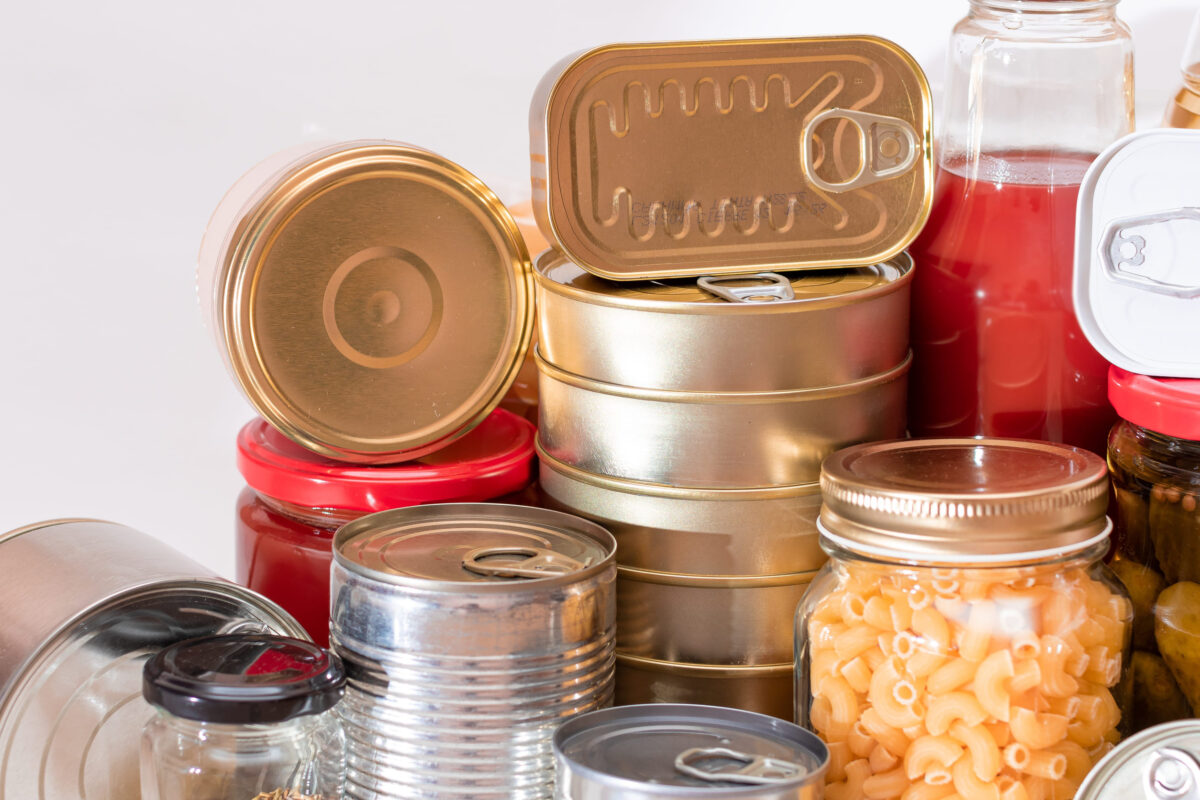
The same USDA chart puts the rest of a typical emergency shelf on a longer or shorter clock:
- Low-acid canned goods such as meat, vegetables and soups: 2 to 5 years unopened, 3 to 4 days refrigerated after opening
- High-acid canned goods such as tomatoes and fruit: 12 to 18 months unopened, 5 to 7 days refrigerated after opening
- Commercially packaged jerky: 12 months
- Rice and dried pasta: 2 years
- Shelf-stable canned ham: 2 to 5 years at room temperature
Dates printed on cans are usually about quality, not safety. The USDA’s guide to food product dating explains that a “Best if Used By” date marks when a product will taste best, and that properly handled food generally stays safe past it until spoilage shows, such as an off odor, flavor or texture.
Which cans and pouches go in the trash
The USDA says to discard heavily rusted cans, deeply dented cans, especially any dent on a seam, and any swollen can. Cans that froze and thawed at 40°F or higher, or that thawed and refroze, should go too, as should any can that hisses loudly or spurts when opened.
Ready.gov adds that commercially canned food may be eaten straight from the can without warming, and that a manual can opener and eating utensils belong in every kit. It also warns against eating from cans that are swollen, dented or corroded, even when the food looks fine.
For anyone holding a box of MREs that spent last summer in a hot garage, the practical move is to check the dates, move the stash somewhere cooler, and plan to eat the oldest pouches first on the next camping trip or snowed-in weekend.
This article was produced with AI assistance and edited for accuracy against the sources linked above.
Image: Christopherlin – CC BY-SA 3.0/Wikimedia Commons