Two free turkey help lines will be staffed on Thanksgiving Day, Thursday, November 26, 2026. The USDA Meat and Poultry Hotline takes calls from 8 a.m. to 2 p.m. Eastern, and the Butterball Turkey Talk-Line runs from 6 a.m. to 6 p.m. Central.
Both lines are already open for the season, so cooks with a frozen bird, a thawing question or a stuffing plan can call well before the holiday rush. Here are the numbers, the hours and the basic turkey rules each one keeps repeating.

The USDA Meat and Poultry Hotline: numbers and hours
The U.S. Department of Agriculture’s Food Safety and Inspection Service lists its contact options in its Thanksgiving turkey tips release:
- Phone: 1-888-674-6854, also written as 1-888-MPHotline
- Email: [email protected]
- Live chat: Ask USDA at ask.usda.gov
- Regular hours: 10 a.m. to 6 p.m. Eastern, Monday through Friday
- Thanksgiving Day: 8 a.m. to 2 p.m. Eastern
The hotline handles questions about handling, thawing, cooking and storing meat and poultry. On the holiday itself, the window closes at 2 p.m. Eastern, which is 11 a.m. on the West Coast, so cooks in later time zones should call early.
The Butterball Turkey Talk-Line: numbers and hours
Butterball’s help line has been answering turkey questions since 1981 and is in its 45th season in 2026. The company’s Turkey Talk-Line page lists the phone number as 1-800-BUTTERBALL and a text line at 844-877-3456, and says the service is open in November and December.
Butterball posts its full 2026 schedule in Central time, and it lists these hours:
- Nov. 2 to Nov. 20: weekdays, 8 a.m. to 8 p.m.
- Nov. 21 and 22: Saturday and Sunday, 8 a.m. to 6 p.m.
- Nov. 23 to Nov. 25: Monday to Wednesday, 7 a.m. to 9 p.m.
- Nov. 26, Thanksgiving Day: 6 a.m. to 6 p.m.
- Dec. 24, Christmas Eve: 8 a.m. to 2 p.m.
The number spelled out is 1-800-288-8372. A turkey hotline explainer that originally appeared in the Asheville Citizen Times also reported Thanksgiving Day hours of 6 a.m. to 6 p.m. and noted that the line started in 1981 with six people answering 11,000 turkey questions. According to a Butterball announcement published September 29, 2026, more than 50 experts answer questions in English and Spanish, and the line is also reachable by email, chat and social media through December 24.
Ovens and refrigerators get a workout this week, so a quick look at these oven checks to make before the turkey goes in and these fridge and freezer checks before the big grocery run can head off a call to either line. Cooks freeing up oven space with a countertop appliance can compare options in this air fryer and toaster oven comparison for Thanksgiving.
The turkey rules both lines keep repeating
The core turkey rules are short, and the USDA spells them out plainly.
Thawing. USDA guidance in its Thanksgiving food safety article says a turkey thawing in the refrigerator at 40 degrees Fahrenheit or below needs about 24 hours for every 4 to 5 pounds. A 20-pound bird therefore needs four to five days in the fridge. In cold water, allow about 30 minutes per pound, keep the turkey wrapped and submerged, change the water every 30 minutes and cook it right after it thaws.
Doneness. The FSIS says to use a food thermometer and check that the turkey reaches 165 degrees Fahrenheit in three places: the thickest part of the breast, the innermost part of the thigh and the innermost part of the wing. Checking all three spots catches any part of the bird that is lagging behind the rest. The same 165-degree mark applies to stuffing, which is one reason many cooks bake it in a separate dish where it is easier to check.
Leftovers. Food on the table is safe for about two hours, according to FSIS. After that, refrigerate the rest in small, shallow containers so it cools quickly. Carving leftover turkey off the bone first helps it chill evenly.
What to have ready before calling
Either line can answer faster with the details in hand. A short checklist:
- The turkey’s weight and whether it is fresh, frozen or partly thawed.
- Whether it will be stuffed, and the planned cooking method, such as roasting, smoking or frying.
- The oven type and whether it has been running hot or cold.
- A food thermometer nearby, since the first question is often what it reads.
- The time the meal needs to be on the table, so the timing advice works backward from it.
Anyone planning to deep-fry should read these things never to do with a turkey fryer first. If a pan of drippings scorches anyway, these tips on getting a burnt smell out of the house help before guests arrive, and this list of items worth keeping in the refrigerator is handy when sorting out fridge space for the bird.
The short version: call USDA at 1-888-674-6854 between 8 a.m. and 2 p.m. Eastern on Thanksgiving, or Butterball at 1-800-288-8372 from 6 a.m. to 6 p.m. Central, and keep a thermometer within reach.
This article was produced with AI assistance and edited for accuracy against the sources linked above.
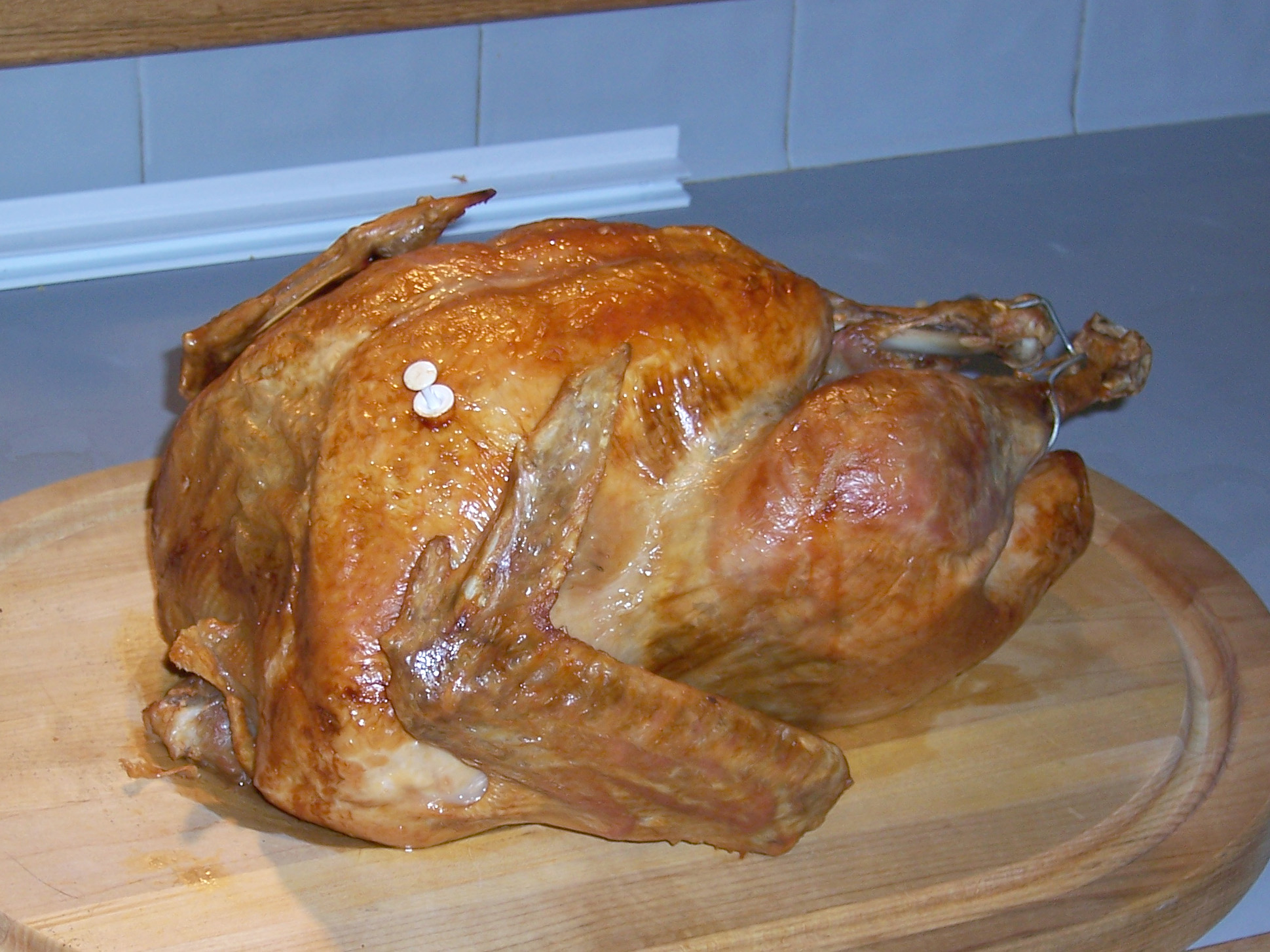
Image: Mark Miller – CC BY-SA 4.0/Wikimedia Commons