Corruption is one of those problems that can quietly affect almost every part of daily life. It can determine whether a hospital receives enough money to treat patients, whether roads get completed, whether businesses can operate fairly, and whether ordinary citizens can trust their leaders.
But which countries are struggling the most?
According to Transparency International’s 2025 Corruption Perceptions Index (CPI), released on February 10, 2026, some countries continue to face serious problems with public-sector corruption, weak accountability, and misuse of government resources. The index examined 182 countries and territories and gave each a score between 0 and 100. A lower score indicates a higher perceived level of public-sector corruption.
South Sudan and Somalia share the lowest position, with just 9 points each. Venezuela follows with 10. However, these rankings do not mean that everyone living in these countries is corrupt. They reflect concerns about public institutions, government accountability, and the misuse of power.
Here are 14 countries at the bottom of the latest ranking and some of the problems behind their positions.
South Sudan: A Government Struggling With Public Money
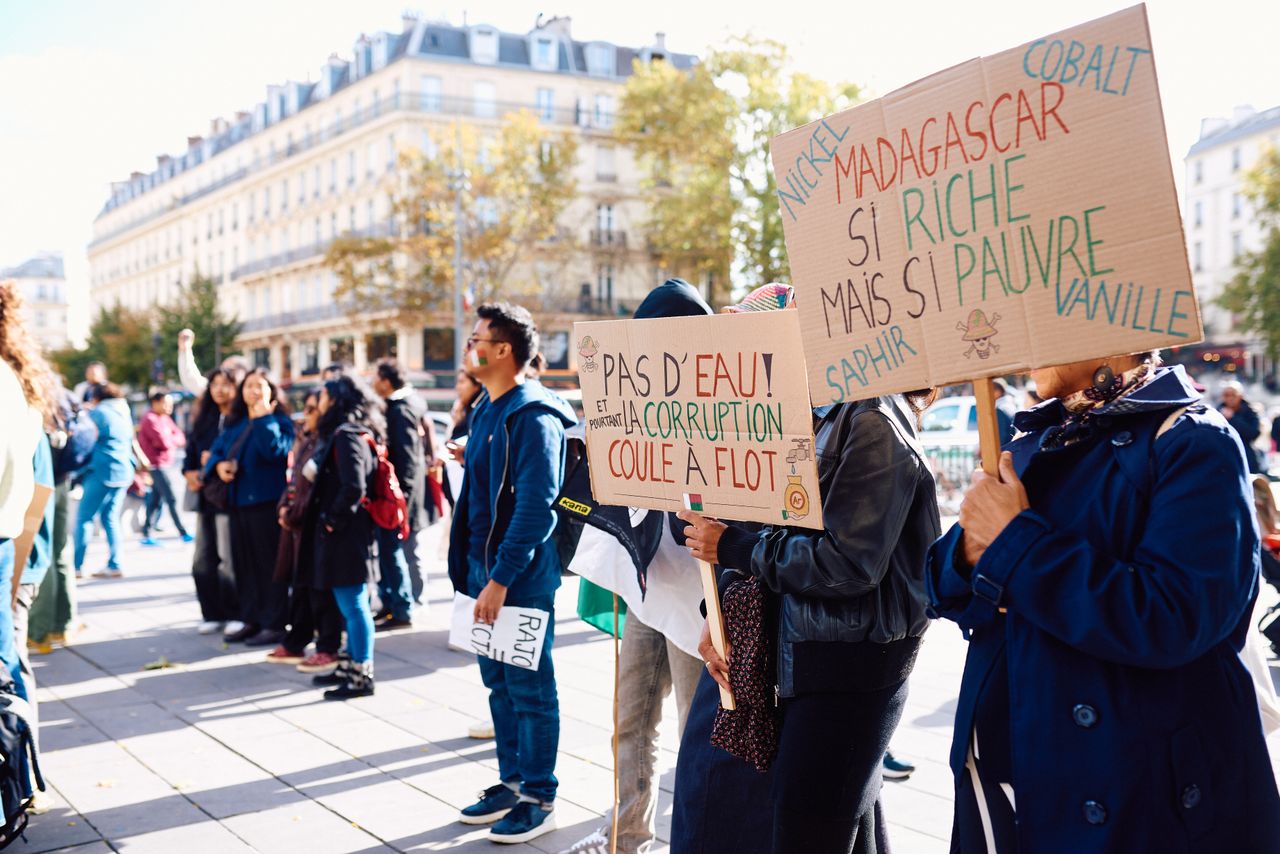
South Sudan ranks among the lowest countries, scoring just 9 out of 100. Despite having valuable oil resources, the country has struggled to turn its natural wealth into better living conditions for its people.
A United Nations investigation published in September 2025 described how politically connected individuals and companies benefited from public resources. Investigators also identified opaque oil revenue arrangements and government spending that lacked proper oversight.
One particularly troubling finding involved more than $73 million in public resources traced as diverted since 2018. The investigation also highlighted concerns about money allocated to healthcare, agriculture, and other essential services.
The bigger question is how a country with valuable natural resources can continue struggling to provide basic services to its population.
Somalia: Weak Financial Controls and Missing Accountability
Somalia also scored 9 points, tying with South Sudan for the lowest position.
The country has faced years of political instability, conflict, and institutional challenges. These problems have made it difficult to establish strong systems for managing public money.
A February 2026 assessment by the U4 Anti-Corruption Resource Center highlighted problems involving public spending, procurement, financial controls, and limited enforcement.
Humanitarian assistance has also faced diversion risks, with evidence pointing to involvement by different actors, including local authorities, camp gatekeepers, and security personnel.
When financial controls are weak, even money intended to help vulnerable families can fail to reach the people who need it.
Venezuela: Billions Connected to Financial Corruption Cases
Venezuela scored 10 points, placing it third from the bottom.
One of the country’s most documented corruption problems involves the misuse of government-controlled financial systems. Investigations have revealed how officials and businesspeople allegedly exploited preferential currency exchange arrangements to generate enormous profits.
Former national treasurer Alejandro Andrade admitted receiving more than $1 billion in bribes in exchange for providing access to favorable government currency transactions. He pleaded guilty in 2017 and received a 10-year prison sentence in 2018.
Another major case involved former treasurer Claudia Díaz and her husband, who were convicted of money-laundering offenses connected to more than $136 million in bribes.
These cases demonstrate how corruption can operate through complicated financial arrangements rather than simple cash payments.
Eritrea: Limited Transparency and Political Control
Eritrea scored 13 points, placing it among the world’s lowest-ranked countries.
One major concern is the concentration of economic power within the ruling political party and military structures. Independent oversight of government finances is also limited.
A 2026 assessment by Bertelsmann Stiftung described the military’s involvement in commercial activities and concerns about the lack of public auditing of state income and expenditure.
When powerful institutions operate without meaningful independent scrutiny, it becomes difficult for citizens to know how public resources are being managed.
Libya: Public Contracts and International Bribery
Libya also received 13 points.
Years of political conflict and divided institutions have made accountability particularly difficult. The country’s oil wealth and state investment institutions have also been connected to historical corruption investigations.
One major international case involved Société Générale, which admitted to a bribery scheme involving payments through a Libyan intermediary to secure investments from Libyan state institutions.
Another involved SNC-Lavalin Construction, which pleaded guilty in Canada in 2019 to fraud relating to its Libyan business activities.
These cases show that corruption involving public institutions can extend beyond national borders and involve international companies.
Yemen: Political Division and Weak Oversight
Yemen scored 13 points, reflecting serious concerns about public-sector accountability.
Years of conflict have divided political authority and weakened government institutions. Different authorities have competed over limited public resources, making effective financial oversight difficult.
The problem extends to public revenue, procurement, import financing, and institutions responsible for monitoring government spending.
However, it is important to distinguish verified institutional problems from individual allegations. An earlier United Nations allegation involving a major Saudi financial deposit was withdrawn in March 2021 after further review found insufficient evidence of corruption or money laundering.
Nicaragua: Political Connections and Financial Networks
Nicaragua scored 14 points.
Concerns about corruption include politically connected financial institutions, patronage networks, and the use of public resources to benefit powerful individuals.
In April 2026, the United States Treasury announced additional sanctions involving alleged corruption and mining-sector arrangements that it said benefited political insiders.
These are government allegations and administrative sanctions, not criminal convictions. Nevertheless, they highlight continuing international concerns about transparency and accountability.
Sudan: Corruption Within Powerful Political and Business Networks
Sudan received 14 points.
Former president Omar al-Bashir was convicted of corruption and money laundering in December 2019. He received a two-year sentence in a facility for elderly offenders.
The country has also faced concerns involving gold exports and business networks connected to powerful security figures.
A 2019 Reuters investigation examined gold shipments linked to a company owned by the family of military leader Mohamed Hamdan Dagalo. The investigation raised questions about export controls and preferential arrangements.
Sudan’s experience illustrates how natural resources can become closely connected to political and military power.
Equatorial Guinea: Wealth Concentrated Among Powerful Individuals
Equatorial Guinea scored 15 points.
Despite its oil wealth, the country has faced long-standing questions about how public resources are distributed.
A major international case involved Teodoro Nguema Obiang Mangue, a senior government official whose assets became the subject of U.S. civil-forfeiture proceedings.
The case resulted in a 2014 settlement involving luxury assets, including a Malibu mansion, a Ferrari, and Michael Jackson memorabilia.
Importantly, this was a civil settlement, not a criminal conviction. The case nevertheless highlighted concerns about unexplained wealth and the movement of assets across international borders.
North Korea: Bribery Can Affect Everyday Survival
North Korea also scored 15 points.
Corruption in the country can look very different from large government procurement scandals. A 2019 United Nations human rights report documented accounts of officials demanding bribes from people trying to work, travel, trade, or avoid punishment.
For ordinary citizens, these payments can become part of everyday survival.
The report also documented women traders facing demands for money and sexual favors from officials. This demonstrates how corruption can involve intimidation and abuse of power, not just financial transactions.
Syria: Public Wealth and Overseas Assets
Syria received 15 points.
One significant historical case involved Rifaat al-Assad, who was convicted by French courts of laundering money diverted from Syrian public funds.
French authorities identified a property portfolio worth approximately €90 million. France’s Court of Cassation upheld the conviction and asset confiscation in September 2022.
The case demonstrates how wealth connected to public corruption can be moved into overseas property and financial markets.
Afghanistan: The Kabul Bank Scandal
Afghanistan scored 16 points.
One of its most significant financial scandals involved Kabul Bank, which collapsed in 2010 following extensive insider lending and fraud.
The scandal exposed serious weaknesses in banking supervision and involved loans to politically connected individuals and businesses.
In November 2014, the bank’s founder, Sher Khan Fernod, and former chief executive Haji Khalil Ferozi received increased 15-year sentences.
The collapse damaged confidence in the country’s banking sector and exposed the dangers of weak financial oversight.
Haiti: Public Development Money Under Scrutiny
Haiti also scored 16 points.
One of its most widely discussed corruption controversies involved the PetroCaribe program, which was designed to provide financing through Venezuela’s oil arrangements.
Audits and investigations identified questionable spending, overbilling, favoritism, and missing financial documentation.
In October 2024, Haiti’s anti-corruption agency also accused three transitional presidential council members of corruption and bribery involving a state-owned bank. The individuals denied the allegations, and a final conviction had not been verified in the research.
Myanmar: Valuable Natural Resources, Limited Accountability
Myanmar completes the list with a score of 16.
The country’s jade industry has attracted serious corruption concerns because of its connections to military-linked businesses, politically connected individuals, and opaque mining arrangements.
A 2015 Global Witness investigation estimated that Myanmar’s jade production was worth as much as $31 billion in 2014. That figure represents the estimated value of production, not the amount proven stolen.
Further investigations have highlighted concerns about bribery, illegal extraction, and the influence of armed groups over valuable mining areas.
What These Rankings Really Tell Us
The world’s lowest-scoring countries do not all experience corruption in the same way. Some struggle with stolen public resources, others with political patronage, weak financial institutions, bribery, or powerful groups operating without meaningful oversight.
It is also important to understand what the Corruption Perceptions Index measures. It examines expert and business perceptions of public-sector corruption, not every corrupt act committed by individuals or companies. A score of 9 does not mean that 91% of a country’s population is corrupt.
Ultimately, these rankings highlight a common problem: when governments lack transparency and accountability, ordinary people often pay the price. Money intended for hospitals, schools, roads, and essential services can fail to deliver the improvements communities desperately need.
Reducing corruption requires more than arresting a few officials. It takes independent institutions, transparent public spending, fair courts, strong financial controls, and leaders who can be held accountable for their decisions.