The last Horn & Hardart Automat, at 200 East 42nd Street in New York City, closed on April 9, 1991, according to Britannica. By then the restaurant that had once sold coffee for a single nickel had charged two nickels since November 29, 1950, the day the price rose.
The two dates mark the beginning and the end of an era in American eating. For decades, the Automat let customers drop coins into a slot, turn a knob and lift a small glass door on a hot dish.

How the Nickel Machine Worked
Horn & Hardart opened its first Automat in 1902 at 818 Chestnut Street in Philadelphia, according to Britannica, which says the “waiterless restaurant” equipment was imported from Berlin. The first New York City location followed in 1912 on Times Square. Britannica lists 1888 as the year Joseph V. Horn and Frank Hardart opened their first Philadelphia lunchroom.
The coin system was the whole point. Wikipedia’s Horn & Hardart entry says prepared food sat behind small glass-doored windows, and that customers fed coins or tokens into a slot and turned a knob that collected the fee and unlocked the door. Staff on the other side of the wall refilled the compartments, and tokens bought from a cashier were worth up to 75 cents.
To get the five-cent coins in the first place, customers visited a booth. The same Wikipedia entry says cashiers called nickel throwers sat in glass booths and handed customers the five-cent pieces needed to operate the machines. History.com adds that the cashiers wore rubber fingertips. The coin involved was the five-cent piece, which Wikipedia’s entry on the nickel says was introduced in its Buffalo design in 1913, a year after the Times Square Automat opened.
The Nickel Cup of Coffee
Coffee was the signature item. History.com says a cup cost only a nickel until 1950 and calls coffee the chain’s most popular item, and Wikipedia gives the date of the increase as November 29, 1950, when the price rose to two nickels.
The coffee was a point of pride. History.com reports that it was brewed fresh every 20 minutes and that Joseph Horn found silver dolphin spouts in Italy to dispense it. The morning cup is an old habit, and the routines that shaped everyday mornings fade quickly, as a list of 8 little rituals from the 80s and 90s that disappeared without much notice shows.
Macaroni, Beans and Creamed Spinach
The menu ran well beyond coffee. Wikipedia’s entry names macaroni and cheese, baked beans and creamed spinach as staples, especially during the Depression, and says later entrees included fish, beef stew and Salisbury steak. History.com lists sandwiches, slices of pie, macaroni and cheese, chicken potpie and tapioca pudding.
Wikipedia also says early offerings included buns, beans, fish cakes and coffee. The food stayed simple, and the price stayed low, which is a large part of why the Automat is remembered with affection in a way few cafeterias are. Many once-common fixtures of daily life have vanished the same way, as a list of 31 forgotten household items from the past shows.
Everyday food memories tend to travel with other objects of their era, a theme in a look at 5 things found in nearly every American kitchen of the 1970s and in a piece on 5 things kids did with the Sears Wish Book before Christmas.
That mix of cheap food and fixed routines is also what ties the Automat to the dishes in a list of 15 foods from the 60s that most boomers loved with a passion.

The Closing on East 42nd Street
The Automat was a mass phenomenon. History.com says that at its height the chain had more than 80 locations in New York City and Philadelphia, and it describes the company as the world’s largest restaurant chain. Wikipedia says that by 1941 it had 157 retail shops and restaurants across Philadelphia, New York and Baltimore, and its separate entry on automats adds that New York once had 40 Horn & Hardart automats.
Wikipedia’s Automat entry attributes the decline to competition from fast food, to inflation that made coins inconvenient, and to an appeal that by the 1970s was mostly nostalgic in city centers. Britannica gives the final date as April 9, 1991, and Wikipedia places the last New York location at the southeast corner of 42nd Street and Third Avenue.
What Remains Today
A piece of the original survives. According to History.com, the National Museum of American History includes a section of the original Automat that opened in Philadelphia in 1902.
The brand has had a second life. Wikipedia’s Horn & Hardart entry says that as of November 2022, the company’s website announced the brand had returned with a recreation of its Automat Blend coffee, and that CEO David Arena has said he hopes to reopen an Automat in the future. No Automat restaurants were operating under the name at the time of that entry.
Wikipedia’s Automat entry lists other attempts to revive the idea of food through a wall of windows. Bamn! opened a Dutch-style automat in New York’s East Village in 2006 and closed about three years later. Eatsa opened six automated restaurants in 2015, and all had closed by 2019. Automat Kitchen opened in Jersey City in early 2021, and Brooklyn Dumpling Shop opened in the East Village in 2021 and in Philadelphia in December 2023.
The dates are the short version of the story. A nickel bought a cup of coffee until November 29, 1950. The last Horn & Hardart Automat in New York closed on April 9, 1991. In between, customers learned that dinner could come from a glass door and a slot full of change.
This article was produced with AI assistance and edited for accuracy against the sources linked above.
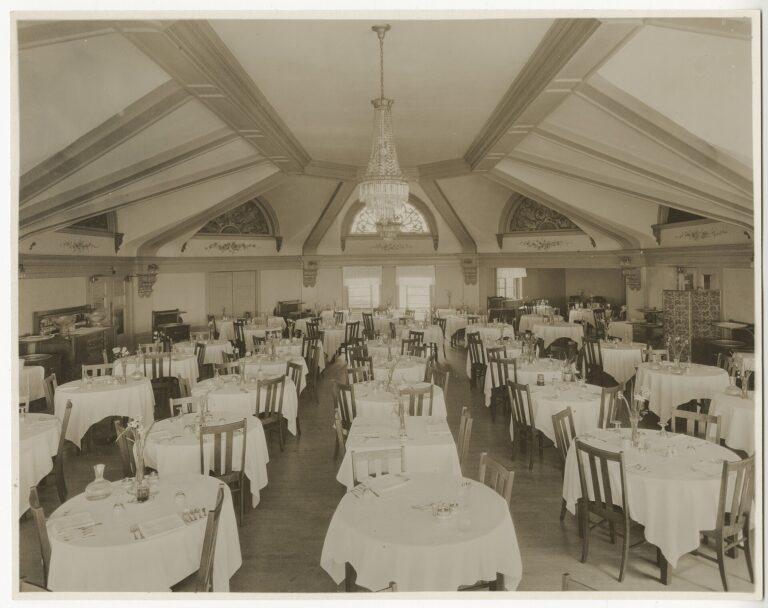
Image: Horn & Hardart/Lumitone Photography, New York – Public domain/Wikimedia Commons