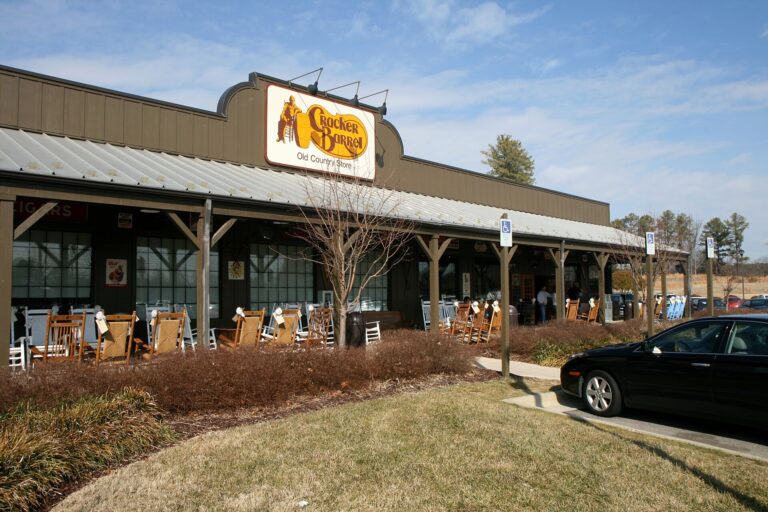
The same $100 can fill a week of grocery bags or cover a couple of restaurant dinners, and a federal forecast says the dinners are getting more expensive faster. The USDA’s Economic Research Service, in a Food Price Outlook last updated Oct. 23, 2026, projects that menu prices will climb more quickly this year than prices at the supermarket.
The forecast puts food-away-from-home prices up 3.5% in 2026, with a prediction interval of 3.4% to 3.7%. Food-at-home prices are forecast to rise 2.3%, with an interval of 1.9% to 2.7%. All food together is forecast at 2.8%. The gap is 1.2 percentage points, and the two ranges do not overlap.

The Forecast Gap Between a Menu and a Grocery Receipt
The ERS defines food away from home as restaurant and other foodservice purchases, and food at home as grocery store or supermarket purchases. Both numbers come from the Consumer Price Index, which the Bureau of Labor Statistics publishes, according to Wikipedia. The October forecasts incorporate the September 2026 CPI and Producer Price Index, so the data runs through September.
The ERS says its forecasting methods are based entirely on statistical models fitted to recent trends in the data. That makes the figures a projection of where prices are heading, not a count of what households have paid. Diners who track restaurant etiquette may recognize the cost-conscious mood from Frenz Hub’s list of 20 unforgivable blunders when dining out.
Beef, Vegetables and Sweets Keep the Grocery Side Busy
Cooking at home does not escape price increases, and the same forecast shows why. Beef and veal prices are forecast to rise 8.7% in 2026, with an interval of 7.4% to 10.1%. Fresh vegetables are forecast at 5.8%, sugar and sweets at 6.5% and nonalcoholic beverages at 4.4%. Upstream, the ERS projects wholesale beef prices up 8.8% and farm-level cattle prices up 5.8%, the same direction as the retail beef forecast. Farm-level eggs are forecast to fall 81.2%, a much steeper drop than the one expected at the register.
Several categories pull the grocery average down. Eggs are forecast to fall 29.3%, dairy products 0.4%, and the ERS projects poultry at 1.2% and pork at 1.0%. Fresh fruits are forecast at 2.9%. A cart heavy on beef and vegetables would feel a different year than one built around eggs, dairy and chicken, which is why the 2.3% grocery figure is an average and not a promise for any one basket. Shoppers hunting for ways to trim a bill can browse Frenz Hub’s wallet-friendly life hacks, a partner-site rundown of things smart shoppers never buy at a dollar store and Frenz Hub’s coffee bar ideas for skipping the daily cafe run.

What a $100 Check Looks Like a Year From Now
A simple example shows the size of the gap between the two kinds of spending. Applying the forecast percentages to a $100 restaurant bill gives $103.50 after a year of food-away-from-home inflation. A $100 grocery run, at the 2.3% forecast, becomes $102.30. The difference is $1.20 on every $100, which is small on a single meal and larger on a household that eats out several times a week.
The calculation is an illustration built from the ERS percentages, not an ERS statement about any particular bill. The USDA also notes in its Food Expenditure Series that it reports food spending with and without sales taxes and tips, a reminder that the total on a restaurant check includes more than the menu price. Couples and friends who split bills can see the same effect in a partner-site story about what one first date in New York cost, down to the drinks.
2027 Keeps Menus Ahead and Widens the Uncertainty
For 2027, the ERS forecasts food-away-from-home prices up 2.8%, with an interval of 0.7% to 5.0%. Food-at-home prices are forecast at 1.0%, with an interval of negative 5.2% to 7.5%, and all food at 1.7%. The forecast gap between menu and grocery prices grows to 1.8 percentage points, but the intervals are far wider than this year’s, which means the next year is much harder to call than this one.
The ERS page offers no 2027 forecasts for individual grocery categories, so the beef and egg figures apply to 2026 only. The agency updates the outlook roughly monthly, and the page lists the next update as Nov. 24, 2026, when the numbers may shift. A look at the full Food Price Outlook shows that it covers forecasts up to 18 months ahead.
What the Forecast Cannot Say About One Household’s Dinner
A national forecast covers the whole category, not a single chain or a single neighborhood. A small-town diner and a downtown steakhouse are folded into the same 3.5%, and a family that cooks pasta four nights a week and orders pizza on Friday has a different mix than the national average. The USDA’s Food Dollar Series separates the farm share of a food dollar from the cost of processing, transporting and selling food, a split that shows how much of each food dollar goes to things other than raw farm commodities.
What the numbers do support is a narrow, checkable claim. By the ERS projection, restaurant prices are on track to rise faster than grocery prices in 2026, and the forecast keeps menus ahead in 2027 as well.
This article was produced with AI assistance and edited for accuracy against the sources linked above.
Image: Infrogmation of New Orleans – CC BY-SA 4.0/Wikimedia Commons