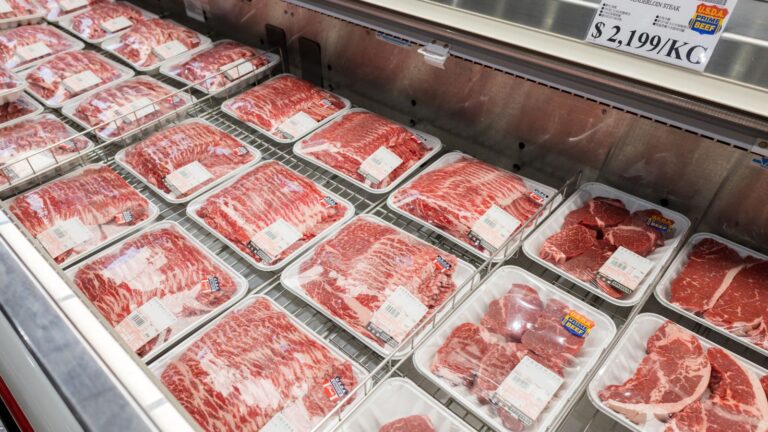
Four of the six major grocery groups got more expensive in October 2026, and one got cheaper. The Bureau of Labor Statistics reported on Nov. 10 that the food at home index rose 0.4 percent for the month, while coffee fell 3.6 percent, according to its October Consumer Price Index release.
Restaurant prices moved even faster. The same release shows the food away from home index up 0.5 percent, so eating out outpaced the grocery aisle for the month.

Which Grocery Groups Went Up
BLS says four of the six major grocery store food group indexes increased in October. The largest move came from other food at home, which rose 0.7 percent, as snack prices climbed 1.0 percent.
The meats, poultry, fish and eggs index rose 0.5 percent, and BLS says the beef index rose 0.9 percent within it. In the detailed tables, eggs show a 0.6 percent increase. The fruits and vegetables index and the dairy and related products index each rose 0.6 percent. On prices, Frenz Hub has a post titled 14 Outrageously Expensive Products Americans are Overpaying For Unknowingly.
Two groups did not rise. The index for cereals and bakery products was unchanged over the month, and the nonalcoholic beverages index fell 0.3 percent in October after rising 0.9 percent in September, per BLS. On shopping, craftingyourhome.com has a post titled 7 Things Smart Shoppers Never Buy at a Dollar Store.
The 3.6 Percent Coffee Drop
Coffee is the standout decline. BLS’s seasonally adjusted detail table shows coffee prices falling 3.6 percent from September to October, which sits inside the nonalcoholic beverages group that dropped 0.3 percent.
The BLS summary text does not break out coffee on its own. The figure comes from the table beneath it, so it describes a price index for coffee as a category and not a particular brand or bag.
For anyone who brews at home, the decline is a small counterweight to the rises elsewhere in the cart. On coffee at home, Frenz Hub has a post titled 15 Creative Coffee Bar Ideas.

Restaurants Rose Faster Than Groceries
BLS reports that the food away from home index rose 0.5 percent in October. The overall food index, which blends groceries and restaurants, also rose 0.5 percent after being unchanged in September.
The detailed lines show where restaurant prices moved. Full-service meals rose 0.7 percent, and limited-service meals, the category that includes fast-food restaurants, rose 0.4 percent, matching the grocery increase. On household spending, Frenz Hub has a post titled 15 Wallet-Friendly Life Hacks That’ll Actually Make a Difference.
That comparison is the center of the cook-at-home question. For the month, groceries rose 0.4 percent, limited-service meals rose 0.4 percent and full-service meals rose 0.7 percent. The gap that stands out is the sit-down restaurant. On everyday spending, craftingyourhome.com has a post titled 10 Everyday Expenses Broke People Always Seem To Waste Their Money On.
The Missing Year-Over-Year Comparison
One caution comes straight from BLS, which posts the figures on its monthly CPI news release page. The agency says it did not collect survey data for October 2025 because of a lapse in appropriations, so it cannot publish the usual 12-month change for October 2026 for many indexes, including the food indexes.
That leaves the monthly figures, which are seasonally adjusted, without the usual year-ago comparison. A year-over-year view for September comes from the USDA Economic Research Service, whose Food Price Outlook was updated Oct. 23 and covers September.
ERS says food-at-home prices in September 2026 were 1.8 percent higher than a year earlier, while food-away-from-home prices were 3.5 percent higher. Its forecasts for 2026 are a 2.3 percent increase for food at home and a 3.5 percent increase for food away from home. ERS adds that its September readings are not seasonally adjusted, so they do not line up exactly with BLS’s adjusted October figures.
For the September month, ERS reported beef and veal prices falling 1.3 percent while fresh fruit rose 2.0 percent and eggs rose 1.0 percent, which shows how quickly individual categories can swing from one month to the next. For 2027, ERS projects food-at-home prices up 1.0 percent and food-away-from-home prices up 2.8 percent, with wide forecast intervals that it publishes to show the uncertainty. The forecasts sit in its Food Price Outlook data product, which covers annual food price changes up to 18 months ahead.
How to Read One Month of Prices
A consumer price index tracks the weighted average price of a market basket of goods, which Wikipedia’s entry on the consumer price index notes is updated periodically to reflect how households spend. It is a statistical estimate, and a single month is one data point. In plain terms, a 0.4 percent rise means a basket of groceries that cost $100.00 in September would cost about $100.40 in October.
The October figures show direction more than a trend. Grocery prices moved up 0.4 percent, restaurants rose faster, and coffee dropped sharply while snacks and beef rose. Because BLS rounds to a tenth of a percent, a move of 0.4 percent or 0.5 percent separates only slightly from its neighbors.
Anyone tracking the household budget will want both the monthly and the annual numbers.
The short version is plain. In October, groceries rose 0.4 percent, restaurants rose 0.5 percent, and coffee fell 3.6 percent, all from the Bureau of Labor Statistics’ Nov. 10 release.
This article was produced with AI assistance and edited for accuracy against the sources linked above.
Image: David – CC BY 2.0/Wikimedia Commons