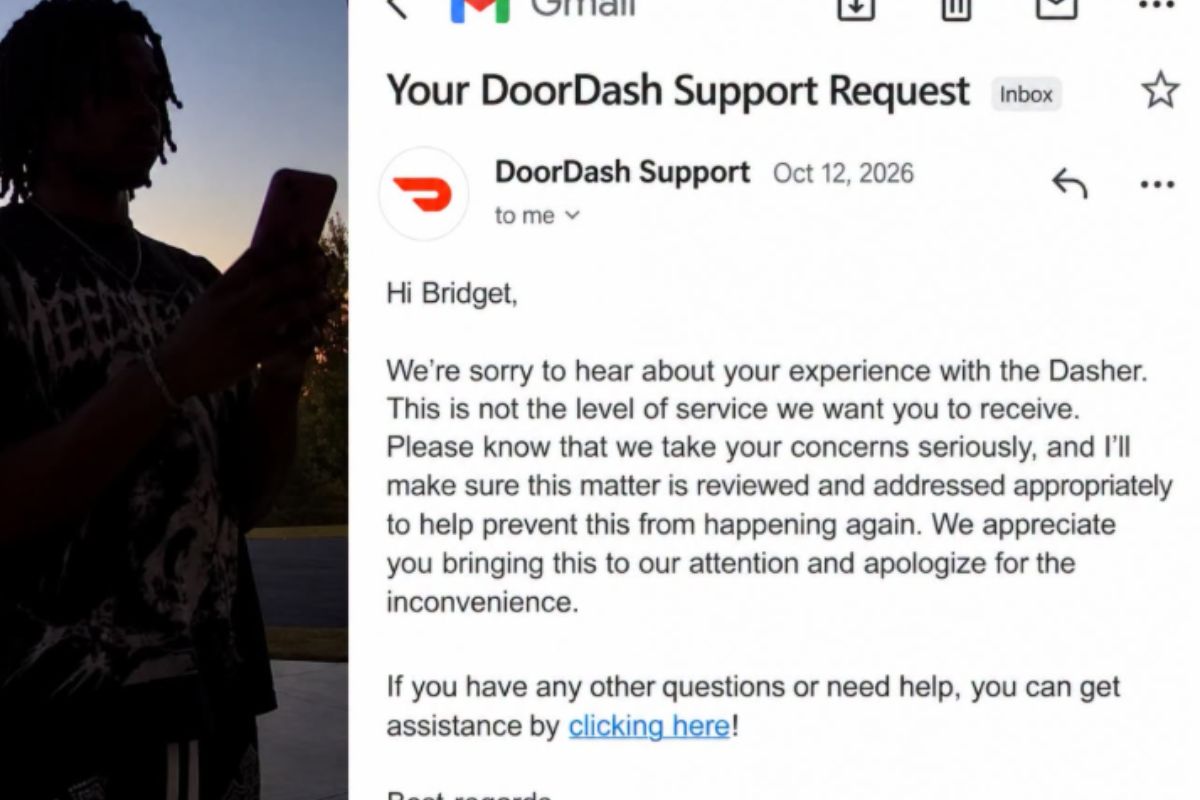
A form letter landed in Bridget Locklear’s inbox on Oct 12, 2026, and DoorDash Support did what support teams do. It apologized, promised a review and said nothing else. Locklear, who first aired her complaint on Facebook, had reported two Dashers over children riding along, and she wanted the company to act.
Screenshots of her emails sit beside what look like doorbell-camera stills, and together they make a thin file. They show that reports were filed and acknowledged. They do not show a car seat, a food handling lapse or a broken rule, which makes the story more interesting than the outrage around it.
DoorDash acknowledged the reports without admitting anything
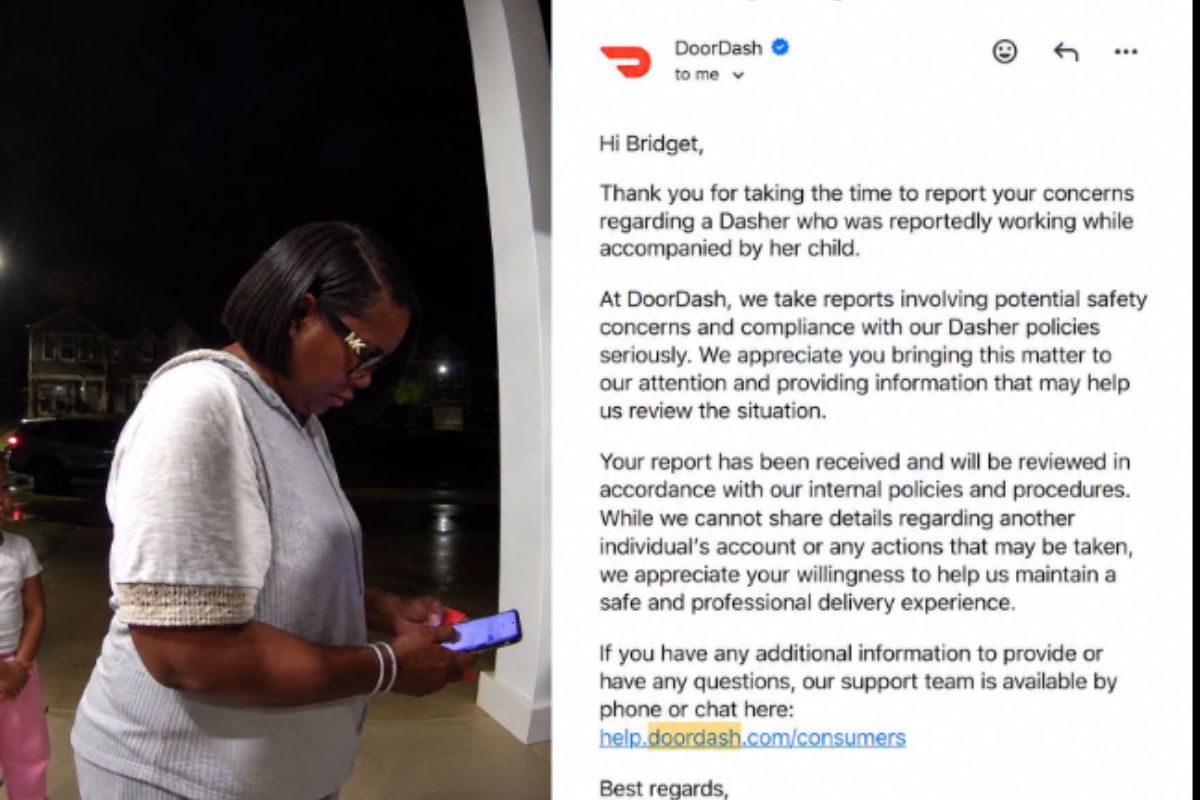
The first message, dated Oct 12, 2026, apologizes for her experience with the Dasher and adds “This is not the level of service we want you to receive.” It promises the matter will be addressed appropriately. Nothing in it mentions a child.
The follow-up, goes further and describes a Dasher reportedly working while accompanied by her child. The company says the report will be handled under internal policies and procedures and declines to share anything about another person’s account. Read plainly, DoorDash confirmed receipt and promised nothing. A customer who wanted consequences got the corporate equivalent of a nod.
Nothing in DoorDash’s rulebook bars a child in the passenger seat
A Tasting Table review of Dasher rules found nothing that stops drivers from carrying a passive passenger, children included. Locklear’s complaint therefore targets a behavior the platform tolerates.
Coverage is murkier still. The same review notes that DoorDash’s third-party liability protection varies by state and applies only during an active delivery. Drivers are left to confirm their own policies.
A company that leaves the passenger question blank hands the judgment call to strangers with doorbell cameras. That is a choice, and a convenient one.
Florida law regulates the car seat, and the screenshots say nothing about one
Where does the law actually bite? Florida’s child restraint statute requires drivers carrying a child aged five or younger to use a crash-tested restraint. Children aged four and five can ride in a booster, and the statute lists a few exceptions.
Locklear’s complaint, as documented, lacks the one fact that would turn disapproval into a violation: how the child was restrained. Griping to an app about a kid in a car is a matter of taste. An unrestrained four-year-old would be a different filing, aimed at a different agency.
Seven hundred child deaths explain why restraint is the question to ask
In 2023, 700 children aged 14 and younger died as occupants of passenger vehicles in American traffic crashes, according to NHTSA’s child traffic safety facts. Restraint use was known for 620 of them, and 264 were unrestrained, about 43%.
The same fact sheet found that 64% of children who died riding with unrestrained drivers were also unrestrained. Missing seats and unbuckled adults carry the weight in those figures.
The federal tally does not isolate gig drivers, so it cannot say delivery apps raise the odds of anything. It can say that Locklear asked about the wrong thing first.
Food safety guidance for delivery is voluntary, and that is the real gap
The FDA highlighted best practices for online delivery in a December 2022 update that covered ghost kitchens and third-party services. Nothing in it works like a regulation.
Trade outlet Food On Demand described the safeguards as encouraged but not mandated. DoorDash offers couriers insulated bags, yet nobody tracks whether they get used.
Locklear’s food worry has a legitimate home in that policy vacuum. Her evidence does not, because nothing in her screenshots touches a meal.
The Food Code sets the temperatures, and no screenshot shows a violation
Under the FDA Food Code, cold foods that need temperature control should stay at or below 41°F, and hot foods at or above 135°F. Delivery blurs who answers for those numbers once a bag leaves the restaurant.
Whether a child in the back seat changes a single reading is an empirical question, and nobody in this episode has answered it. Locklear raised the possibility without producing a thermometer, a spill or a complaint about the food itself.
Suspicion is a fine reason to ask questions. It makes a poor substitute for findings.
Facebook sided with the driver and treated the nanny advice as tone-deaf
Locklear’s own words handed critics their ammunition. Baller Alert reported days of criticism after she told a delivering mother to hire a nanny and promised to keep reporting similar sightings.
The pile-on was predictable. Advice that assumes a delivery driver can afford a sitter invites a dunking, and the internet obliged.
Her critics have a point about tone and skip her better question about restraints. Winning the argument about manners does not settle the argument about safety.
Childcare costs explain why kids ride along, and why platforms keep quiet
A San Francisco driver’s car was stolen while he delivered food with two children inside, KQED reported in its coverage of Bay Area driver unrest. The children were unhurt and returned to family hours later. The incident pushed the cost of child care for drivers into the open.
Platforms profit from a workforce that often cannot pay for sitters, and from a policy gap that spares them from saying so. A written passenger rule, or a simple car seat attestation, would cost DoorDash almost nothing.
Locklear aimed at the drivers. The target sat in the handbook.