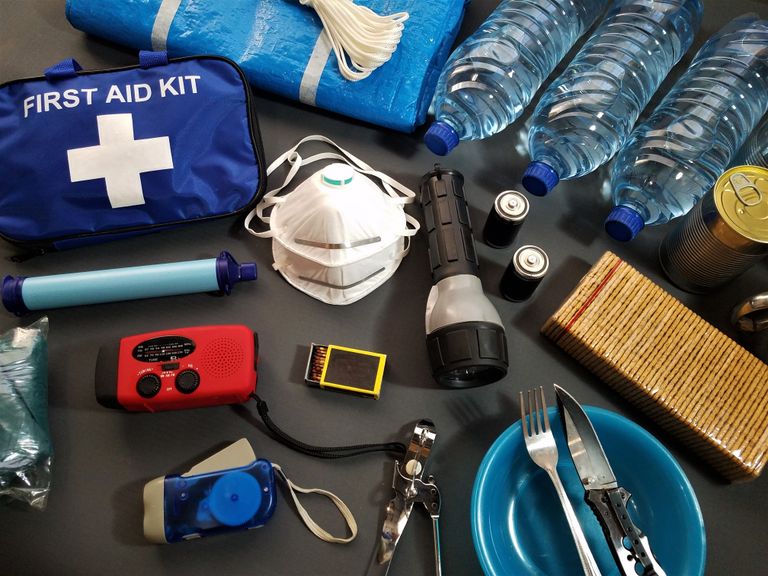
The federal government’s preparedness site has a short shopping list for the food side of an emergency kit, and the first line on it pairs ready-to-eat canned meats, fruits and vegetables with a can opener. Ready.gov’s companion supply checklist spells out that the opener should be a manual one, since an electric model is useless once the power goes out.
With winter storm season starting across much of the country, the list is a practical place to begin. It covers what to buy, how to store it and which cans to throw away no matter how the food inside looks.

What Ready.gov Puts on the Emergency Food List
The Ready.gov food page advises households to store at least a several-day supply of non-perishable food. Its suggested items, in the order the page lists them, are:
Ready-to-eat canned meats, fruits and vegetables, plus a can opener. These need no refrigeration and, as the page notes, commercially canned food can be eaten straight from the can without heating.
Protein or fruit bars. Shelf-stable and easy to hand out.
Dry cereal or granola. A no-cook breakfast that keeps well in a sealed container.
Peanut butter. A pantry staple that needs no cooking or cold storage.
Dried fruit and canned juices. Both hold up on a shelf for long stretches.
Non-perishable pasteurized milk. Shelf-stable cartons fill in for the fridge.
The page also lists high-energy foods, food for infants and comfort foods. Its broader advice is to choose foods the household will actually eat, rather than stocking items that will sit untouched.
A tidy shelf makes the stockpile easier to rotate, and Frenzhub’s roundup of kitchen organization ideas includes ways to keep cans visible so older ones get used first. Budget matters too, and Frenzhub’s list of low-cost foods that even the wealthy eat overlaps heavily with the Ready.gov list, from peanut butter to canned goods.
Why the Can Opener Has to Be Manual
The Ready.gov basic supply kit checklist lists a “manual can opener (for food)” alongside water and a several-day supply of non-perishable food. The same checklist recommends one gallon of water per person per day for several days, for drinking and sanitation.
The American Red Cross also puts a manual can opener on its own list. Its survival kit supplies page sets out a firmer timeline than Ready.gov: a 3-day supply of non-perishable, easy-to-prepare food and water for an evacuation, and a 2-week supply for sheltering at home. The Red Cross also suggests baby supplies such as formula and baby food, and pet supplies including food and a bowl. Households that camp often own much of this gear already, and Frenzhub’s piece on why family camping is a good way to bond and unplug covers the kind of camp kitchen setup that doubles as backup equipment.
Food is only part of the plan. Craftingyourhome.com notes that most families are not prepared with the emergency cash needed at home, which matters when card readers at stores go down along with the power.
Which Cans to Throw Out
Ready.gov is blunt about damaged cans. It says not to eat from cans that are swollen, dented or corroded, “even though the product may look safe to eat.” It also says to skip any food that looks or smells abnormal, even when the can itself looks fine.
Its other storage rules are simple:
Keep food covered. Store it in covered containers and keep utensils clean.
Toss anything that touched floodwater. The page says food that has come into contact with contaminated floodwater should be thrown out.
Watch the 2-hour mark. Food left at room temperature for two hours or more, or food with an unusual odor, color or texture, should be discarded.
The supply kit page adds three maintenance habits: keep canned food in a cool, dry place, replace expired items as needed, and rethink the household’s needs every year as the family changes. For the cold-storage side of the plan, Craftingyourhome.com has a list of things never to do with a full freezer when the power goes out.

When the Refrigerator Goes Dark
The pantry list exists because the fridge stops being reliable during an outage. According to the federal FoodSafety.gov power outage chart, a refrigerator keeps food safe for up to 4 hours if the door stays closed. A full freezer holds a safe temperature for about 48 hours, and a half-full freezer for about 24 hours.
Ready.gov uses 40 degrees Fahrenheit as the line for refrigerated food. Perishables such as meat, poultry, fish, eggs and leftovers that have been above 40 degrees for two hours or more should be discarded. Thawed food that still contains ice crystals can be refrozen, the page says. Its short rule for anything uncertain is “When in doubt, throw it out.”
Dry ice is another option Ready.gov raises. It says 25 pounds of dry ice will keep a 10-cubic-foot freezer below freezing for three to four days, and advises finding a local seller before an outage, keeping the dry ice away from food and handling it with dry, heavy gloves.
Cooking Without Power
Ready.gov lists candle warmers, chafing dishes, fondue pots and a fireplace as indoor options for warming food. Charcoal grills and camp stoves are for outdoor use only.
To heat food in its can, Ready.gov says to remove the label, wash and disinfect the can with a diluted bleach solution of one part bleach to 10 parts water, and open it before heating.
The National Weather Service adds a winter-specific angle. Its guidance on preparing before a winter storm recommends stocking extra food and water, with an emphasis on items like dried fruit, nuts and granola bars that need no cooking or refrigeration. It also warns never to run a generator in an enclosed space and to refuel heating supplies before they run empty, since deliveries can be delayed for days after a storm.
Taken together, the agencies’ advice lands on the same short list: shelf-stable foods the household likes, a manual opener, enough water, and a habit of checking cans and dates before the next storm arrives.
This article was produced with AI assistance and edited for accuracy against the sources linked above.
Image: MSLONAG BOAKS TEN – CC0/Wikimedia Commons