An empty jar of pumpkin pie spice does not have to stall holiday baking. New Mexico State University’s ingredient substitution chart says 1 teaspoon of the blend can be replaced with 4 common pantry spices: 1/2 teaspoon cinnamon, 1/4 teaspoon ginger, 1/8 teaspoon allspice and 1/8 teaspoon nutmeg.
The formula appears in “In a Pinch: Ingredient Substitution,” Guide E-131 from the NMSU Cooperative Extension Service, a chart of kitchen swaps for ingredients that run out at the wrong moment. With Thanksgiving on Nov. 26, the same chart also covers allspice, apple pie spice, brown sugar and fresh herbs.

The 4-Spice Formula, Measured Out
The NMSU ingredient substitution guide lists the pumpkin pie spice swap as a teaspoon-for-teaspoon replacement. Cinnamon makes up half of the mix, ginger a quarter, and allspice and nutmeg split the final quarter.
Scaling the formula is simple math. A pie recipe that calls for 2 teaspoons of pumpkin pie spice would need 1 teaspoon cinnamon, 1/2 teaspoon ginger, 1/4 teaspoon allspice and 1/4 teaspoon nutmeg. Doubling or tripling the numbers and storing the extra in a small jar gives a ready supply for the rest of the season.
The store-bought version follows a similar pattern. Pumpkin pie spice is an American blend developed to flavor pumpkin pie filling, and it contains no pumpkin. It is generally made from ground cinnamon, nutmeg, ginger and cloves, sometimes with allspice, and McCormick & Company introduced a commercial blend in 1934.
The flavor also moved well beyond pie. According to the same Wikipedia entry, Starbucks began selling its pumpkin spice latte nationally in fall 2004, which touched off a seasonal run of spiced products. For households that brew at home, this comparison of the Keurig K-Express and Ninja Fresh Brew weighs single cups against a full pot for fall mornings.
Measuring tiny amounts like 1/8 teaspoon is where a set of small spoons earns its drawer space, and these clever kitchen tricks for home cooks include other shortcuts for busy baking days.
No Allspice? The Chart Has a Second Swap
A cook missing allspice as well can still follow the NMSU chart. It lists 1 teaspoon of allspice as replaceable with 1/2 teaspoon cinnamon and 1/2 teaspoon ground cloves.
That pairing makes sense given the spice’s name. Allspice is the dried unripe berry of the Pimenta dioica tree, and the English coined its name as early as 1621 because it seemed to combine the flavors of cinnamon, nutmeg and clove. In the pumpkin pie spice formula, the 1/8 teaspoon of allspice could become a small pinch each of cinnamon and cloves.
The guide also gives an apple pie spice formula: 1 teaspoon equals 1/2 teaspoon cinnamon, 1/4 teaspoon nutmeg and 1/8 teaspoon cardamom. Bakers choosing fruit for that pie can look over these apple varieties bakers reach for in the fall.
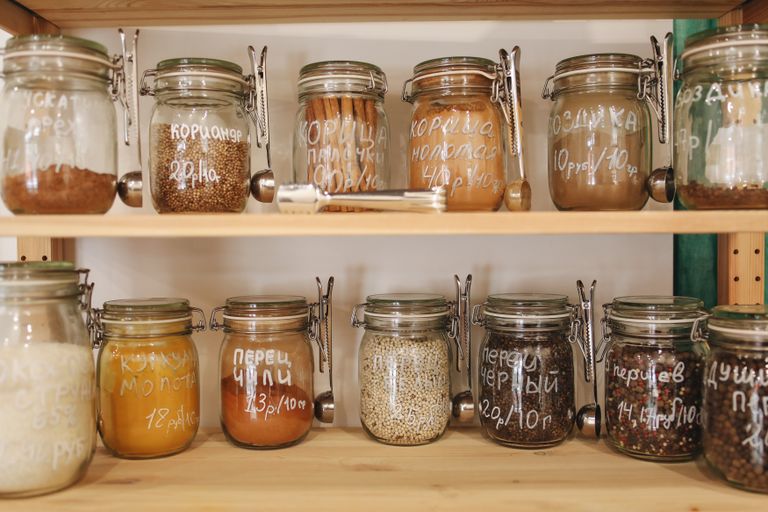
Keeping these spices in one spot makes the swap faster. These small kitchen ideas include ways to fit a spice collection into tight cabinets.
Other Holiday Baking Swaps on the Chart
Brown sugar is another common shortfall in November. According to the NMSU guide, 1 cup of firmly packed brown sugar can be replaced with 1 cup of granulated sugar. The swap works in a pinch, though the finished bake will lack the molasses note of brown sugar.
For stuffing and savory sides, the chart lists 1 tablespoon of fresh, finely cut herbs as equal to 1 teaspoon of dried herbs, a 3-to-1 ratio. Ginger has its own line: 1/8 teaspoon of powdered ginger can be replaced with 1 tablespoon of candied ginger rinsed of its sugar and finely cut, or 1 tablespoon of raw ginger.
Honey also appears. One cup of honey can be swapped for 1 1/4 cups of sugar plus 1/4 cup of liquid, using a liquid the recipe already calls for. Plenty of these staples have long sat within reach in home kitchens, as this list of kitchen staples grandmothers kept within arm’s reach shows.

A Cousin Blend Across the Atlantic
Pumpkin pie spice has a close relative in British kitchens. Mixed spice, also called pudding spice, is a British blend of sweet spices in which cinnamon is the dominant flavor, with ginger and allspice. It is used in baking and with fruits and other sweet foods.
The idea is far older than the jar. Wikipedia notes that the 1390s French household book Le Ménagier de Paris includes a mix of 17 parts ginger, 4 parts each cinnamon and sugar, and 2 parts each cloves and grains of paradise. The first known American cookbook, Amelia Simmons’ American Cookery from 1796, seasons its “Pompkin” with mace, nutmeg and ginger.
In the Netherlands, a similar mix called koekkruiden or speculaaskruiden flavors cold-season pastries such as speculaas, and it can contain cardamom along with cinnamon, cloves, allspice and sometimes nutmeg. The overlap explains why a well-stocked spice drawer can stand in for any of these blends.
After the Pie Comes Out of the Oven
Once the spice question is solved, storage comes next. Iowa State University Extension and Outreach’s AnswerLine notes that the USDA advises refrigerating egg-rich pies, a group that includes pumpkin and pecan, after baking and cooling unless they will be served within 2 hours.
AnswerLine recommends cooling the pie completely, chilling it uncovered and then wrapping it loosely, since covering a warm pie traps condensation that leads to a soggy crust. Pumpkin and pecan pies can also be frozen whole, in halves or in slices, and hold their best quality for about 1 to 2 months.
There is one exception. Store-bought pies sold unrefrigerated are made with shelf-stable ingredients and typically do not need the refrigerator until they are cut, according to AnswerLine. For clean slices of a chilled pie, the extension service suggests letting it sit out for a few minutes and cutting with a sharp serrated knife, drawing it through pumpkin and sawing through pecan.
This article was produced with AI assistance and edited for accuracy against the sources linked above.
Image: Robert Dell – CC BY-SA 4.0/Wikimedia Commons