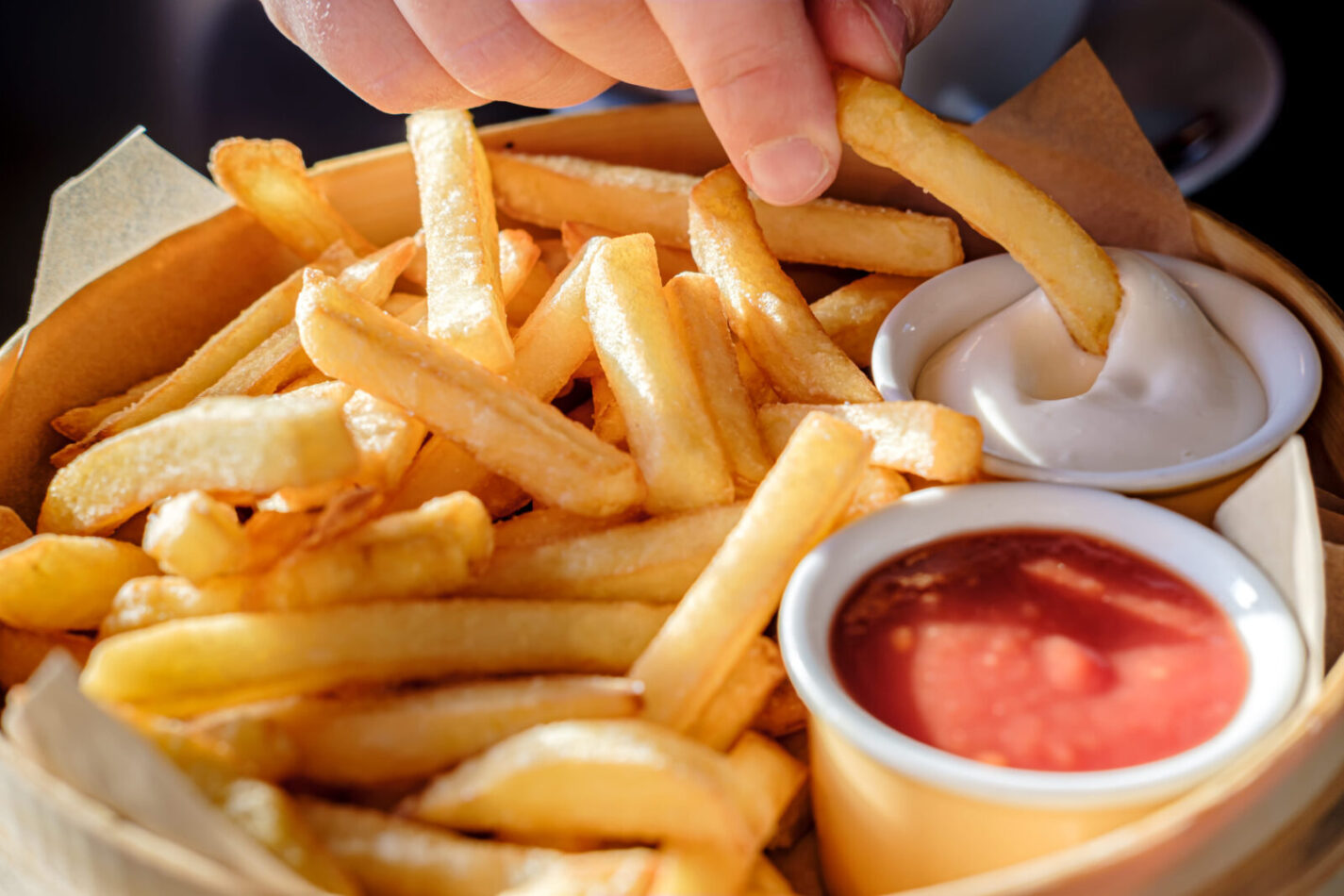
There’s something irresistible about a basket of freshly cooked French fries. The golden edges crackle between your fingers, the middle stays soft and fluffy, and somehow, the last few fries at the bottom of the basket are just as tempting as the first.
Yet making that same texture at home can be surprisingly difficult. One batch turns out beautifully crisp, while the next becomes limp before you even reach for the ketchup.
The difference often comes down to preparation rather than a mysterious ingredient.
Five Guys confirms that it cooks its fries twice, while McDonald’s uses potatoes that have been blanched, partially fried and frozen before reaching restaurants. Both approaches involve more planning than simply dropping raw potatoes into hot oil.
Here are seven techniques that help explain what goes into restaurant-style fries and how home cooks can borrow the ideas.
Choose Your Potatoes Carefully
Great fries begin long before the oil starts bubbling. Restaurants often pay close attention to the potatoes they use because variety and preparation influence the finished result.
McDonald’s identifies Russet Burbank and Shepody among the potato varieties used for its U.S. fries. Meanwhile, Five Guys says it sources potatoes carefully and cuts them inside its restaurants.
For home cooks, the lesson is to be deliberate about the potatoes rather than grabbing whichever ones happen to be available. Serious Eats’ tested thin-fries recipe recommends russets cut into uniform quarter-inch sticks.
That consistency helps make the cooking process more predictable, giving each fry a better chance of reaching the same texture.
Cook the Fries Twice Instead of Once
The secret to a crisp exterior and fluffy center isn’t necessarily one long session in hot oil. Sometimes, it’s two separate cooking stages.
Five Guys publicly confirms that its fries are cooked twice. McDonald’s follows a different process, with suppliers blanching and partially frying potatoes before freezing them for restaurant preparation.
Food writer J. Kenji López-Alt also explored double-frying through original kitchen experiments published by Serious Eats. His testing found that double-fried potatoes developed a thicker, longer-lasting crisp exterior than the single-fried version tested.
The practical lesson is simple: give the potatoes an initial cooking stage before their final crisping. Different recipes require different temperatures and timings, so follow a tested method rather than assuming every restaurant uses the same settings.
Don’t Automatically Dismiss Frozen Potatoes
Fresh-cut potatoes sound appealing, but freezing isn’t necessarily a shortcut that compromises the final result. McDonald’s confirms that its fries arrive at restaurants frozen, following preparation by its suppliers. That process is deliberate, not an accident of storage.
Serious Eats also tested freezing potatoes between cooking stages and found that it helped produce a fluffy interior in its particular recipe. The explanation involved ice crystals affecting the potato’s structure and the movement of moisture during cooking.
Interestingly, Five Guys takes the opposite approach, emphasizing that its potatoes are never frozen. Both methods demonstrate that what matters is how the entire process works together.
For home cooks, freezing can be a useful step when following a tested recipe, while commercially frozen fries should be cooked according to their package directions.
Keep the Oil Temperature Steady
You’ve carefully prepared your potatoes, heated the oil, and added a generous handful. Then the temperature drops, and the fries don’t behave quite as expected.
Professional kitchens pay attention to this problem because adding too much food at once changes the cooking conditions.
Frozen-potato supplier Lamb Weston identifies overloaded baskets and low oil temperatures among common causes of disappointing results.
Its guidance recommends filling frying baskets no more than halfway, shaking them during cooking and following the product’s instructions. Serious Eats also recommends frying in batches and allowing the oil to recover its temperature between additions. At home, resist the temptation to cook everything at once.
A smaller, carefully managed batch may take more patience, but it gives you greater control over the finished texture.
Related: Foods You Should Never Reheat in the Microwave and Better Ways to Reheat Them explains why French fries and other crispy foods can lose their crunch during reheating.
Understand How Oil Changes the Flavor
Potatoes are the main ingredient, but cooking oil also plays a role in the final flavor. And major restaurant chains don’t necessarily use the same kind.
Five Guys says its fries are cooked in 100% refined peanut oil. McDonald’s, meanwhile, publishes a U.S. ingredient list that includes a vegetable-oil blend and natural beef flavor. That means two fries made from similar potatoes can still have noticeably different flavor profiles.
The McDonald’s ingredient information also makes clear that its current U.S. recipe isn’t simply potatoes fried in pure beef tallow. For home cooks, choosing an oil suited to the recipe is part of developing a consistent result.
There’s no verified evidence that one oil automatically produces everyone’s favorite fry. Taste remains personal.
Know That Some Commercial Fries Have Special Coatings
Here’s a detail that can surprise anyone trying to recreate restaurant fries from scratch. Some commercial frozen fries aren’t made from plain potatoes alone.
Lamb Weston’s REALLY Crunchy Fries, for example, contain 84% potatoes and a 9% coating, according to the supplier’s published product information. The coating includes ingredients such as modified potato starch, rice flour, potato starch and seasonings.
The company markets that particular product as retaining its crunch for up to 30 minutes. That performance claim comes from the manufacturer rather than an independently verified comparison.
Still, the ingredient list reveals an important distinction: a coated commercial fry isn’t quite the same product as a freshly cut potato stick.
If you’re comparing homemade fries with restaurant versions, remember that the starting ingredients may differ considerably.
Season and Serve at the Right Moment

Even beautifully cooked fries can lose some of their appeal if they’re left sitting too long. That final stage between the fryer and the plate deserves just as much attention as the cooking itself.
Serious Eats’ tested recipe recommends draining the finished fries, seasoning them immediately and serving without unnecessary delay.
Lamb Weston similarly advises restaurant operators to drain fries properly, season them evenly and move them promptly to the appropriate serving or holding station.
Five Guys offers lightly salted fries alongside a Cajun-seasoned version, showing how finishing choices can create different flavor experiences. For home cooks, the takeaway is to have everything ready before the final batch comes out.
Put the salt, serving dish and any preferred seasonings within reach. Once the fries are finished, don’t make them compete with the rest of your dinner preparations for attention.
Great French Fries Are About Technique, Not One Secret Ingredient
The difference between disappointing homemade fries and an impressive restaurant-style batch often involves several small decisions working together.
Potato variety, consistent cutting, staged cooking, freezing, oil temperature, coatings and seasoning all help shape the result.
Five Guys and McDonald’s demonstrate that restaurants can follow very different preparation systems while aiming for consistent fries. The experiments published by Serious Eats show that home cooks can apply some of the same principles without needing to reproduce a restaurant’s entire operation.
The next time your fries don’t turn out quite the way you hoped, don’t assume you need a secret seasoning blend or expensive equipment.
Sometimes, the difference is as simple as cooking in smaller batches, following a reliable double-fry method and serving those golden potatoes while their edges still sing.