Philadelphia’s tomato pie has a habit of surprising first-time customers. It looks enough like pizza to suggest melted cheese and a hot slice, then arrives as a square of springy bread topped with tomato sauce and a light dusting of grated cheese. Often, it is served at room temperature. Nothing has gone wrong with the order. That presentation belongs to a longstanding Italian bakery tradition, giving tomato pie a different identity from the city’s steak-and-cheese sandwiches.
The short answer is that these foods come from different kinds of preparation and service. A cheesesteak pairs cooked shaved beef with cheese inside a roll; Philadelphia-style tomato pie is baked in a pan, cut into squares and commonly allowed to cool before serving. It does not depend on a blanket of melted mozzarella. Its defining elements are bread, tomato sauce and the baker’s technique, not a cheese pull. Room temperature is customary, although serving it hot is also part of its documented tradition.
It’s a Bakery Specialty, Not a Pizza That Missed Its Reheating
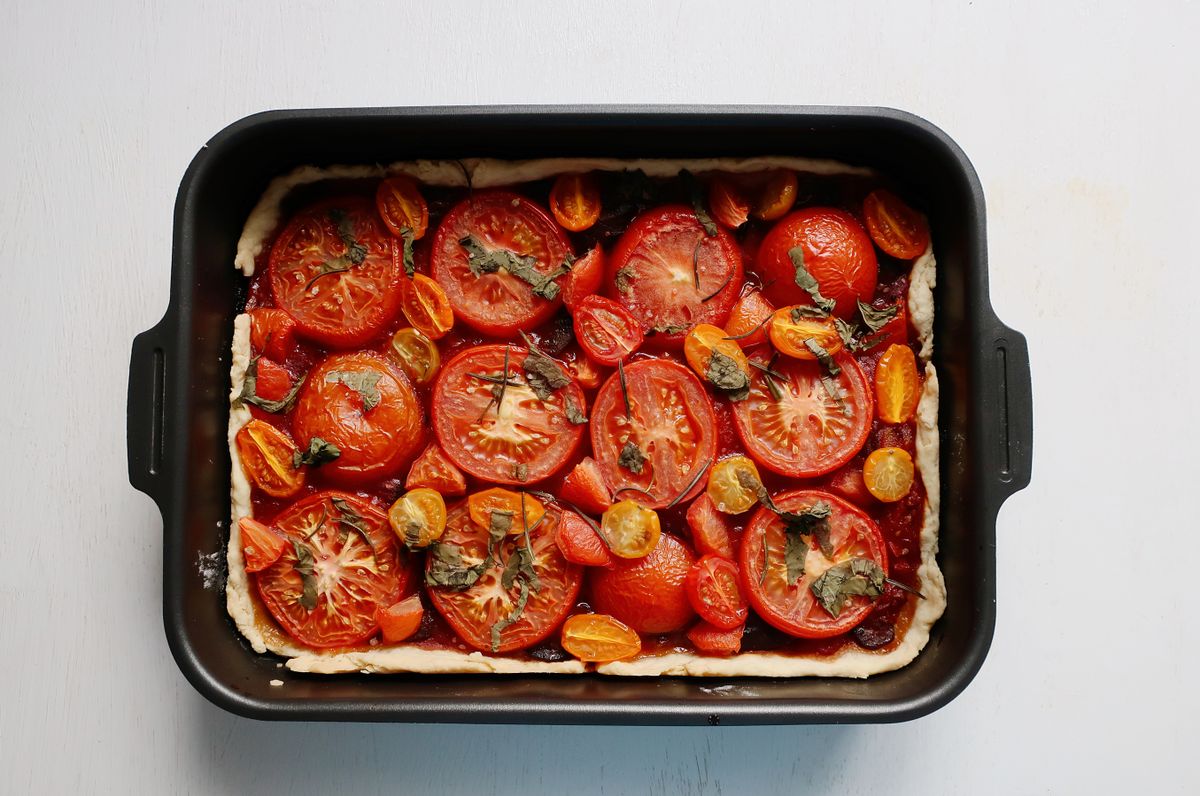
Start with the foundation. Philadelphia tomato pie has a thick, spongy crust resembling focaccia, rather than the thin base many visitors associate with a pizza slice. Tomato sauce, often called gravy locally, covers the surface, followed by a modest sprinkling of Parmesan or Romano. The Encyclopedia of Greater Philadelphia describes the traditional pie as pan-baked, historically in a brick oven, then cut into square pieces. That combination explains what customers should expect before temperature even enters the conversation: bread and sauce take the lead.
Vincent Iannelli,the third-generation operator of Iannelli’s Brick Oven Bakery, summed up the essentials in reporting by Mari Uyehara for The New York Times, excerpted on the bakery’s website. “You need three basic ingredients,” he said. “You need a good gravy, a good dough and an amazing oven.” His explanation leaves little room for treating tomato pie as ordinary pizza with something missing. The dough, sauce and baking are the point, while cheese plays a much smaller role.
The room-temperature service fits that established bakery identity. Uyehara describes Philadelphia tomato pie being sold primarily by Italian bakeries alongside seeded loaves and cannoli. Visit Philadelphia likewise identifies chilled or room-temperature service as characteristic of the dish. That is different from saying it must never be eaten warm: the regional encyclopedia explicitly notes that it can be served hot. The useful distinction is tradition, not a rigid temperature rule or proof that a customer has received yesterday’s leftovers.
Related: Want to Be Happier? These 7 Everyday Habits Are Worth Rethinking
Its Philadelphia Story Began Before the Cheesesteak Became an Icon
Tomato pie’s local roots reach into the early twentieth century, when immigrants from southern Italy brought their food traditions to Philadelphia. Its foundation is linked to sfincione palermitano, a focaccia-like specialty from Palermo, Sicily. The Philadelphia version developed its own character rather than reproducing the Sicilian dish unchanged. Where the Palermo preparation includes onions, anchovies and caciocavallo cheese, Philadelphia bakers made seasoned tomato gravy central to their pies, developing individual recipes with different combinations of herbs and seasonings.
The bakery names tell part of that history. Iannelli’s opened in 1910, followed by Sarcone’s in 1918; later establishments, including Gaeta’s and Cacia’s, helped carry the specialty forward. According to the Encyclopedia of Greater Philadelphia, these neighborhood bakeries were crucial to tomato pie becoming a regional food. What began as an inexpensive offering within Italian communities reached a broader audience, while customers continued developing loyalties to particular bakeries, sauces and slices. There was no need for every baker to produce an identical pie.
One frequently repeated origin story deserves a little caution. Some oral traditions describe tomato pie as a profitable use for dough left over from baking hoagie rolls, the encyclopedia notes. That is not the same as a conclusively documented invention story, and the source also describes bakeries making their tomato pies from scratch each morning. The history supports a close relationship with bread baking. It does not justify confidently claiming that leftover dough, or a particular customer’s lunch schedule, single-handedly explains the dish’s creation or serving temperature.
The cheesesteak followed a separate path. Visit Philadelphia credits Pat Olivieri with beginning to sell the sandwiches in 1930 and describes today’s traditional version as shaved ribeye and a choice of cheese in a roll. Provolone, American and Cheez Whiz are among the familiar options. Compare that with tomato pie’s pan-baked bread, sauce and grated cheese, and the difference becomes straightforward: one centers on cooked beef and cheese inside bread; the other makes the bread itself a major part of the dish.
How to Order Without Expecting the Wrong Kind of Pie
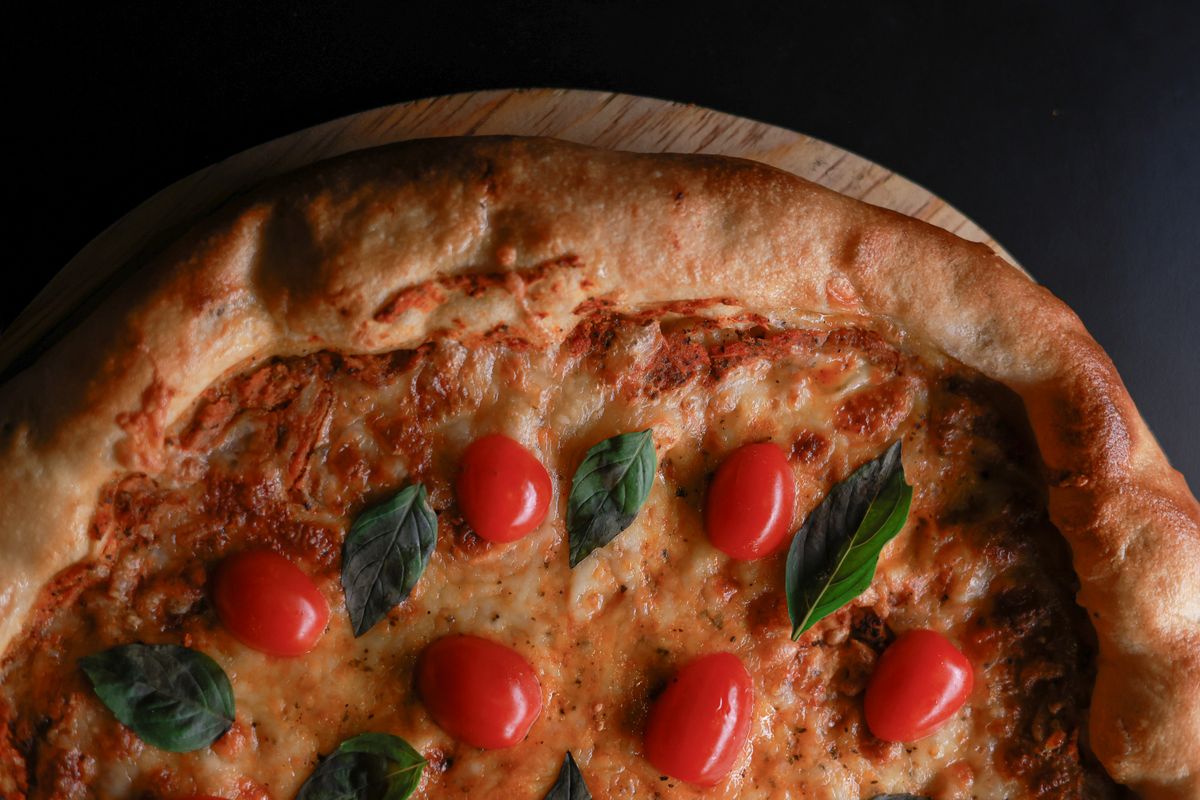
For a first taste, think bakery square rather than triangular pizza slice. Visit Philadelphia lists Sarcone’s, Cacia’s and Carangi Baking Company among South Philadelphia’s tomato-pie institutions, with other examples around the city and suburbs. The bakery matters because recipes vary: some bakers age their dough, others use different dough preparations, and each has its own approach to the sauce. Comparing those differences is more useful than assuming that one slice establishes exactly how every tomato pie in the region should taste.
Geography can also change what the name means. Trenton, New Jersey, has its own tomato-pie tradition, typically round and made with more cheese and toppings. The Encyclopedia of Greater Philadelphia describes that style as resembling “a pizza in reverse,” distinguishing it from Philadelphia’s thicker bakery pie. Both styles appear in the wider region, so the words “tomato pie” alone do not guarantee the same dish everywhere. In Philadelphia’s classic bakery context, expect the springy, square-cut version with sauce prominently on display.
So there is no need to ask where the melted mozzarella went or assume a room-temperature square needs rescuing.Philadelphia tomato pie offers a different expression of the city’s food culture: Italian American bakery history, distinctive dough and a sauce recipe worth returning for. Cheesesteaks may deliver the familiar beef-and-melted-cheese combo, but tomato pie highlights simpler components. Pick your bakery, choose a corner or center piece, and enjoy the square for what it is, not for the hot pizza slice it never promised to be.
Other Posts You Might Like
- 11 Subtle Signs Someone May Be Living With Deep Unhappiness
- 3 Reasons Women Need to Be Very Selfish Just Like Men: Why Being Too Selfless Can Destroy Their Happiness