Forget the maple syrup. Vietnamese bánh xèo belongs to a different pancake conversation: thin, savory, crisp-edged, and filled with shrimp, pork, mushrooms, and bean sprouts. It arrives folded over, often looking a little like an oversized omelet, but the resemblance is misleading. In cookbook author Andrea Nguyen’s southern-style preparation, turmeric, not eggs, gives it the golden color, and rice flour forms the batter’s foundation.
What makes bánh xèo distinctive is the whole package: the sizzling batter, the crunchy shell, the savory filling, and the fresh greens that accompany it. Rather than eating the folded pancake alone, diners can cut it into pieces, tuck them into lettuce with herbs, and dip the bundles in nước chấm. That combination puts warm and cool, crisp and tender, rich and tangy into the same bite.
Even the name draws attention to the cooking. In an excerpt from her cookbook Vietnamese Food Any Day,published by The Splendid Table,Nguyen explains that these rice crepes “are named for the sizzling sound they make while cooking.” That sizzle is more than kitchen background noise: Her instructions use it as a clue that the skillet is hot enough for the batter. This pancake announces itself before it reaches the table.
The Golden Shell Has a Personality All Its Own
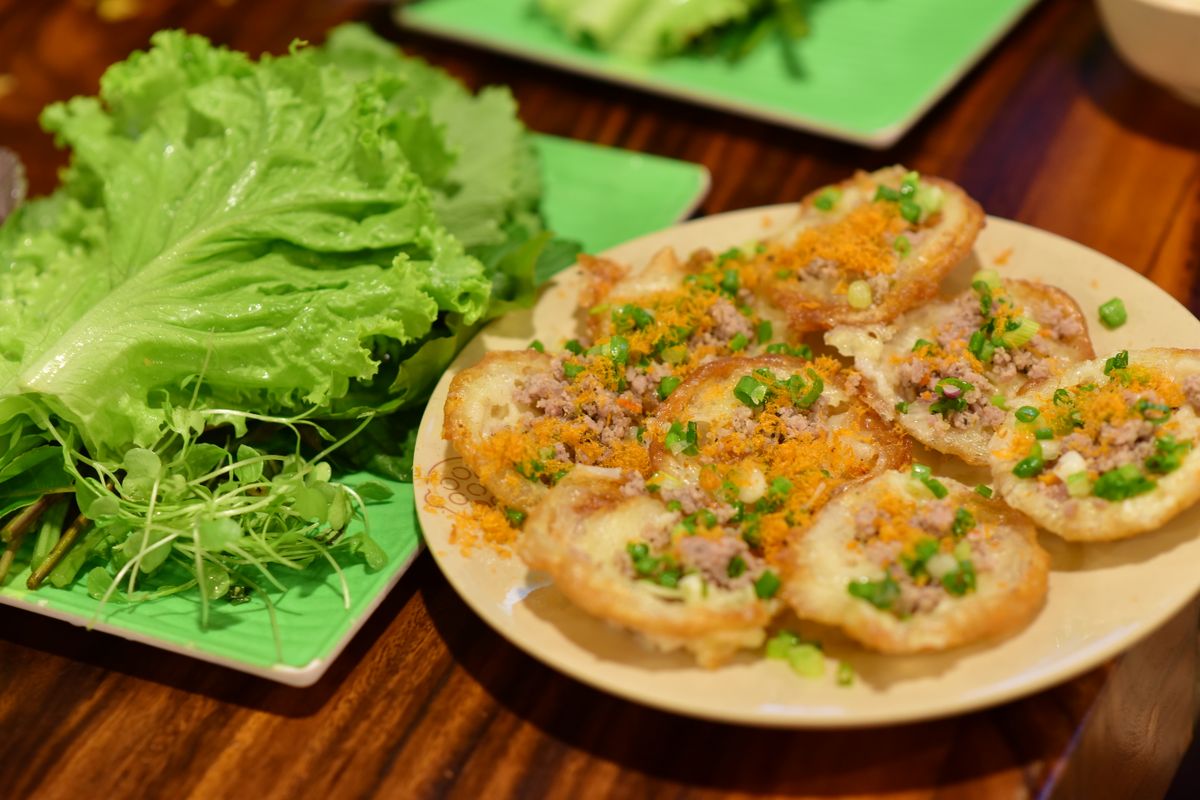
The omelet comparison is understandable, but it misses what makes the shell special. “These crepes are yellow and folded over like an omelet, but don’t contain eggs,” Nguyen writes of her recipe. Her batter combines white rice flour, cornstarch, salt, turmeric, water, and unsweetened coconut milk. The goal is not a thick, fluffy pancake. The batter is swirled around the pan to create a thin layer that surrounds the filling and crisps as it cooks.
Nguyen’s supermarket-friendly version also shows how much the handling of rice flour matters. She writes that supermarket white rice flour initially gave her gritty results until she tried hotter water, which softened the rice starch and produced a finer-textured crepe. Her batter rests for 30 to 45 minutes before cooking, reaching a consistency she compares to half-and-half. These details belong to her tested formula, not to a set of rules for every bánh xèo recipe.
Regional variety matters, too, so one giant yellow pancake shouldn’t stand in for every version. Vietnam’s official tourism website distinguishes between smaller Central-region bánh xèo and larger “Western” versions available in Ho Chi Minh City. It describes the Central pancakes as smaller than a hand in diameter, while the larger version contains fillings such as shrimp, pork belly, bean sprouts, and beans. Size and filling are part of the dish’s range, not evidence that one preparation is the only correct one.
That flexibility extends to contemporary home recipes. Nguyen’s Bon Appétit version uses shrimp, red cabbage, onion, and sugar snap peas, with mushrooms as an optional addition. Her Vietnamese Food Any Day recipe includes a meatless variation using tofu or tempeh, plus extra mushrooms. The important distinction is between describing a particular recipe and declaring every ingredient universal. Bánh xèo has recognizable characteristics without requiring every cook to fill it identically.
The Crunch Comes From More Than a Hot Pan
A crisp shell takes a little choreography. Nguyen describes her cooking approach as “Fry/steam/fry,” which explains why simply pouring batter into a skillet isn’t the whole process. In her cookbook recipe, the filling is briefly stir-fried first, then the batter is stirred vigorously and poured around it. The cook lifts and swirls the skillet so the batter spreads across the bottom and sets around the meat, shrimp, and vegetables.
Next, bean sprouts go on one side, and the pan is covered briefly so they soften slightly. The lid then comes off, more oil is drizzled around the rim, and cooking continues until the crepe becomes crisp from the edge toward the center. That final uncovered stage matters: A browned border alone is not the whole target. Nguyen tells cooks to peek underneath and keep frying if the rest of the crepe needs more time.
For home cooks, the reassuring part is that adjustment is expected. In Bon Appétit, Nguyen advises, “Making these crepes is akin to making pancakes: adjust as you go. Also be patient.” Batter that does not sizzle signals insufficient pan heat; batter that bubbles but resists swirling may call for lower heat, a little more water, or both. Her instructions also allow for a fold that breaks in the middle. Dinner does not need a flawless hinge.
Related;If Your Dad Had These 11 Hobbies, You Were Probably Lucky to Grow Up With Him
The Lettuce and Dipping Sauce Are Part of the Meal
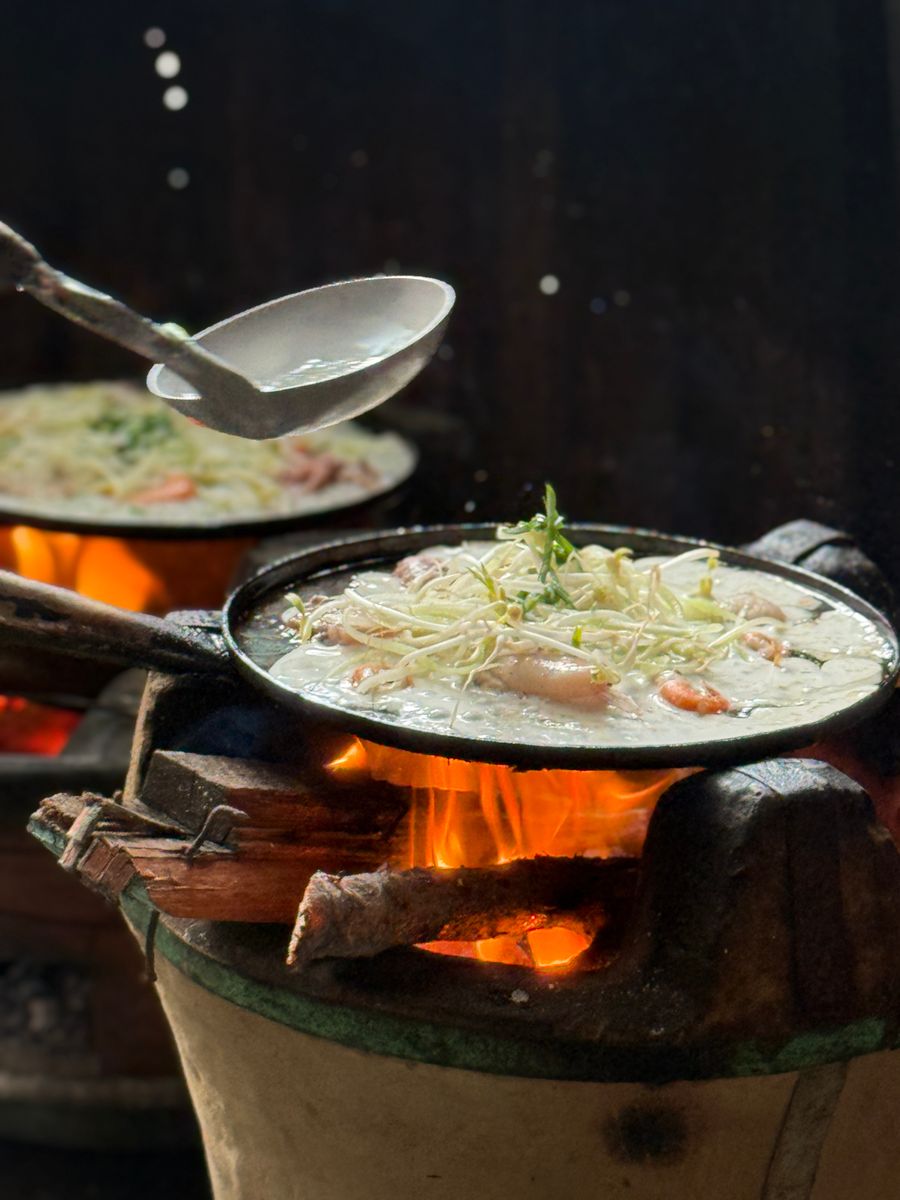
If bánh xèo arrives with a generous plate of greens, do not treat them as decoration. Nguyen’s serving instructions call for a palm-sized lettuce leaf topped with a manageable piece of crepe and a few herb leaves. Fold everything into a bundle, then dip. Kitchen scissors can help divide the pancake at the table, making its impressive size much less intimidating. The folded crepe is the starting point, not necessarily the finished bite.
Nước chấm supplies another layer of flavor. In Nguyen’s recipes, the dipping sauce combines fish sauce, lime juice, sugar, and water, with additions like chiles and garlic. Its balance matters enough that she compares making it to preparing a vinaigrette: “taste, taste, taste.” The sauce seasons the fresh lettuce and herbs as well as the crepe, connecting ingredients that would taste quite different if eaten separately.
Serve bánh xèo soon after frying, as Nguyen recommends, and have the greens and sauce ready before you start cooking. That way, the crisp shell reaches the table while it can still deliver its defining texture. No syrup, no stack, and no need to mistake it for an omelet: This savory pancake comes with its own assembly ritual, and plenty of reasons to use your hands.
Other Posts You Might Like
- 8 Grandmillennial Hobbies That Bring Old School Charm Back Home
- Having a Dad with Any of These 6 Hobbies Means You Were Likely Raised by a Great Man