Food does not always spoil because you bought too much. Sometimes, the problem starts after you bring your groceries home.
From putting wet berries straight into the fridge to squeezing every last item onto the shelves, small storage habits can leave you with wilted greens, moldy fruit, and leftovers that lose their appeal sooner than expected.
The good news? You do not need a new refrigerator to make your groceries last longer. A few practical changes can preserve freshness, improve storage, and help you use the food you already have better.
Putting a Whole Pot of Leftovers Straight Into the Fridge
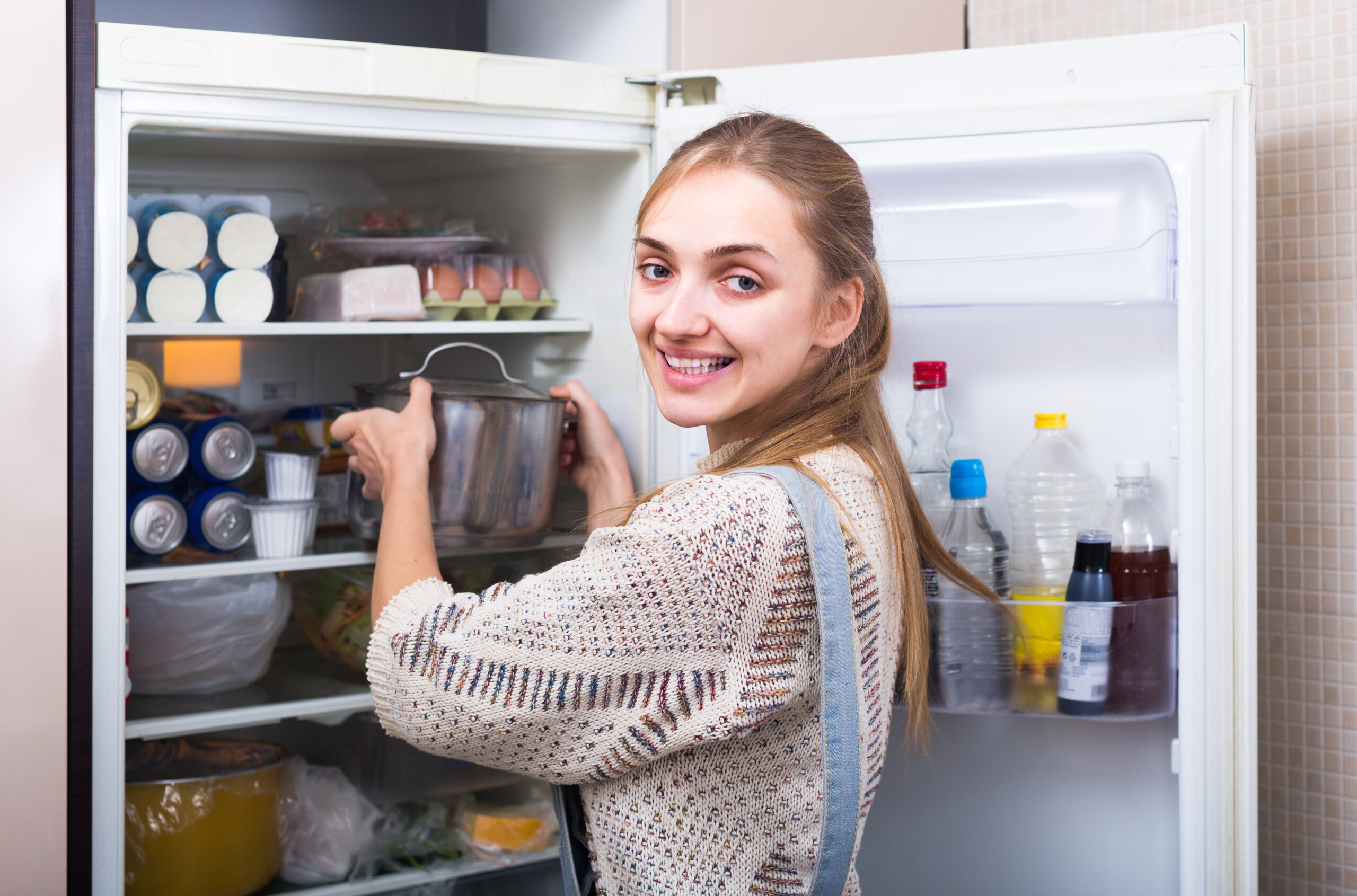
Refrigerating a large pot of soup, stew, or chili without dividing it into smaller portions can slow cooling in the center. The USDA recommends transferring large quantities into shallow containers, so they cool faster, rather than leaving them in one deep pot.
Refrigerate perishable food within two hours, or within one hour when the surrounding temperature exceeds 90°F.
You don’t need to leave a pot on the counter until it’s completely cold; hot food can go straight into the refrigerator, or you can cool it quickly in an ice-water bath first. Smaller portions make this process easier.
Trusting the Temperature Dial Without Checking the Actual Temperature
Relying on the refrigerator’s numbered dial without checking the inside temperature is an easy mistake. The U.S. Food and Drug Administration recommends keeping your refrigerator at 40°F or below, approximately 4°C, and using an appliance thermometer to verify the temperature.
A dial setting doesn’t necessarily reflect the actual temperature, so a refrigerator that feels cold may not be cold enough for proper food storage.
Check the temperature periodically and adjust the setting as needed rather than assuming your original setting will always work.
Keeping Eggs in the Refrigerator Door
Storing eggs in the built-in door tray seems convenient, but the refrigerator door is a warmer location than the interior. The FDA recommends keeping refrigerated shell eggs in their original carton on an inside shelf, where they are better positioned for consistent cold storage.
The carton also keeps the eggs together in their original packaging. For U.S. refrigerated eggs, FDA guidance recommends using shell eggs within three weeks for the best quality.
That makes the interior shelf a better choice than the door, even if the built-in egg holder seems like the obvious place.
Packing the Refrigerator Until There Is No Room Left
Filling every shelf and cramming groceries into every available gap can disrupt cold-air circulation. The FDA advises against overpacking refrigerators because air needs room to move around stored food to keep it properly chilled.
Instead of treating your refrigerator like a storage cupboard, leave space around items and keep air outlets clear, as the appliance’s instructions recommend. Before a large grocery run, check what is already inside and make room where necessary.
A full refrigerator isn’t automatically a problem, but one packed so tightly that air cannot circulate properly can make temperature control harder.
Washing Berries and Storing Them While They Are Still Wet
Rinsing strawberries and raspberries as soon as you get home and putting them away damp can encourage them to deteriorate faster. Utah State University Extension recommends washing berries close to when you plan to eat them and removing damaged or moldy berries before storing.
For ordinary short-term storage, refrigerate sound berries unwashed and rinse them gently under running water before eating. This simple change can help you avoid opening the refrigerator to find that a container of berries has already started to rot.
Related post: Is Your Fruit Going Bad Too Fast? Try These Simple Storage Tricks
Storing Lettuce Beside Apples
Keeping apples right next to lettuce and other sensitive greens may seem harmless when you are organizing groceries, but certain fruits release ethylene, a gas that can speed up unwanted changes in sensitive produce.
University of Minnesota Extension recommends keeping lettuce away from high-ethylene-producing crops, including apples and tomatoes.
Instead of putting every fruit and vegetable together just because there is room, separate produce with different storage needs.
Using the refrigerator’s produce compartments thoughtfully can help keep your greens fresh. Just remember that not every fruit produces the same amount of ethylene, and different vegetables respond differently.
Leaving Leafy Greens Exposed on a Shelf
Leaving lettuce and other leafy vegetables unpackaged in the refrigerator can cause them to lose moisture and become limp.
Cold air alone doesn’t prevent wilting, which is why Penn State Extension emphasizes moisture management to preserve produce quality.
Store greens in appropriate packaging and use the crisper drawer as your refrigerator recommends.
University of Minnesota Extension also recommends loosely closed plastic bags for lettuce to help retain moisture. The goal is to prevent the leaves from drying out without leaving them sitting in pooled water.
Leaving Cooked Food Uncovered
Putting an uncovered plate of leftovers in the refrigerator may seem like a harmless shortcut, especially when you plan to eat the food the next day.
However, exposed leftovers can dry out and absorb odors from other foods, making yesterday’s meal less appealing.
The USDA recommends wrapping leftovers or placing them in covered containers. When dividing large portions, use shallow containers so the food cools faster, then cover them for storage.
Remember, covering leftovers doesn’t make them last indefinitely; refrigerate leftovers and use them within three to four days, or freeze them for longer storage.
Ignoring Moldy Produce in the Drawer
Leaving a moldy strawberry or other soft produce among the rest can let the problem spread to neighboring items. The USDA advises discarding moldy soft fruits and vegetables, cleaning the affected storage area, and inspecting nearby food that may have touched the spoiled item.
Make it a habit to check your produce drawers regularly, especially when you buy delicate berries or other soft fruits.
Remove damaged items promptly rather than letting them sit unnoticed beneath newer groceries. You do not necessarily need to throw away every untouched item nearby, but you should inspect the remaining produce carefully.
Small Refrigerator Changes Can Make a Difference
Keeping food fresh is not just about buying the right amount; it is also about how you cool, cover, arrange, and store it once you get home. A thermometer, a little breathing room between groceries, and better habits for handling leftovers and produce can help you get more out of your weekly shop.