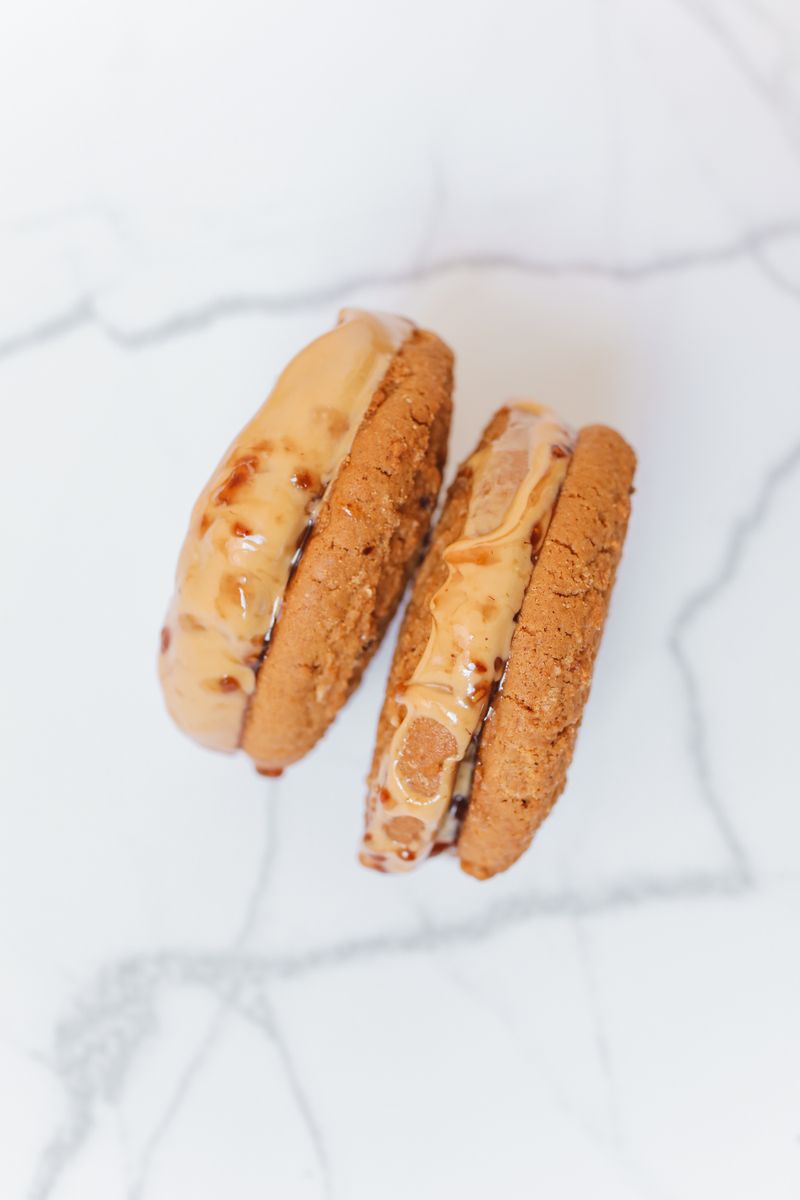
A Fluffernutter sounds like something a child invented after negotiating a little too successfully over lunch. The sandwich pairs peanut butter with it spread between slices of bread, turning a few pantry ingredients into a sweet, sticky New England institution. But its history is more complicated than its construction. Behind that wonderfully unserious name are competing marshmallow businesses, wartime shortages, clever advertising and a Massachusetts political argument that made national news.
First, untangle the difference between the sandwich and the product most closely associated with it. Marshmallow Fluff is a brand with roots in Somerville, Massachusetts, while peanut butter-and-marshmallow sandwiches appeared in promotional recipes before the name “Fluffernutter” arrived. Emma Curtis helped popularize an early version, Archibald Query developed the formula that became Marshmallow Fluff, and two entrepreneurial veterans built that formula into a business. No single person deserves credit for the whole story.
Before It Was a Fluffernutter, It Was a “Lidealrty Sandwich”
One important chapter begins in Melrose, Massachusetts, where siblings Emma and Amory Curtis began marketing Snowflake Marshmallow Crème in 1913. According to the New England Historical Society, other companies already sold similar products, so the Curtises did not invent marshmallow spread. Emma’s contribution was finding appealing ways to use it, then sharing those ideas through recipe brochures and other promotions. Selling a jar was one job; persuading households to make it part of their cooking was another.
During World War I, Emma promoted a peanut butter-and-marshmallow crème combination called the “Liberty Sandwich.” A promotional recipe published in 1918 paired those fillings with oat or barley bread, making it a recognizable predecessor of today’s sandwich rather than an entirely different creation. Her family connection supplies an especially memorable historical detail: Emma was Paul Revere’s great-great-great-granddaughter. That does not make the sandwich a Revolutionary-era food, but it does give its Massachusetts backstory an unexpected family-tree twist.
Meanwhile, another marshmallow enterprise was taking shape nearby. The official Marshmallow Fluff history dates Archibald Query’s Somerville operation to 1917, when he made the spread in his kitchen and sold it door to door. Wartime shortages forced him to stop, and after the war he had moved on to other work rather than restarting the business. He was, however, willing to sell his formula, a decision that gave two returning veterans an opportunity.
H. Allen Durkee and Fred L. Mower pooled their savings; Ford bought Query’s recipe for $500. According to the company’s historical account their partnership to manufacture Marshmallow Fluff was announced in a Lynn newspaper on May 14, 1920. They initially called the product “Toot Sweet Marshmallow Fluff,” a French-inspired pun reflecting their recent service in France. “Toot Sweet” didn’t stay on the label long, but Marshmallow Fluff proved far more durable.
Related: 10 American Foods That Make Visitors Scratch Their Heads- But Many Americans Still Love
The Sticky Spread Got a Big Assist From Advertising
Durkee and Mower’s beginnings were so small they sound almost comically modest compared with the product’s eventual recognition. Recalling the startup in 1930, Durkee wrote, “Ten years ago we started out with one barrel of sugar (at 28 cents per pound), a few tin cans: two spoons: one second hand Ford, and no customers, but plenty of prospects.” They cooked at night and sold during the day. Door-to-door customers helped build a reputation that eventually put the spread on grocery shelves.
The company did not rely on grocery-store discovery alone. In 1930, it began sponsoring a weekly radio program called the “Flufferettes,” carried by the Yankee radio network across New England. The 15-minute variety and comedy show placed the brand in an entertainment habit rather than limiting its pitch to the kitchen. A series followed the Yummy Book, a collection of recipes showing marshmallow Fluff could become cakes, candies, frostings and ot,her treats.
The sandwich’s now-familiar name came later. The New England Historical Society dates “Fluffernutter” to 1960, when Durkee-Mower’s advertising agency created it to market the peanut butter-and-marshmallow combination. That distinction is the key to the timeline: the sandwich existed before the catchy label, and the label helped give it a recognizable identity. The name was an advertising creation, not evidence that someone first thought to combine the fillings in the 1960s.
Then Massachusetts Turned Lunch Into a Legislative Argument
In 2006, the Fluffernutter became the unlikely subject of a school-food dispute. Massachusetts state Sen. Jarrett Barrios objected after learning his young son had eaten one at school, and he proposed restricting how often school lunches could include marshmallow spread. Supporters of the sandwich responded with proposals to make it Massachusetts’ official state sandwich. The disagreement brought two different concerns into collision: what schools should serve children and what residents considered a cherished local tradition.
State Rep. Kathi-Anne Reinstein made the pro-Fluff case with a pointed question about the state’s other official symbols. “We have a state muffin, a state dessert, a state cookie, an official state children’s book, a state polka song, a state ceremonial march – why not make the Fluffernutter the official state sandwich?” she told the Los Angeles Times. The company’s then-president, Don Durkee, offered a simpler defense: “It’s not marketed as a health food.” Neither quote makes it a nutritional recommendation; both show how its defenders understood the debate.
Barrios subsequently backed away from the proposed restrictions, The New York Times reported. Food historian Barbara Haber offered the Los Angeles Times an explanation for the fierce reaction: “Everybody hates the food police,” particularly when the target is a comfort food connected with childhood. That helps explain why this modest sandwich became bigger than its ingredients. The Fluffernutter carries a history of Massachusetts enterprise and advertising, but its strongest ingredient may be the memories people refuse to leave out.
Other posts you might like
- worst-american-foods-that-leave-international-visitors-horrified
- 6-american-foods-that-baffle-the-world