Before you turn the last of that loaf into another round of toast, consider giving it a bigger assignment. A breakfast strata combines bread, eggs, cheese, and savory additions in a casserole that you assemble ahead and bake later. Jennifer Segal’s spinach-and-cheese version, published on Once Upon a Chef, layers cubed Italian sandwich bread with spinach, Gruyère, and Parmesan, then soaks everything in an egg custard. It serves eight to 10, making it useful for a family brunch or a breakfast worth planning around.
The appeal is not that strata cooks in minutes; it does not. The appeal is that you prep it ahead of time, leaving the oven for the main event. “Think of it as a savory bread pudding or breakfast casserole,” Segal writes. Her recipe needs at least an hour in the refrigerator, then 70 to 80 minutes of baking, so it is a make-ahead breakfast rather than an emergency fix for someone already reaching for their car keys.
Start With the Bread and Know What You’re Making
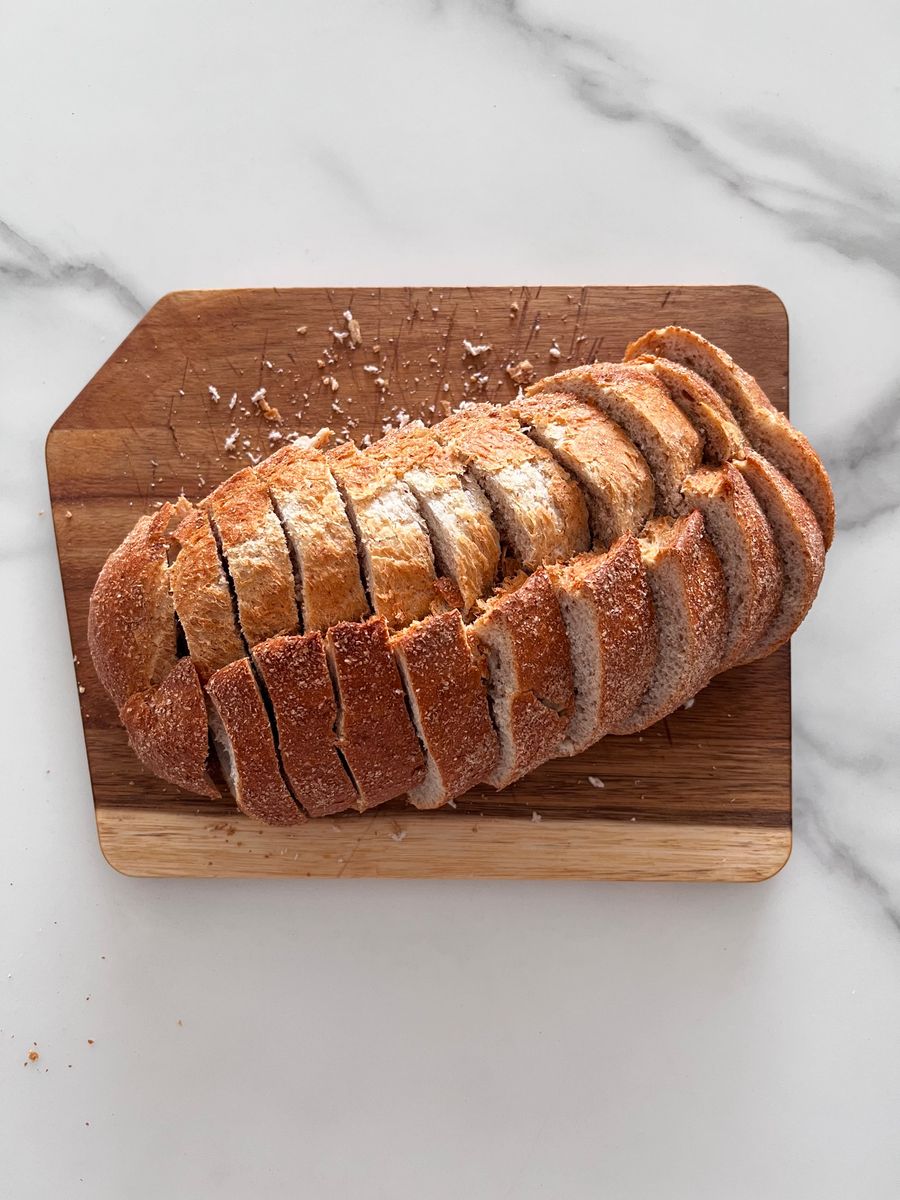
Segal describes strata as “a layered casserole made with bread, eggs, cheese, and sometimes vegetables or meat.” For her version, start with 12 ounces of Italian sandwich bread, cut into 1-inch cubes about 11 slices or 8 cups. Check your bread bin before shopping, but use the specified weight as the clearest guide. A loosely filled cup of large cubes and a tightly packed cup of small pieces are not interchangeable measurements.
The “use what you have” approach still has boundaries. This recipe is written for a particular quantity and type of bread, so swapping in a very different loaf may change how it absorbs the custard. More importantly, leftover bread must still be safe to eat. The USDA advises discarding moldy bread and baked goods because their porous structure can allow contamination beneath the surface; cutting away one visible spot doesn’t make the remaining loaf suitable for a casserole.
Bread provides the structure, but the filling needs some preparation, too. Segal uses a 1-pound bag of frozen chopped spinach, thawed and squeezed as dry as possible, along with onion and garlic. “Take your time; it’s important to get it all out or the strata will be watery,” she cautions about the spinach. That is the kind of small step worth doing carefully: the recipe already includes a measured quantity of dairy, and extra vegetable water is not part of the plan.
Related: 8 Hungry-Man Frozen Meals That Go From Disappointing to Worth Keeping in Your Freezer
Build the Layers, Then Let the Refrigerator Do Its Part
Gather 3 tablespoons unsalted butter, one large chopped yellow onion (about 2 cups), and three minced garlic cloves. Alongside the prepared bread and spinach, you need 6 ounces coarsely grated Gruyère and 2 ounces finely grated Parmigiano-Reggiano. The custard calls for nine large eggs, 2¾ cups half-and-half, and 2 tablespoons Dijon mustard. Finish the seasoning with 1¾ teaspoons salt, ¾ teaspoon black pepper, and ¼ teaspoon ground nutmeg, and have a buttered 3-quart or 9-by-13-inch baking dish ready.
Melt the butter in a large skillet over medium heat, then cook the onion for four to five minutes, stirring frequently, until soft and translucent. Add the garlic and thoroughly drained spinach and cook for another two minutes before setting the mixture aside. Spread one-third of the bread cubes in the baking dish, followed by one-third of the spinach mixture and one-third of each cheese. Repeat twice more, breaking up spinach clumps as you go and finishing with cheese.
In a large bowl, whisk the eggs, then whisk in the half-and-half, Dijon, salt, pepper and nutmeg until combined. Pour the mixture evenly over the layered bread, cover the dish with plastic wrap and refrigerate for at least one hour or overnight. Segal’s overnight approach is especially useful when guests are coming in the morning. The chilling period belongs in the refrigerator, not on the counter, and it needs to be included when you calculate when to start.
When you are ready to bake, preheat the oven to 325°F and remove the plastic wrap. Bake the strata uncovered for 70 to 80 minutes, until puffed, set and golden across the top; Segal’s timing assumes it goes directly from the refrigerator into the oven. Also check the center with a food thermometer: USDA recommends cooking egg casseroles to 160°F. Let it stand for 10 to 15 minutes before serving, and do not worry when the impressive puff settles slightly as it cools.
Make Sensible Swaps Without Turning Breakfast Into Guesswork
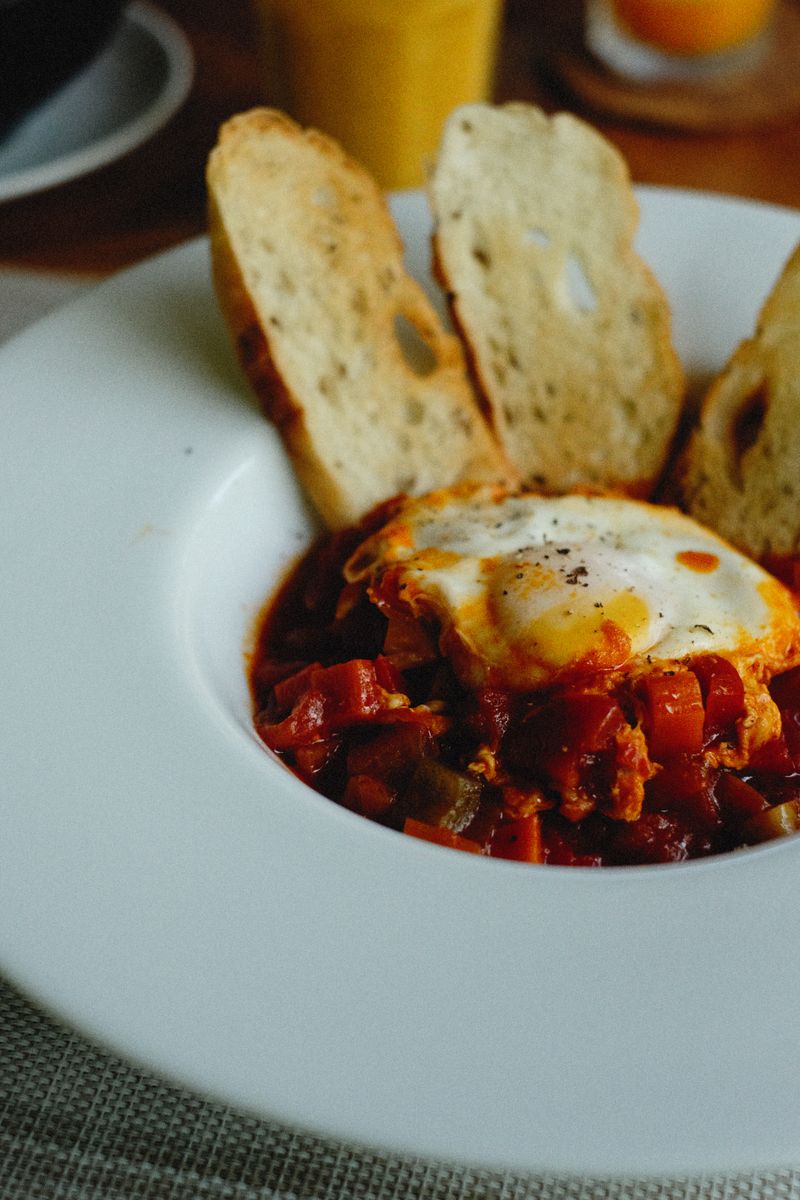
The cheese doesn’t have to be the most expensive part of brunch. Segal acknowledges that Gruyère and Parmigiano-Reggiano can be costly and recommends other flavorful melting cheeses, such as extra-sharp cheddar, as alternatives. “The recipe is pretty flexible, so you can play around with different sautéed vegetables depending on what you have on hand,” she adds. Notice the word “sautéed”: her guidance supports prepared vegetables, not an unmeasured pile of raw additions that might release extra liquid during baking.
Segal suggests cooked sausage or pancetta as another variation, but it requires a seasoning adjustment. Reduce the recipe’s salt to a scant teaspoon if you add those salty meats, rather than using the full amount. There is no requirement to add meat at all; the spinach-and-cheese combination already supplies the recipe’s savory character. For serving, Segal suggests fruit salad and, if desired, bacon alongside it, letting the casserole remain the centerpiece instead of turning breakfast into several separate cooking projects.
You can also plan ahead. Segal says you can wrap the assembled, unbaked strata tightly in plastic wrap, then foil, and freeze it for up to two months; thaw overnight in the refrigerator before baking. You can also freeze individual portions of baked strata, while refrigerated egg-dish leftovers should be used within three to four days. That gives a familiar loaf a more interesting future: not a mysterious fridge experiment, but a properly planned breakfast with crisp edges, a savory center and the hard work already done.
Other Posts You Might Like
- 7 Truths About Organic Food That Everyone Should Know
- 10 Powerful Immune-Boosting Foods for a Stronger Immune System
- 10 Surprising Foods That Can Lead to Bad Dreams and Disturbed Sleep