A jar of blackberry jam can do considerably more than improve your morning toast. Put it into a spiced cake, add nuts and finish with caramel icing, and you have a dessert with a long-standing place in Southern baking. Jam cake brings together fruit, warm spices and a rich topping without needing elaborate decorations to make its point. If your dessert rotation has become a predictable parade of chocolate, vanilla and carrot cake, this is a delicious reason to change the lineup.
You may encounter it as Kentucky jam cake, Tennessee jam cake, or simply blackberry jam cake, but those names don’t describe one fixed recipe. Published versions include both fluted-pan cakes and frosted layers, with differences in the fruit, nuts and other additions. What connects them is the combination of berry preserves and spice, often finished with caramel icing. The fun is in those distinctive flavors not in pretending every family has baked exactly the same cake.
The Jam Is Part of the Cake, Not Just a Pretty Filling
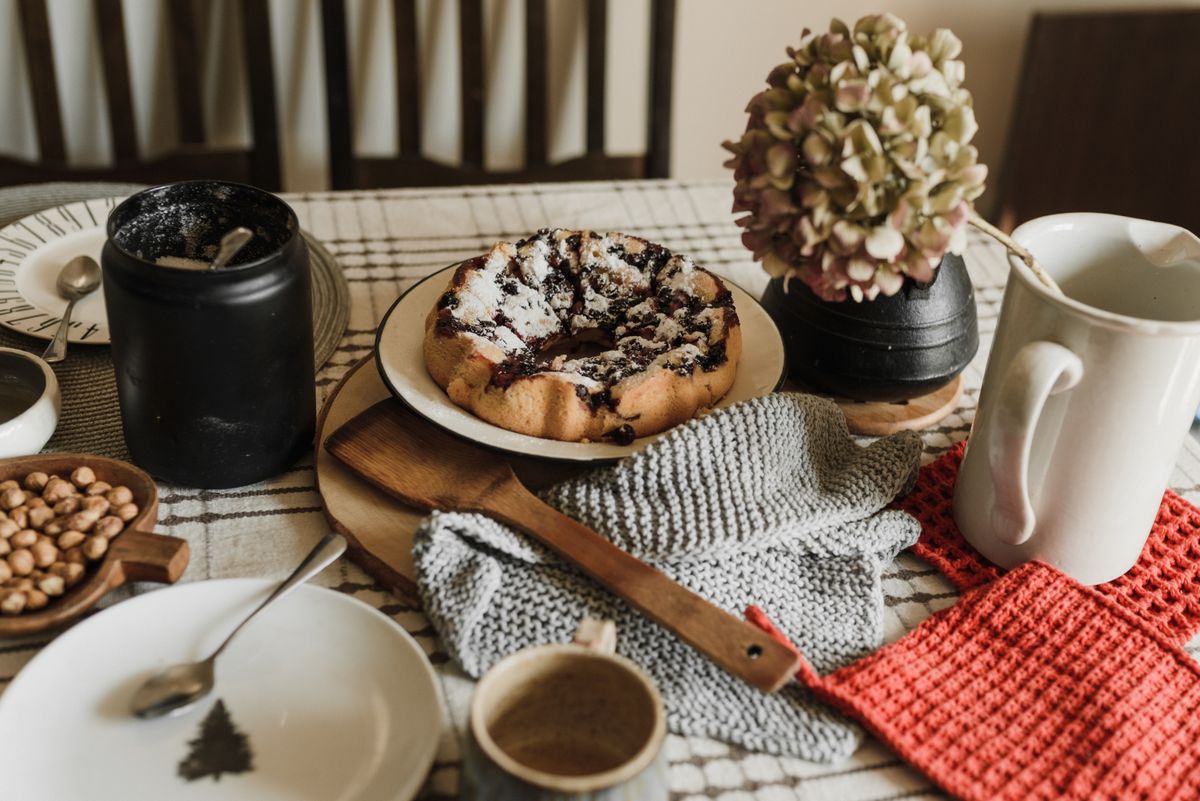
Forget the idea that jam cake must be a plain sponge with preserves sandwiched through the middle. In Smucker’s blackberry jam cake recipe, an entire 12-ounce jar of seedless blackberry jam is blended into the batter after the butter, sugar and eggs. Cinnamon, cloves, allspice and nutmeg join it, followed by buttermilk and chopped walnuts or pecans. The finished cake gets caramel icing, making the preserves one component of a fully spiced dessert rather than an isolated stripe of fruit.
Other recipes make the cake even more substantial. Taste of Home’s old-fashioned jam cake includes raisins, crushed pineapple, pecans and baking cocoa alongside blackberry jam, then stacks the batter into two frosted layers. Bakepedia’s examination of the dessert also found versions with raisins or dates, with pecans often adding crunch. That variety matters: jam cake is a family of recipes, and its name alone will not tell you whether your slice contains dried fruit, cocoa or nuts.
Even the way the jam enters the cake can vary. Southern Living’s history describes a Kentucky tradition of spreading jam between spice-cake layers, while its Tennessee example incorporates jam into the batter. Yet Taste of Home also publishes a Kentucky contributor’s layer cake with jam mixed directly into the cake mixture. The sensible conclusion is not that one recipe has the wrong name; it is that regional labels leave plenty of room for household traditions and individual recipes.
Its Real Story Is Bigger Than One State
Southern Living traces one strand of jam cake’s history to German settlers who traveled into Kentucky, Tennessee and northern Alabama in the late 19th century. Its account connects their familiar heavily spiced cakes with the blackberries available in their new surroundings, which families gathered and preserved as jam. The cakes could also include regional nuts, such as black walnuts, pecans or English walnuts. That history helps explain the dessert’s character: preserved fruit and assertive spices belong at its center, not merely on top.
The same account makes clear that jam cake was not exclusive to the South. Drawing on food writer Betty Fussell’s book I Hear America Cooking, it notes that the 1913 Portland Woman’s Exchange Cook Book included berry jam in both spice-cake batter and buttercream frosting. In that version, the preserves even turned the frosting pink. Rather than assigning every American jam cake to one birthplace, the evidence points to a baking idea that appeared in different places and took different forms.
Family testimony offers a more personal view of how those recipes survived. Janet Robinson of Lawrenceburg, Kentucky, shared her aunt’s cake with Taste of Home, recalling, “Through the years, she made improvements to it, and her cake become a real family favorite.” Robinson also described it as a popular staple at family reunions. That is a more concrete story than simply calling the dessert “forgotten”: for some families, jam cake never disappeared from the table.
There is also no need to turn its old-fashioned reputation into a rule that only homemade preserves will work. Southern Living recounts a belief that store-bought jam will sink to the bottom, but explicitly identifies that claim as an “old wives tale,” not an established baking fact. Smucker’s, meanwhile, publishes a recipe built around a jar of its seedless blackberry jam. A commercially made preserve is therefore a documented starting point, not a shortcut that automatically disqualifies the cake.
Related: If Your Dad Had These 11 Hobbies, You Were Probably Lucky to Grow Up With Him
How to Bring It Back to Your Own Dessert Table
For a straightforward introduction, Smucker’s version uses a 10-inch fluted tube pan and serves 12. Along with the jam, the batter calls for three-quarters cup butter, one and one-quarter cups sugar, three eggs, two and one-half cups flour, and one cup each of buttermilk and chopped nuts. Baking soda, salt and the four spices complete the mixture. The recipe lists 20 minutes of prep time and a “medium” difficulty level, so it is approachable baking, not an instant dessert.
The method starts by creaming butter and sugar until light and fluffy, then beating in the eggs one at a time and blending in the jam. Combine the dry ingredients separately, then add them alternately with the buttermilk, mixing just until blended; add the nuts afterward. Bake at 350°F for 50 to 55 minutes, checking that a toothpick inserted near the center comes out clean. Let the cake rest in its pan for 15 minutes, then turn it out onto a rack to cool completely.
The caramel icing adds a final flourish without needing a piping bag. Melt one-quarter cup butter, whisk in one-half cup packed brown sugar and one-quarter cup buttermilk, then bring the mixture to a boil and cook for one minute while stirring constantly. Finish with one and one-third cups powdered sugar and one teaspoon vanilla, whisk until smooth, and spoon it over the cooled cake. Blackberry jam, four warm spices and a caramel topping: that is a pretty persuasive case for giving this old-fashioned dessert a fresh turn in the spotlight.