A green chile cheeseburger sounds straightforward: beef, melted cheese, and a generous helping of chile inside a bun. In New Mexico, however, that combination carries more than flavor. It connects family restaurants, local agriculture, competing origin stories, and a culinary trail built around the search for a memorable burger. Order one, and you are entering a conversation that started long before anyone thought to photograph lunch.
The first question is also the trickiest: who invented it? No one can say for certain. The Original Owl Bar & Café in San Antonio, New Mexico, has a strong claim, but nearby Buckhorn Tavern also has a longstanding connection to the dish. Other restaurants and communities tell additional versions. As Santa Fe chef Fernando Olea told New Mexico Magazine, “Everybody says they created it.” That uncertainty is part of the story, not a detail to tidy away.
What is clear is that the burger became much more than a cheeseburger with an optional condiment. Restaurateurs, chile specialists and cookbook authors describe it as an expression of New Mexico’s food culture, where green chile was already familiar long before it became a visitor attraction. Its history is best understood through people’s accounts and family memories, rather than definitive proof of invention.
A Missing Dishwasher, and a Claim Across the Street
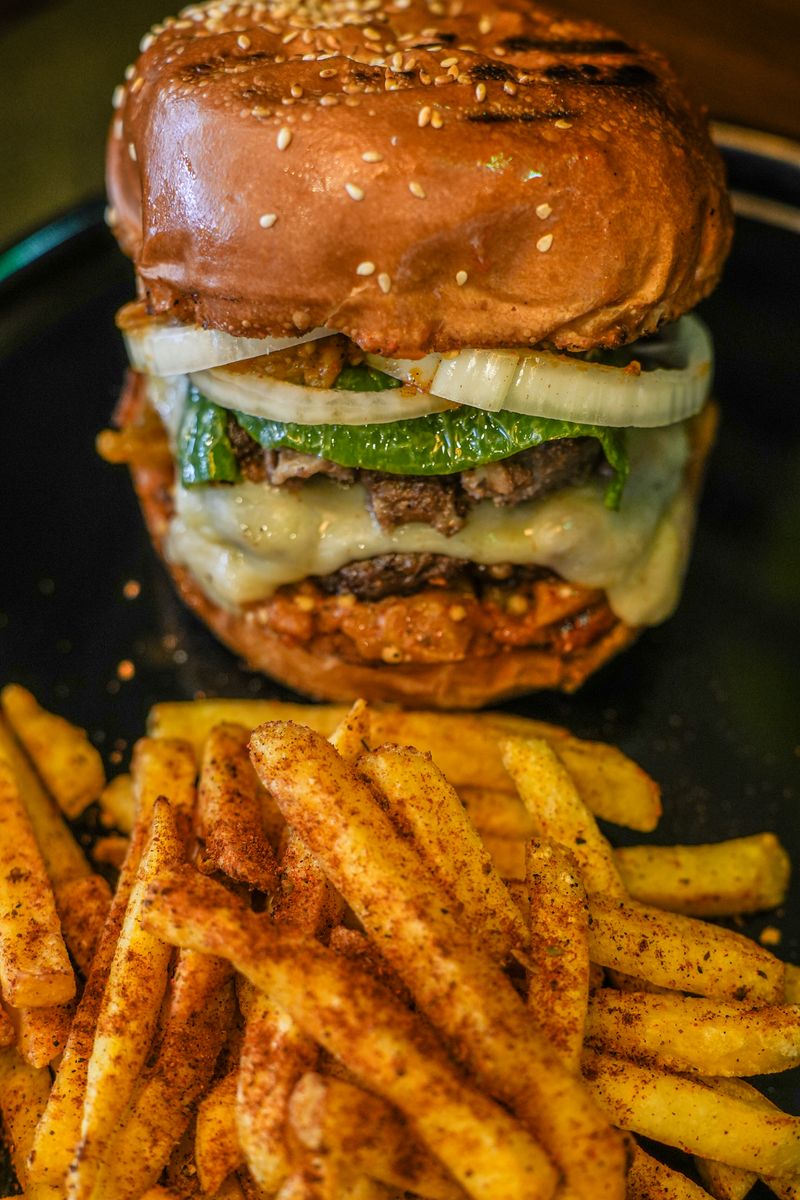
The Owl’s story begins with a family mercantile business in the 1930s. Third-generation owner-operator Janice Argabright told New Mexico Magazine that her great-grandfather sold cold cuts and cheese, and that scientists associated with the nearby Trinity Site came looking for hot food and drinks. Her family dates the restaurant’s beginnings to 1945. They initially served cheeseburgers with a side of picante sauce, before locally grown fresh green chile became a popular accompaniment.
According to Argabright, the move from side dish to burger topping was prompted by a very practical problem. “One day my grandfather didn’t have a dishwasher,” she said. “He got upset, so he just threw the chile on the meat and cheese and started doing it like that. So we think we invented the green chile cheeseburger.” The final sentence matters: this is the family’s explanation, not a conclusively established birthplace certificate.
Across the street, the Buckhorn complicates a neat, single-restaurant origin story. Socorro County Historical Society secretary Paul Harden told the magazine that Manny Olguin took over the Buckhorn business in 1945 and added a small restaurant serving Trinity Base travelers and soldiers. “Both restaurants served green chile hamburgers,” Harden said. “I was never able to prove definitively which opened first. It appears to have been within weeks of each other.”
That connection gives the burger an intriguing place alongside the region’s wartime history, but it does not settle who assembled the first one. Cookbook author Cheryl Alters Jamison drew a useful distinction between putting familiar ingredients together and promoting a named dish. She would not dispute the Owl’s claim to the latter, while acknowledging that someone may have already combined burger, cheese, and chile elsewhere. The story is more credible when those possibilities remain separate.
Related: “Gable at the Hollywood Roosevelt: The Bold New Restaurant Aiming to Win Over LA Locals”
The Chile Is More Than a Hot Topping
For New Mexicans who grew up with chile, putting it on a burger was not necessarily a dramatic invention. Danise Coon, identified in New Mexico Magazine’s reporting as a senior research specialist at the Chile Pepper Institute, recalled growing up on a farm in Española where her family cultivated it. “Putting green chile on our burgers in the summertime was just a no-brainer,” she said. “It’s been a New Mexico thing for many, many years.”
The appeal is also about flavor, not simply seeing how much heat a diner can handle. Jamison described the ideal combination as beef with a good sear and a juicy interior, soft melted cheese, and the sharpness and full flavor of the chile. “Those things need to be the predominant flavors,” she said. That offers a useful definition: the chile should contribute to the burger’s character rather than serve as spicy decoration.
Restaurants achieve that balance differently. Argabright said the Owl buys fresh chile from the surrounding area and Hatch, while keeping its preparation secret. Olea described using roasted, diced Hatch chile cooked with onions, garlic and oregano at Bert’s Burger Bowl. These accounts show why no single topping method is mandatory. The shared idea is recognizable, but the cooking gives each restaurant room to distinguish its version.
Even the cheese invites discussion, though several people in the magazine’s oral history favored familiar, well-melting choices. Olea preferred classic American cheese; Jamison mentioned mild cheddar or Jack as alternatives and valued American cheese on a burger. The goal was not the most elaborate cheese counter selection. It was a combination that lets the beef and chile work together, which helps explain why an unpretentious diner burger can inspire such serious loyalty.
How a Local Favorite Became a Road-Trip Mission
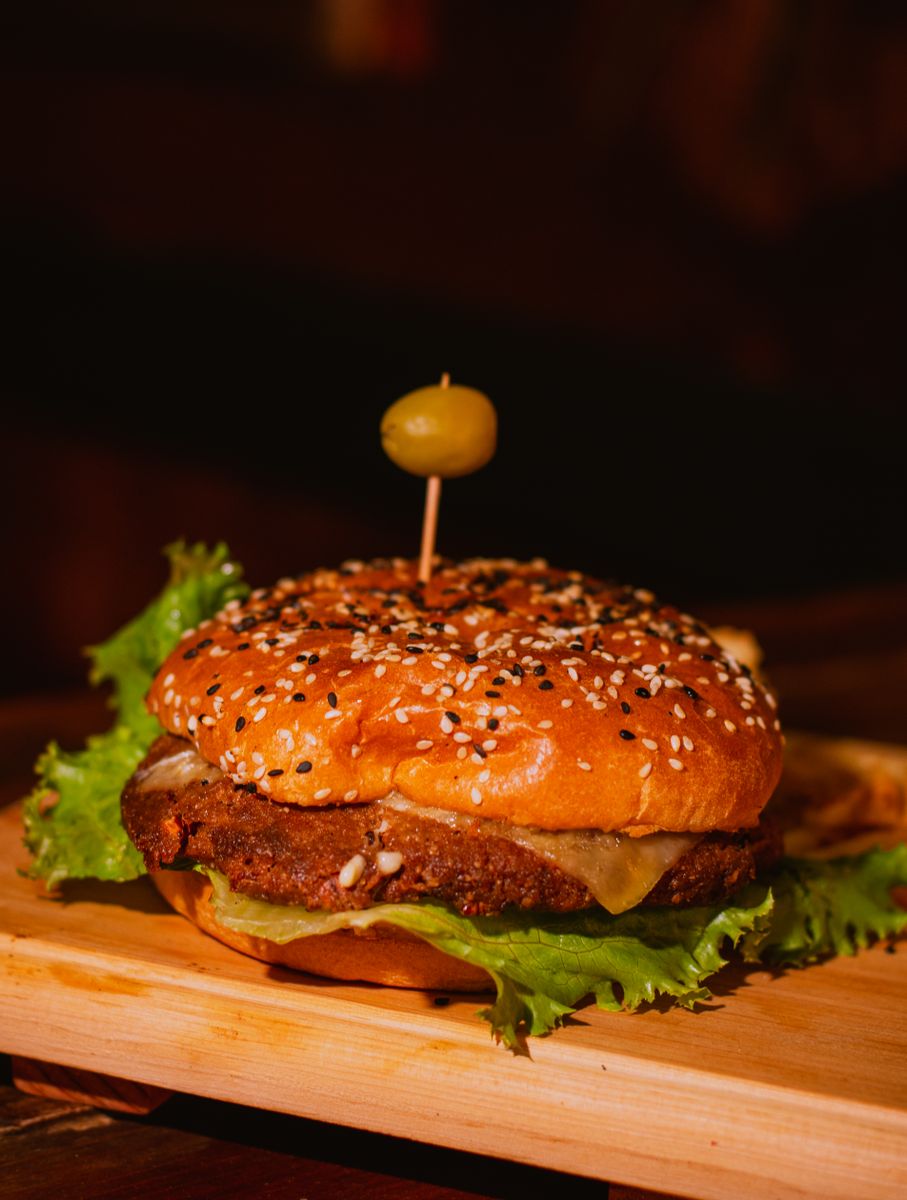
The burger’s spread involved more than independent cafés. Brian Rule, then identified as Blake’s Lotaburger president, said the chain’s first restaurant opened in 1952 without green chile on its original burgers. A few years later, founder Blake Chanslor saw a customer adding chile, tried the combination, and liked it. Rule credited Blake’s as the first restaurant chain to promote green chile on hamburgers, a narrower claim than inventing the dish itself.
National attention supplied another boost. Bobby Olguin beat chef Bobby Flay on Throwdown! with Bobby Flay in 2009, and the Buckhorn’s burger reached television audiences. That victory did not create the restaurant’s chile-burger tradition, but it introduced it to a much wider audience. The distinction captures the burger’s trajectory: longstanding local cooking gradually became something outsiders traveled to experience for themselves.
Tourism promotion turned that interest into an itinerary. Jamison said the idea for the Green Chile Cheeseburger Trail emerged in 2008, and Visit Albuquerque dates its establishment to 2009. The New Mexico Tourism Department continues to promote the trail as a way to explore restaurants serving the specialty. Its message is cheerfully direct: “New Mexico didn’t invent the hamburger, but we’re the ones who added green chile and made it hot!”
Ultimately, the story is as much about belonging as it is about toppings. Olea recalled discovering the burgers at Blake’s after moving from Mexico to Minneapolis and then Santa Fe: “It was incredible to eat chile. It felt like home.” That is why the uncertain invention date need not diminish the dish. The green chile cheeseburger’s importance rests in the families, farms and restaurants that made it part of everyday New Mexico life, and kept giving people reasons to come back.
Other Posts You May Like
Perry Daycare Employee Charged With Murder After Newborn Is Found Dead
Gardeners Are Turning Their Outdoor Spaces Into Places Actually to Spend Time
The September Garden Mistakes That Can Ruin Next Spring’s Blooms