Stephen Miller delivered the announcement as if the argument had already been settled: “Birth tourism is hereby banned.” But behind those five words is another major constitutional fight over who automatically becomes an American citizen at birth.
Speaking ahead of President Donald Trump’s signing of new executive orders on August 6, Miller described birth tourism as a serious abuse of the immigration system. In the Facebook video shared with this story, he argued that the administration’s action would help protect the value of U.S. citizenship.
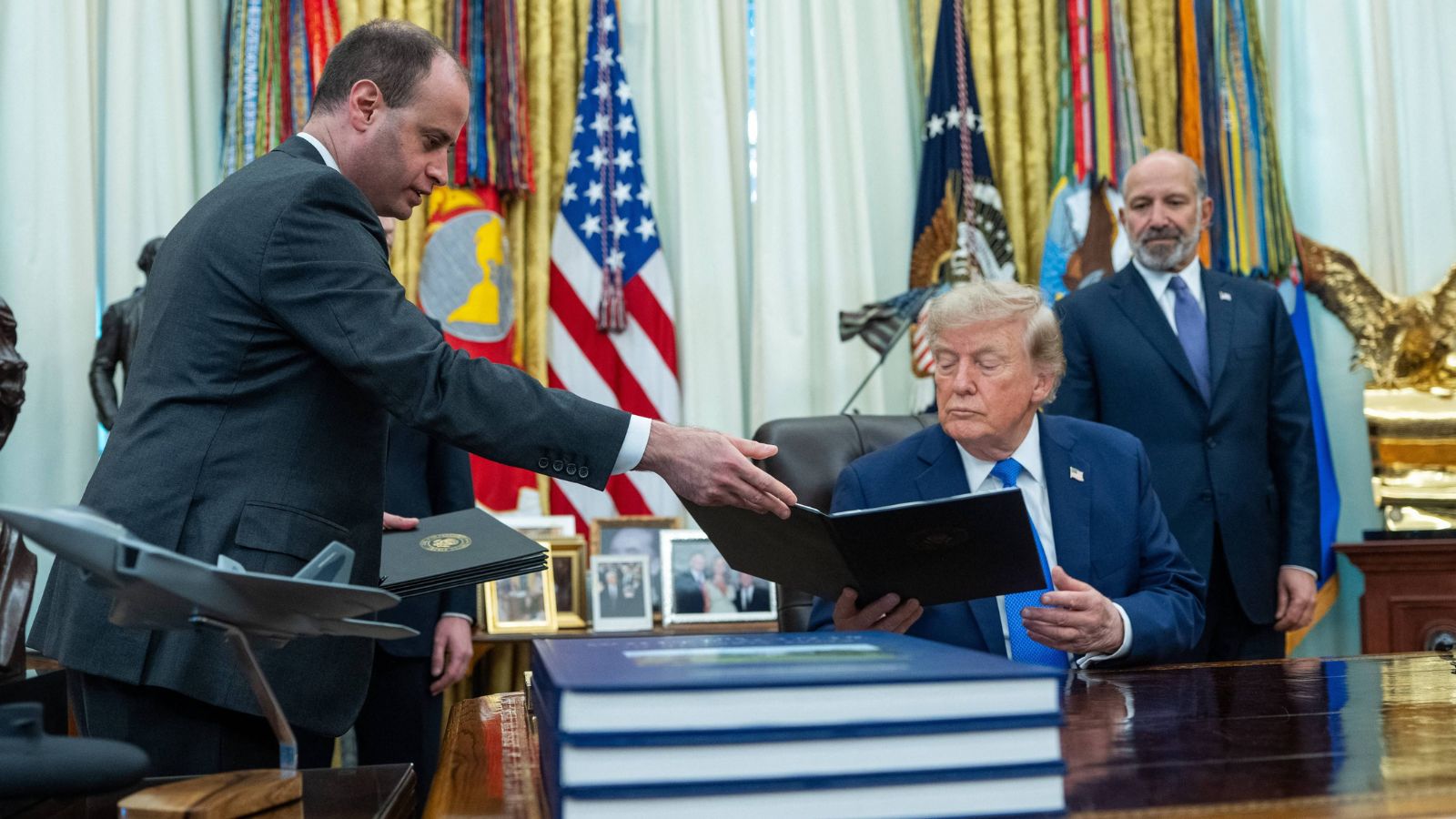
Trump then signed two executive orders aimed largely at foreigners who travel to the United States to give birth and at expanding categories of children the administration says should not receive automatic citizenship. The move came just weeks after the Supreme Court dealt Trump a major defeat on his earlier attempt to restrict birthright citizenship.
Trump Targets Birth Tourism After Supreme Court Defeat
The phrase “birth tourism” generally refers to foreigners traveling to the United States primarily so their child will be born on American soil and obtain U.S. citizenship.
Trump’s new action attacks the practice from more than one direction.
One order directs federal agencies not to recognize citizenship for a child when a parent is deemed to have engaged in fraudulent activity to obtain citizenship for the child. Another seeks tighter visa restrictions against foreign nationals suspected of planning to enter the country specifically to give birth.
The administration is also trying to broaden existing exceptions to automatic birthright citizenship. Children born to accredited foreign diplomats have historically been treated differently because their parents are not considered fully subject to U.S. jurisdiction.
Trump’s latest directive seeks to expand those categories to include some foreign government employees and people classified as alien enemies or connected to designated terrorist organizations.
Trump portrayed birth tourism as a huge problem, telling reporters that “hundreds of thousands” of people may be benefiting.
Available numbers do not support that estimate.
According to the Associated Press, CDC data showed nearly 9,600 babies were born in 2024 to foreign mothers whose official residence was outside the United States. Researchers cited by Reuters have estimated roughly 5,000 to 10,000 such births annually during the 2014 to 2024 period, although not every birth to a foreign resident necessarily qualifies as intentional birth tourism.
Birth Tourism Visas Were Already Restricted
There is another important detail behind Miller’s dramatic announcement: using a visitor visa primarily for birth tourism was already restricted before Trump signed these new orders.
In January 2020, during Trump’s first administration, the State Department changed its B-visa regulations. Consular officers were instructed to deny visitor visas when they had reason to believe an applicant’s primary purpose for traveling to America was giving birth in order to secure U.S. citizenship for the child.
The State Department still states that birth tourism is not a permissible reason for obtaining a visitor visa.
That means the new fight is about more than simply denying tourist visas.
The far more consequential question is whether the executive branch can deny citizenship to a baby born in the United States because of what the child’s parents allegedly did to enter the country.
That is where Trump’s orders run directly into the Constitution and the Supreme Court’s latest ruling.
The Supreme Court Fight Is Far From Over
Miller’s declaration may sound final, but whether the administration can actually deny citizenship in these cases is almost certain to be tested in court.
The 14th Amendment states that people born or naturalized in the United States and subject to its jurisdiction are citizens.
On June 30, the Supreme Court voted 6-3 to strike down Trump’s earlier birthright citizenship restrictions. Chief Justice John Roberts wrote that the amendment’s authors extended citizenship to “every free-born person in this land.”
The administration argues its latest orders are narrower and therefore legally different.
White House Staff Secretary Will Scharf said the new measures do not conflict with the Supreme Court’s ruling. But several legal scholars disagree.
University of Virginia law professor Amanda Frost told Reuters that children born on American soil are citizens and argued that unlawful behavior by a parent cannot determine the child’s citizenship status. Other legal experts said certain portions involving diplomats or enemy forces may have stronger legal arguments than the birth-tourism provisions.
The ACLU has also signaled another legal challenge, arguing that an executive order cannot override the citizenship guarantee contained in the 14th Amendment.
So when Miller said birth tourism was “hereby banned,” he captured the administration’s policy position in one powerful sentence.
But the constitutional question is not finished.
Trump has signed the orders. Federal agencies now have their instructions. Immigration officers could receive significantly greater authority to scrutinize travelers suspected of planning to give birth in America.
Yet denying a visa and denying citizenship to a child already born on U.S. soil are two very different legal questions.
And after the Supreme Court’s June ruling, Trump’s latest attempt to draw that line may soon send birthright citizenship straight back into America’s courts.