President Donald Trump turned the eve of America’s 250th Independence Day into an argument about national loyalty, ideology, and the future of the republic. Speaking at Mount Rushmore on July 3, 2026, beneath the carved faces of four former presidents, Trump warned that communism was again challenging the values that built the United States.
“You can be loyal to Karl Marx, or you can be loyal to America. You can be a communist, or you can be a patriot. You cannot be both,” Trump declared. The line became the sharpest moment of a speech that mixed patriotic celebration with a political warning.
A Celebration Becomes an Ideological Battle
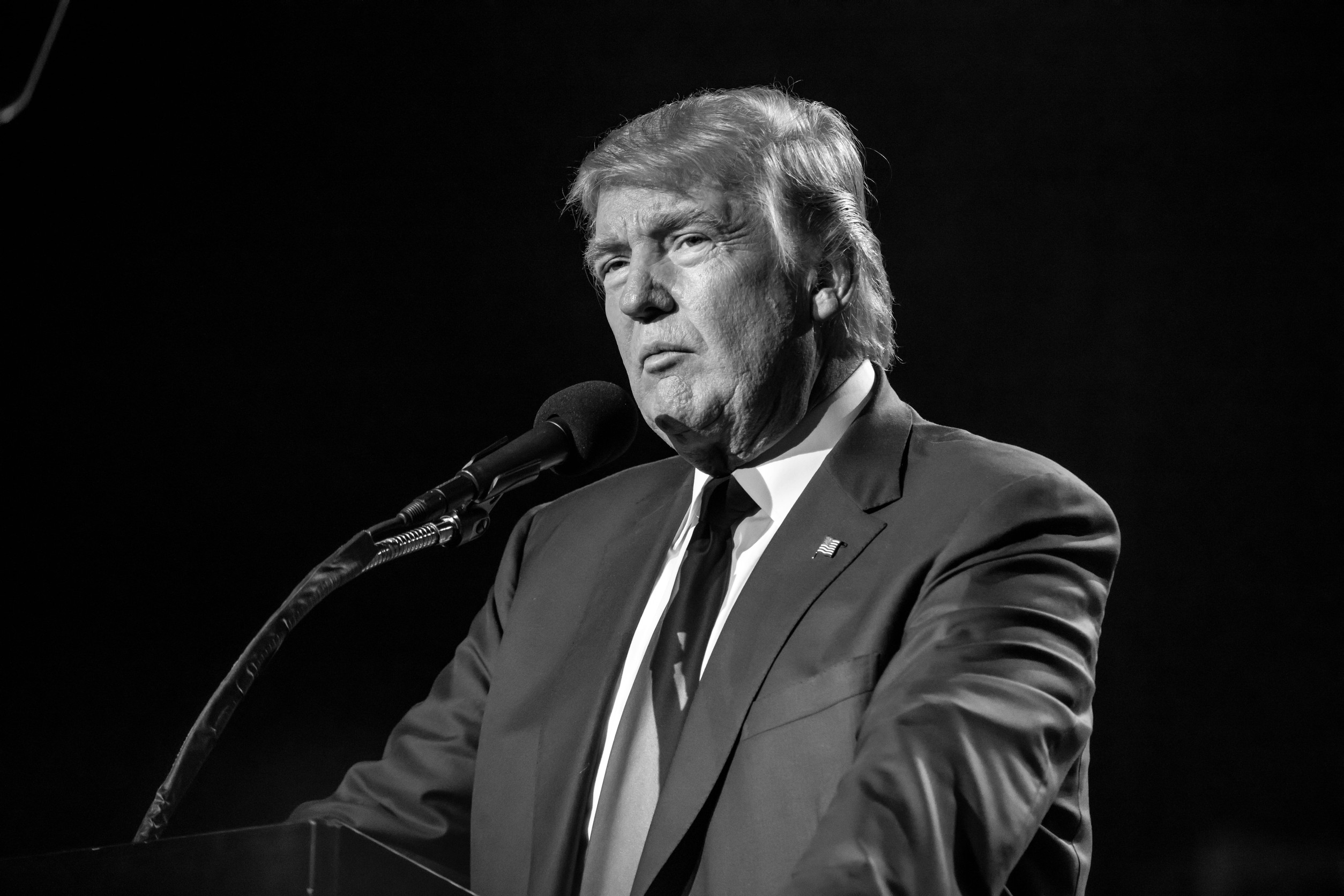
The gathering opened a major weekend commemorating 250 years since the Declaration of Independence was adopted on July 4, 1776. Trump celebrated American military and economic power and described the anniversary as the beginning of a new national “golden age.”
The festive setting did not soften his message. Trump said the country faced a renewed “communist menace” decades after the Cold War, portraying communism as the opposite of life, liberty, private rights, religious faith, and the pursuit of happiness.
His argument reached beyond foreign governments. Trump presented the ideological battle as something unfolding inside the United States, where progressive candidates and democratic socialist movements have gained visibility.
Why Marx Remains a Powerful Political Symbol
Karl Marx was a nineteenth-century philosopher and economist whose writings condemned capitalism and predicted that class conflict would produce a society without private ownership of productive property. His ideas influenced revolutionary movements that later established communist governments in Russia, China, Cuba, North Korea, and elsewhere.
The record of several of those governments gives Trump’s warning emotional force. The Soviet Union under Joseph Stalin carried out purges, forced labor, and mass arrests, while Mao Zedong’s Great Leap Forward contributed directly to a catastrophic famine in China.
Communist systems have not all operated identically, but many one-party states restricted elections, censored dissent, punished religious activity, and concentrated enormous authority in government. Those experiences remain personal for American families whose relatives fled political imprisonment, state censorship, property seizures, and authoritarian rule.
A Direct Attack on the Political Left

Trump’s remarks were clearly aimed at more than historical communism. He used the language of national survival to challenge progressive politicians whom Republicans frequently describe as socialists or communists, especially those calling for expanded government programs, higher taxes on the wealthy, and greater public control of the economy.
However, democratic socialism in the United States is not identical to Soviet style communism. The Democratic Socialists of America reject authoritarian socialism while campaigning for policies that include universal health care, stronger labor protections, public ownership, and greater democratic control of the economy.
Critics therefore accused Trump of applying the communist label too broadly and turning a national celebration into a partisan confrontation. Supporters saw the speech as a necessary boundary against ideas they believe threaten free enterprise, individual responsibility, and limited government.
The Meaning of the Mount Rushmore Setting
The location gave the statement enormous visual power. Mount Rushmore presents presidents associated with the nation’s founding, preservation, expansion, and rise as a world power, allowing Trump to place his warning beneath a monumental image of American leadership.
The site also carries a contested history. Mount Rushmore stands in the Black Hills, territory recognized as belonging to the Lakota under the 1868 Treaty of Fort Laramie and regarded as historically, culturally, and spiritually important by several tribal nations.
Trump did not dwell on those disputes. Instead, he used the monument as proof of national endurance and as a backdrop for his claim that Americans must defend their inheritance against movements that portray the country’s past mainly through oppression and injustice.
A Political Message Built for 2026
The statement is likely to remain part of Trump’s political strategy as the 2026 midterm elections approach. Republicans use warnings about socialism and communism to rally voters who fear expanding federal authority, while Democrats argue that such labels make ordinary policy disagreements appear dangerous or un-American.
The power of Trump’s declaration came from its simplicity. It offered no middle ground and no academic distinction, only a choice between Marxist communism and American patriotism.
That framing will inspire supporters and alarm critics, but it leaves little doubt about the president’s message. For Trump, America’s 250th anniversary was not only a celebration of what the country had achieved, but a warning that its identity could still be lost.
As fireworks rose above Mount Rushmore, Trump transformed a birthday ceremony into an ideological battle cry. His message was blunt, memorable, and designed to last: communism and American patriotism, in his view, cannot share the same flag.