Pete Buttigieg is reviving one of America’s oldest political debates by arguing that the nation should replace the Electoral College with a system where the candidate who wins the most votes nationwide becomes president.
The former U.S. Transportation Secretary and Democratic presidential hopeful has positioned himself among the growing number of political figures who believe the Electoral College no longer reflects the principle of equal representation. Buttigieg argues that every American voter should have the same influence in choosing the nation’s leader, regardless of where they live.
His proposal has quickly reignited a fierce national conversation over the future of presidential elections. Supporters say the current system can allow a candidate to win the White House without receiving the most votes from Americans, while critics warn that eliminating the Electoral College could weaken the voice of smaller states and rural communities.
The debate touches on one of the most fundamental questions in American democracy: should presidential elections be decided by the total number of votes cast across the country, or should the system continue to protect the influence of individual states?
Buttigieg Argues Every Vote Should Carry Equal Weight
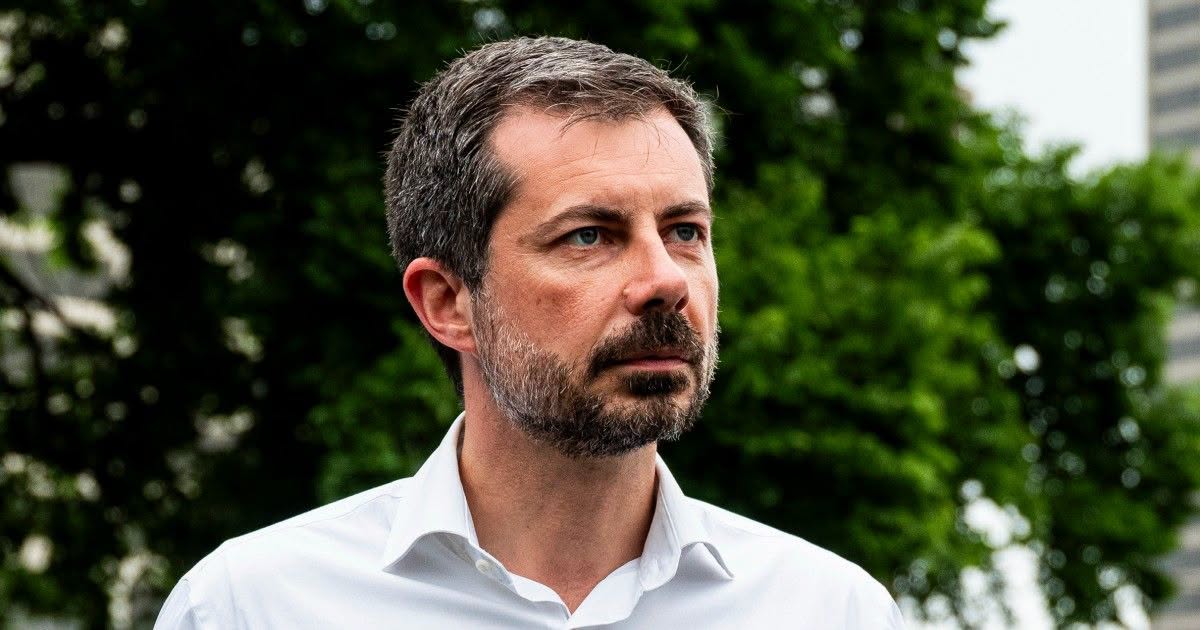
Buttigieg has repeatedly expressed support for replacing the Electoral College with a national popular vote system. His argument centers on the idea that a voter in a small town should have the same power as a voter in a major metropolitan area.
Under the current Electoral College system, Americans do not directly elect the president through a nationwide vote total. Instead, voters choose electors assigned to each state, and those electors determine the winner. Each state receives electoral votes based on its number of representatives in Congress, meaning smaller states receive a minimum level of influence.
Buttigieg believes this structure creates unequal outcomes because candidates often focus their campaigns on a limited number of competitive states rather than appealing to voters nationwide.
His position reflects a broader movement among election reform advocates who argue that presidential candidates should compete for every vote rather than concentrate their efforts on swing states such as Pennsylvania, Wisconsin, Michigan, and Arizona.
The Electoral College Has Created Controversial Election Outcomes

The debate over the Electoral College has intensified because of several recent elections in which the winner of the national popular vote did not win the presidency.
In the 2000 presidential election, Republican George W. Bush defeated Democrat Al Gore despite Gore receiving more votes nationwide. The election was ultimately decided by a narrow victory in Florida and a Supreme Court ruling that ended the recount process.
A similar situation occurred in 2016 when Donald Trump won the Electoral College despite Hillary Clinton receiving nearly 3 million more votes nationally.
These outcomes have fueled arguments from reform supporters who say the system allows some votes to matter more than others. They argue that a national popular vote would ensure the candidate with the most support from American voters becomes president.
However, defenders of the Electoral College say those examples highlight the importance of the current system’s purpose: balancing the interests of states rather than simply counting individuals nationwide.
Supporters Say A Popular Vote Would Transform Campaign Strategy
Those who support Buttigieg’s position believe a national popular vote would force presidential candidates to compete across the entire country.
Under the current system, candidates often prioritize states where the election is expected to be close. Large portions of the country receive limited attention because they are considered safely Republican or Democratic.
Reform advocates argue that a popular vote could change that dynamic. Candidates would have incentives to campaign in more communities, including those currently ignored, because their state’s electoral outcome is predictable.
They believe the change could increase voter participation by making every ballot count directly toward the final result.
Critics Warn Big Cities Could Gain Too Much Power
Opponents of abolishing the Electoral College argue that a national popular vote could shift political power toward densely populated urban areas.
They say presidential candidates might focus primarily on large cities and heavily populated regions where millions of voters live, leaving rural communities with less influence.
The Electoral College was created by the nation’s founders partly to ensure that smaller states had a voice in presidential elections. Critics argue that removing it could weaken the role of states such as Wyoming, North Dakota, and Vermont, whose populations are much smaller than those of states like California, Texas, and New York.
They believe the presidency should represent the entire country, not simply reflect where the largest concentrations of voters live.
Changing The System Would Require A Constitutional Amendment
One of the biggest obstacles facing Buttigieg’s proposal is the difficulty of changing the Electoral College.
The system is established in the U.S. Constitution, meaning Congress cannot simply pass a law to replace it. Eliminating the Electoral College would require a constitutional amendment approved by two-thirds of both the House and Senate, followed by ratification from three-fourths of the states.
That process has historically been extremely challenging. The United States has adopted only 27 constitutional amendments, with the most recent one taking effect in 1992.
Because of this requirement, major election reform would likely need broad bipartisan support across the country.
A Debate Likely To Shape The 2028 Presidential Race
Buttigieg’s position could become a major issue as Democrats and Republicans prepare for future presidential contests. The former mayor of South Bend, Indiana, is widely viewed as a potential candidate for the 2028 Democratic nomination.
His call to change the Electoral College places him within a broader national discussion about voting rights, representation, and the future of American democracy.
For supporters, the argument is simple: the person who receives the most votes should become president. For critics, the issue is more complicated because the United States is a collection of states with different populations, economies, and political priorities.
The Electoral College debate has lasted for more than two centuries, and Buttigieg’s proposal shows that the question of how America chooses its leaders remains one of the country’s most important political battles.