A message cut into grass should not usually shake Washington. But when the numbers appear near the nation’s most symbolic monuments, days before a major presidential spectacle, even damaged turf can become a national argument.
Federal authorities are investigating after the number 8647 appeared on a lawn area of the National Mall, near the World War II Memorial and the Washington Monument grounds. The figures showed up as brown markings against the surrounding green grass, drawing police, National Park Service workers, National Guard members, and a rush of political speculation.
What might have looked like ordinary vandalism anywhere else landed differently in Washington. The National Mall is not just a park. It is the country’s most visible stage for protest, patriotism, grief, celebration, and political theater. That is why one strange marking in the grass has quickly become a larger story about security, free speech, public property, and the increasingly bitter fight over America’s shared civic spaces.
A Political Message in the Wrong Place
The numbers 8647 carry a charged meaning in today’s political climate. The number 86 is commonly understood as slang for removing, ejecting, or getting rid of something. The number 47 refers to President Donald Trump as the 47th president.
Together, the phrase has been used by some Trump opponents as a sign of resistance. But Trump allies and federal officials have argued that the same numbers can be read as something more threatening. That disagreement is exactly why the National Mall marking triggered such a fast official response.
The Department of the Interior condemned the incident and said threats against the president are taken seriously. U.S. Park Police are investigating the markings as vandalism, but officials have not publicly identified who made them or explained exactly how the grass became discolored.
That uncertainty matters. Right now, the public knows the numbers have appeared. It knows the grass was damaged or discolored. It knows authorities collected samples for testing. What it does not know is whether this was a planned protest act, a prank, a threat, a chemical stunt, or something else entirely.
Why This Grass Matters More Than It Should
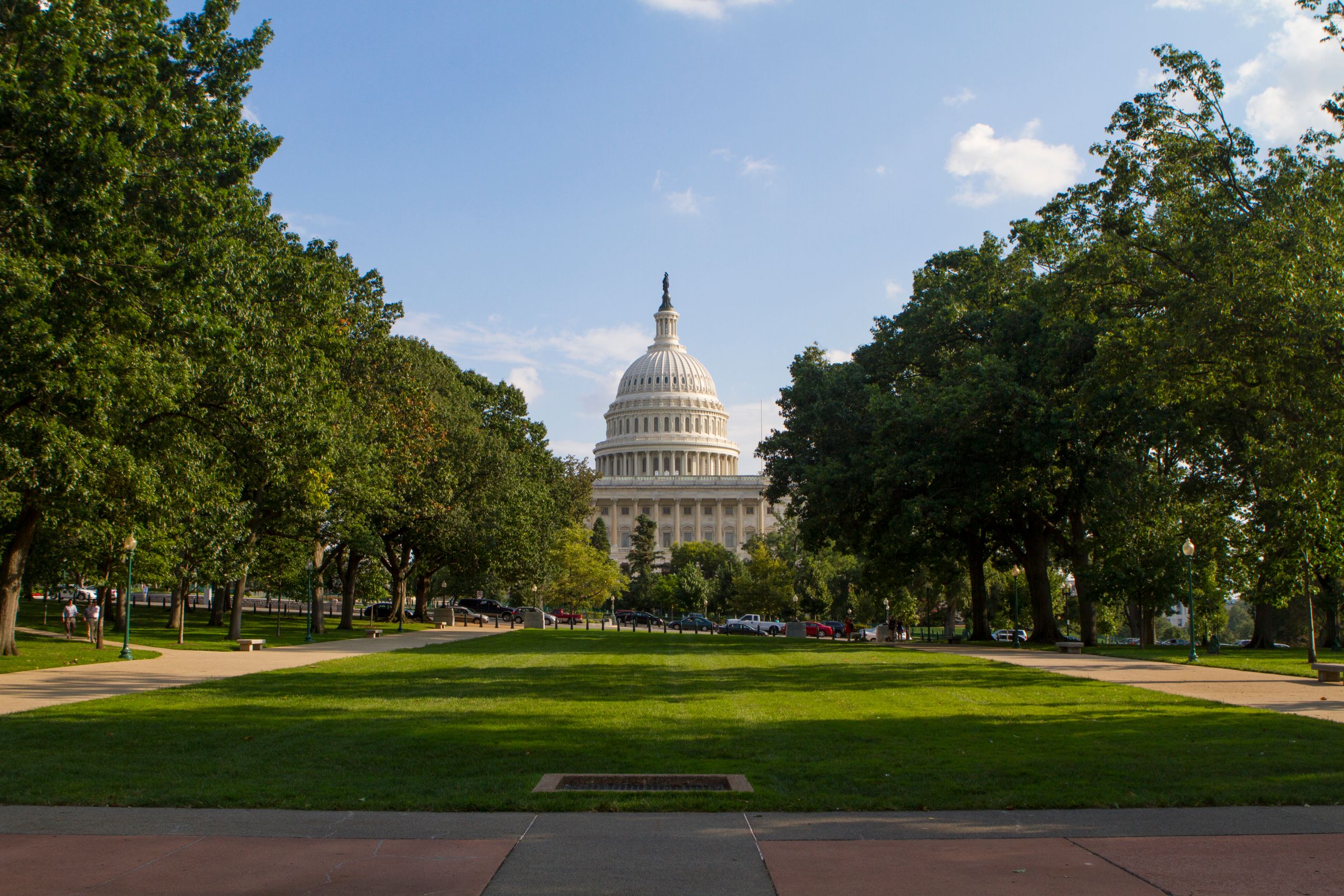
The National Mall is often called America’s front yard, but that phrase can make the place sound simpler than it is. The Mall is federal land, a tourist destination, a memorial corridor, and one of the country’s most protected protest spaces.
People come there to celebrate the presidents and challenge them. They gather there for marches, festivals, memorials, inaugurations, and national ceremonies. The same ground that welcomes peaceful dissent is also protected by rules meant to preserve public land and keep visitors safe.
That is what makes the 8647 marking legally and politically complicated. A sign with a harsh political message may be protected speech. A flag at a permitted demonstration may be protected speech. But damaging public parkland to deliver that message creates a very different problem.
The government cannot punish people simply because their political message is ugly, offensive, or unpopular. But theFirst Amendment does not give anyone the right to burn, poison, carve, or scar public property as a form of expression.
That line is likely to define how this case is viewed if investigators identify a suspect. The message may start the conversation, but the method may decide the consequences.
A Symbol Already at the Center of a Court Fight
The timing of the National Mall incident is especially sensitive because the numbers 8647 were already tied to a major legal fight.
Former FBI Director James Comey was indicted earlier this year after prosecutors said a social media post showing seashells arranged as 86 47 amounted to a threat against Trump. Comey has denied intending violence, and the Justice Department has said the indictment is an accusation, not proof of guilt.
That case turned the numbers into a national test of meaning. Are they political slang? Are they a threat? Does intent matter more than interpretation? Can the government treat a vague symbol as a criminal message if officials believe it targets the president?
Those questions grew even sharper after a federal judge recently allowed a protest group to keep displaying an 8647 flag near the White House. The judge’s decision leaned heavily on the idea that political speech cannot be shut down without clear evidence that it represents a true threat.
The grass case is different. A flag can be removed, carried, folded, or challenged with another message. Damaged turf leaves a physical mark on public land. That difference may give authorities a stronger case for vandalism, even if the political meaning remains disputed.
The Timing Could Not Be More Charged
The marking appeared while Washington was already under unusual pressure from major events tied to Trump, the White House, and the country’s 250th anniversary celebrations.
The UFC Freedom 250 event, planned for the White House South Lawn, has already brought temporary closures, legal challenges, security planning, and public criticism. A federal judge allowed the event to proceed after rejecting an attempt to block it, while National Park Service notices show closures around President’s Park and nearby areas running from May 20 through June 28.
That wider backdrop matters. The National Mall and surrounding federal spaces are not operating like ordinary public parks right now. Fencing, restricted areas, event staging, road changes, security decisions, and political messaging have all placed Washington’s symbolic landscape under a bright national spotlight.
So when 8647 appeared in the grass, it did not land in a quiet civic setting. It landed in the middle of a city already arguing over how public space should be used, who benefits from it, and whether national landmarks are being turned into partisan stages.
For residents, workers, commuters, and tourists, that means more than politics. It means blocked sidewalks, rerouted foot traffic, roped-off lawns, police presence, and another reminder that national spectacle often becomes local disruption.
The Real Story Is Bigger Than Four Numbers
The easiest way to cover this story is to ask who wrote 8647 in the grass. That is still an important question. But the deeper story is what the reaction reveals.
Washington is now so politically charged that four numbers on a lawn can become a threat investigation, a free-speech debate, a vandalism case, and a symbolic fight over the country’s most visible public square.
That does not mean the damage should be dismissed. Public land belongs to everyone, and vandalism of federal parkland is not harmless just because the message is political. The Mall is maintained for millions of visitors, and every damaged section adds cost, restriction, and repair work.
But it also does not mean every hostile political symbol should automatically be treated as an assassination threat. The country has laws against true threats for a reason. It also has constitutional protection for harsh political speech for a reason.
The challenge for investigators and officials is to carefully separate those issues. If the case is vandalism, call it vandalism. If evidence shows a real threat, prove it clearly. But if the government stretches the meaning of a political symbol too far, it risks turning anger into a crime by interpretation alone.
For now, the grass can be repaired. The harder question is whether Washington can still distinguish among protest, property damage, and actual danger.
That question will outlast the brown marks on the Mall.
Source grounding: Reuters reported that the marking was seen near the World War II Memorial, that U.S. Park Police and National Guard members responded, and that grass samples were collected because the cause of the discoloration had not been determined. ABC News reported that EarthCam images showed the numbers on the lawn since at least Wednesday afternoon and that National Park Service workers roped off the area.
In the legal context, the Justice Department announced the indictment of Comey and noted that an indictment is only an accusation, with the defendant presumed innocent unless proven guilty. The ACLU of D.C. reported that a federal judge temporarily barred the National Park Service from acting against a permitted 8647 flag demonstration near Constitution Avenue.
For the event backdrop, the National Park Service confirmed temporary closures around President’s Park and nearby areas tied to UFC Freedom 250 from May 20 through June 28, with added Secret Service restrictions from June 12 through June 15. AP reported that a federal judge allowed the UFC event on the White House South Lawn to proceed