Flying has become a pressure test for basic manners. On an average day, the FAA handles more than 44,000 flights and more than 3 million passengers, which means one small cabin habit can ripple through dozens of rows before the plane ever leaves the gate.
That tension is sharper now because U.S. air travel keeps breaking records. TSA screened 3.13 million passengers in a single day after Thanksgiving 2025, and when that many people are moving through airports, the little things people do in the cabin suddenly feel much bigger.
Stuffing the overhead bin like it belongs to you
The overhead bin is a shared space, not a private locker. On a full 180-seat aircraft, even 1 passenger putting a backpack, coat, shopping bag, and roller bag overhead can steal space from several people boarding behind them.
Flight attendants want the simple version: large bags go overhead, smaller bags go under the seat. If just 20 passengers misuse the bin, that can mean 20 roller bags suddenly have nowhere to go, which slows boarding and raises the mood in the cabin before takeoff.
Ignoring the safety briefing because you have heard it before

Many passengers treat the safety demo like airport background noise, but aviation data tells a different story. FAA turbulence figures show 207 serious turbulence injuries from 2009 through 2024, including 166 crew injuries and 40 passenger injuries.
The briefing usually takes only a few minutes, but those minutes explain exits, seat belts, oxygen masks, and emergency procedures. IATA’s 2026 safety research found that only 18% of surveyed travelers knew aircraft evacuations are built around a 90-second benchmark.
Leaving headphones on while ordering
A drink order should take seconds, not a small negotiation. If 60 passengers each waste just 10 extra seconds because they cannot hear the crew, the cabin loses 10 full minutes to repeated questions.
Flight attendants are not asking for a grand conversation. Taking out 1 earbud, pausing 1 movie, and giving 1 clear answer helps the service move faster for everyone sitting in the next 10 or 20 rows.
Getting up when the seat belt sign is on
The seat belt sign is not cabin decoration. FAA guidance tells passengers to keep their belts fastened during taxi, takeoff, landing, and whenever the sign is illuminated, because turbulence can appear even when the sky looks clear.
This matters most during descent, when crew members are trying to secure the cabin for landing. In 2024 alone, FAA data recorded 23 serious turbulence injuries, 20 of which involved crew, a reminder that flight attendants are often standing while passengers are safely seated.
Treating the call button like a personal doorbell
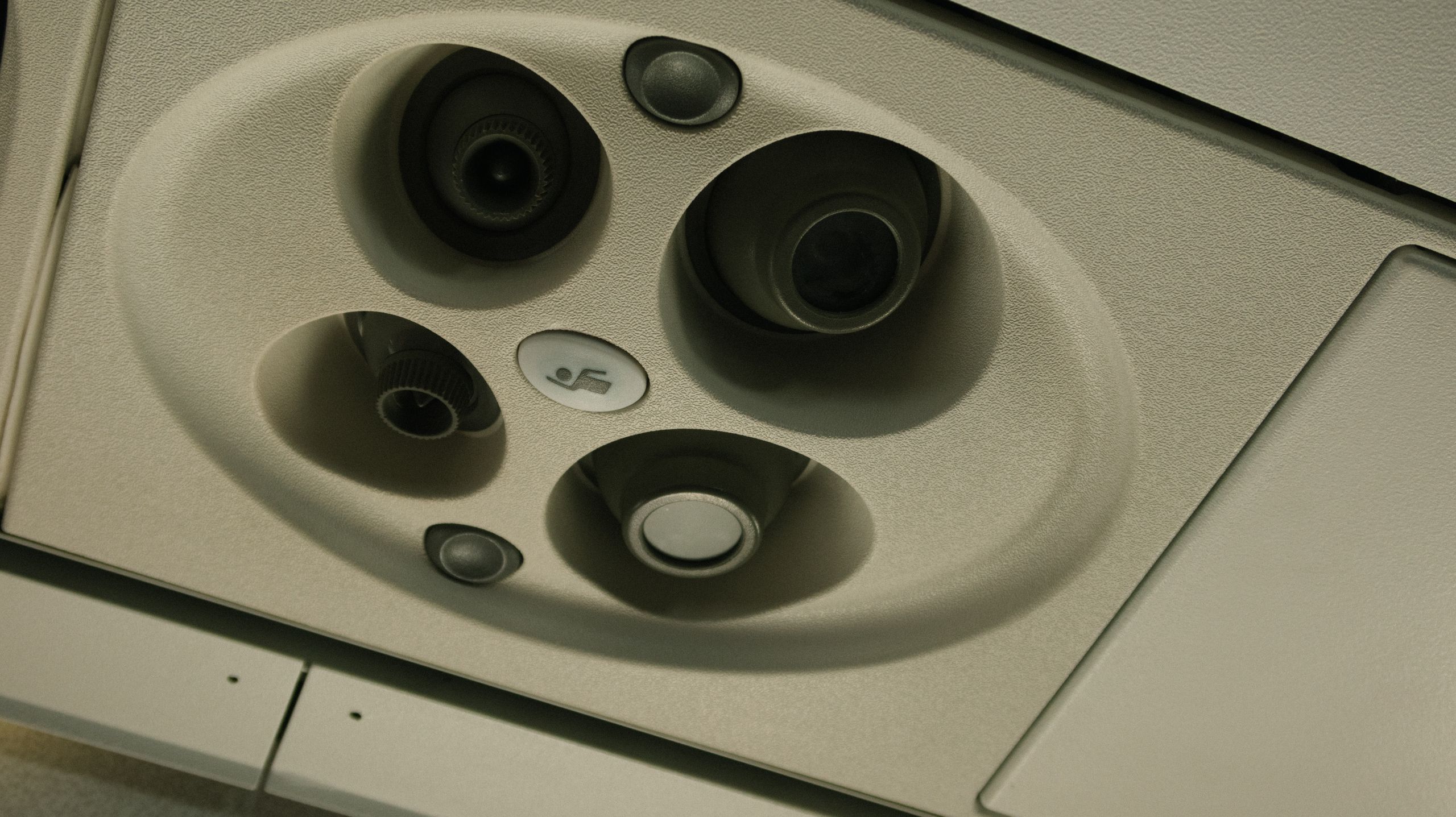
The call button exists for real needs, not every minor inconvenience. In a cabin with 150 to 250 passengers, one unnecessary call can pull a crew member away from service, safety checks, or another traveler with a more urgent problem.
The same rule applies to snapping, poking, tapping, or tugging at a flight attendant. A simple “excuse me” takes 2 words, while touching a crew member can turn a normal request into a tense moment in a cabin where FAA fines for unruly behavior can reach $43,658 per violation.
Walking barefoot into the airplane restroom
No flight attendant wants to see bare feet in an aircraft lavatory. On a plane with 2 restrooms and 180 passengers, that can mean roughly 90 people sharing each tiny bathroom during one trip.
Socks are not protection from a public restroom floor. Shoes take 5 seconds to slip on, but walking barefoot through a cabin restroom can leave passengers carrying that mess for the next 2 or 3 hours.
Blaming flight attendants for delays they cannot control
Flight attendants do not control weather, air traffic, mechanical decisions, gate availability, or routing. During the 2025 Thanksgiving travel crush, the FAA expected more than 360,000 flights over a 9-day stretch, underscoring how many moving parts lie far beyond the cabin crew.
Passengers may be tired, angry, or worried about missing connections, but yelling at the crew does not move the aircraft faster. The FAA says disruptive behavior can trigger fines, FBI referrals, travel restrictions, or airline no-fly consequences, and just 1 bad outburst can make a bad travel day much worse.
Panicking over the second meal choice

A plane meal is not a restaurant reservation, and flight attendants cannot magically create more trays at 35,000 feet. On a full flight with 150 or more passengers, meal choices can run out before the cart reaches the final rows.
The same goes for empty premium seats. One open first-class seat does not mean 1 free upgrade, and trying to sneak into it only creates an awkward confrontation that the crew has to handle in front of nearby passengers.
Forgetting that safety beats every carry-on bag.
The most serious version of bad cabin behavior happens during emergencies. IATA’s 2026 passenger research found that 80% of surveyed travelers claimed they knew what to do during an evacuation, but only 61% correctly said passengers should leave all personal belongings behind.
That gap is dangerous because even 1 or 2 passengers grabbing bags can slow the line behind them. IATA also found that 1 in 10 passengers admitted they might still take baggage during an evacuation or follow others who do, even when told not to.
Flight attendants are not asking passengers to be perfect. They are asking for 8 basic habits that make the cabin safer, faster, cleaner, and less miserable for everyone trapped in the same narrow aisle.