Los Angeles students are not treating the fight over DEI as a distant political argument. They are treating it as a question that lands in hallways, counseling offices, college tours, classroom safety plans, and the daily lives of students who already feel watched, judged, or left behind.
When teenagers rally behind the Los Angeles Unified School District’s Black Student Achievement Plan, they are not just defending a program name. They are defending the idea that schools should respond directly to the students who have been underserved the longest.
The conflict sharpened after the Trump administration moved against race conscious school programs and warned districts about policies it views as unlawful racial preference. In Los Angeles, that national pressure collided with local organizing around Black students, undocumented students, LGBTQ students, and school policing.
The result is a story bigger than one protest. It is a test of whether public schools can still name inequality clearly, fund support directly, and protect vulnerable students without being accused of discrimination for doing so.
L.A. students are pushing back because the classroom fight feels personal

The students at the center of this protest are not speaking in abstract policy language. They are talking about feeling seen, supported, and protected inside one of the largest school districts in the country. For many of them, DEI is not a slogan from a campaign speech. It is the difference between a school that notices their needs and a school that tells them to survive quietly.
That is why the rally in South Los Angeles carried more emotional weight than a normal district debate. Students, parents, and education activists gathered to defend programs they believe provide Black students with real support after years of unequal outcomes.
The tone was urgent because the students understood what adults often soften with legal language. If the money disappears, the counselors, social workers, college exposure, clubs, and mental health support tied to these efforts could become weaker just when students say they need them most.
The Black Student Achievement Plan became the center of a national DEI battle.
LAUSD’s Black Student Achievement Plan was created to address long running gaps in academic outcomes, school climate, and support for Black students.
The program has funded counselors, psychiatric social workers, restorative justice staff, academic help, culturally responsive instruction, and opportunities such as Historically Black College and University exposure. Supporters argue that the program exists because broad, race-neutral promises have not produced equal outcomes for Black students.
Critics see the issue very differently. Parents Defending Education, a Virginia based organization, filed a civil rights complaint arguing that the program used race in a way that treated students differently. LAUSD later said it would stop using race as a factor in selecting which schools participate, even as district officials and supporters defended the program’s purpose.
That shift created a messy middle ground. The district tried to keep the support in place, while activists argued that removing race from a program designed for Black student achievement weakens the honesty of the whole effort.
Trump’s anti-DEI pressure gave local critics a stronger weapon.

The Trump administration’s position on DEI gave national force to complaints that had already been aimed at LAUSD. Federal education officials warned schools against practices that treat students or workers differently because of race, and the threat of losing federal funding made the debate more serious for districts across the country.
For a massive district like LAUSD, federal pressure is not symbolic. It can shape budgets, legal strategy, staffing, and the language administrators use in public.
That is why students saw the administration’s actions as more than paperwork from Washington. They saw a political climate that could make school districts nervous about protecting Black, immigrant, and LGBTQ students by name.
Once fear enters the budget process, programs can be watered down before they are ever officially eliminated. Students are protesting because they understand that public pressure can work both ways. If outside groups can pressure a district to retreat, students can pressure it to stand firm.
The fight is also about school safety, not just race conscious programming.
The Police Free LAUSD Coalition has long argued that school safety should mean more counselors and fewer police centered responses. In 2020, activists successfully pushed for $25 million to be cut from the school police budget and redirected into the Black Student Achievement Plan.
That history matters because it shows how this current protest grew from an older argument about what safety should look like in public schools.
For supporters, BSAP represents a different model of protection. It suggests that students are safer when they have mental health care, trusted adults, academic support, restorative justice, and culturally aware staff.
That vision clashes with a tougher political message that often treats discipline, policing, and compliance as the main path to order. Los Angeles students are making the opposite case. They are saying that safety starts when students feel valued before they are punished.
Immigration fears made the protest bigger than one student group.
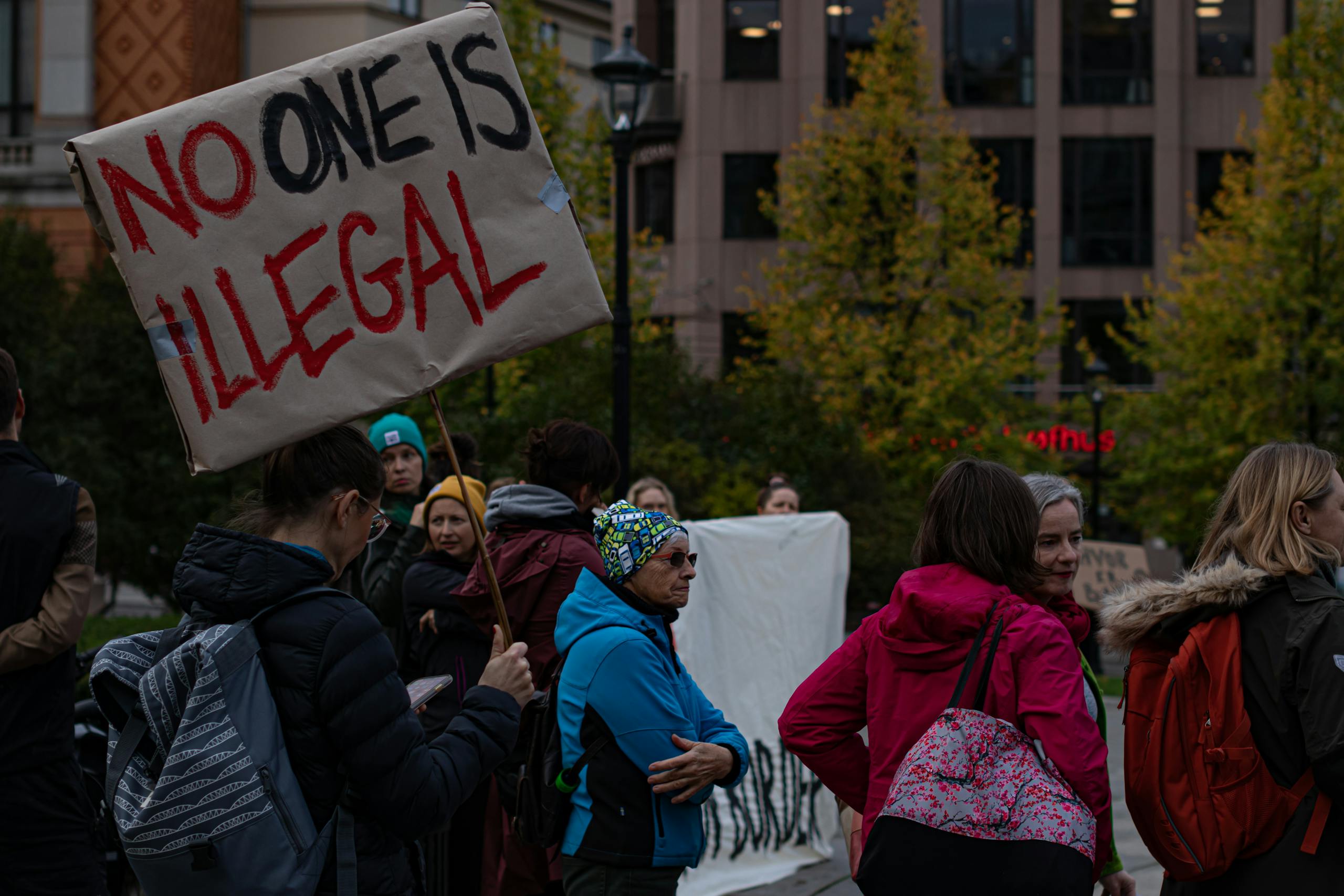
The protest also carried a wider message about undocumented students and immigrant families. Students described fear around immigration enforcement, with some saying no child should be scared to leave home or wonder if a parent will be there at the end of the day.
That fear connects the DEI debate to another painful question facing schools. Can a district protect students emotionally and practically when federal politics make families feel exposed?
For LAUSD, this matters because schools do not operate outside the lives of their students. A child worried about immigration raids, family separation, racism, bullying, or anti LGBTQ hostility does not simply turn that fear off when class begins.
The protesting students argue that schools must be safe zones in a real sense, not just in a poster on the wall sense. They want administrators to defend students whose families may be afraid to speak publicly.
Supporters say equity programs should be judged by student needs, not political branding.
One reason this story has become so charged is that the word “DEI” now carries heavy political baggage. To supporters, diversity, equity, and inclusion mean direct support for students who face measurable barriers. To opponents, DEI often sounds like unfair preference or ideological programming. That divide makes it easy for both sides to talk past each other.
The stronger question for LAUSD is practical. Are Black students receiving the academic, emotional, and cultural support they need to succeed? Are schools with serious needs receiving enough resources to meet those needs?
Are programs being measured by outcomes, or are they being attacked because of the language attached to them? Students backing BSAP want the district to answer those questions with investment, not retreat. They argue that fairness does not always mean giving every campus the exact same thing. Sometimes fairness means giving more support where the need is deeper.
LAUSD now faces a hard choice between legal caution and moral clarity

LAUSD is caught between federal scrutiny, activist pressure, legal risk, and student need. If the district moves too aggressively with race conscious criteria, it may face more complaints and investigations. If it strips race from the heart of the program, it may lose the trust of the students and families the program was created to serve.
That tension explains why the protest matters. Students are trying to make sure district leaders do not treat their lives as a legal inconvenience.
The path forward will require more than slogans from either side. LAUSD will need transparent data, clear eligibility rules, strong legal review, and honest communication about why targeted support exists. It will also need to show whether the Black Student Achievement Plan is improving academic outcomes, attendance, school climate, college readiness, and mental health access.
If the district can prove that the program meets real needs without excluding students unlawfully, it will have a stronger case. If it cannot explain the program clearly, critics will keep filling that silence with their own story.
Why this student protest could shape school equity fights nationwide
Los Angeles is not just another local district in this debate. LAUSD is huge, visible, politically watched, and often treated as a test case for national education fights. When students in Los Angeles organize around DEI, Black student achievement, immigrant protections, LGBTQ student safety, and school policing, other districts pay attention.
The question becomes whether student organizing can still influence public education when federal politics are moving in the opposite direction.
That is what makes this protest powerful. Teenagers are refusing to let adults reduce their school experience to a legal memo or campaign talking point. They are saying that support programs are not luxuries when students are dealing with academic gaps, racial isolation, mental health strain, immigration fears, and political hostility.
The debate over LAUSD’s Black Student Achievement Plan will continue, but students have already changed the frame. They turned a bureaucratic fight over DEI into a public demand for protection, investment, and honesty
The fight over LAUSD’s Black Student Achievement Plan is not only about one program, one complaint, or one administration. It is about whether schools can still respond directly to students who have been failed by broad promises of equal treatment.
Los Angeles students are making a simple but uncomfortable argument. If the system already produces unequal results, pretending every student starts from the same place does not make school fair. It only makes inequality easier to ignore.