Religion can turn a normal conversation tense in seconds. One person brings up politics, another mentions school prayer, someone makes a joke about Muslims, Christians, Jews, Hindus, or Buddhists, and suddenly the room gets quiet.
That is because many people talk about religion with confidence they have not earned. They repeat what they heard at home, online, in movies, in political speeches, or from one bad experience that became their entire opinion.
The problem is not disagreement. People can disagree honestly about faith, doctrine, power, history, and public life.
The problem starts when lazy myths replace real understanding. These myths make people sound certain, but they often flatten billions of believers into stereotypes.
All religious people think the same way.

This myth survives because it makes life easier for people who do not want complexity. It treats believers as a single predictable crowd with a single moral code, a single political opinion, and a single way of seeing the world. Real religious life is much messier than that.
A Christian in Texas, a Muslim in Indonesia, a Hindu in India, a Buddhist in Thailand, a Jew in New York, and a Sikh in California may all care deeply about faith, but that does not mean they think alike. Even within one religion, people argue about scripture, culture, gender, politics, reform, tradition, and authority. Religion may shape identity, but it does not erase personality, class, country, history, or conscience.
Christianity belongs to one political side.
In the United States, Christianity is often reduced to a single political image. Many people hear the word Christian and immediately picture a conservative voter, a church culture-war debate, or a national argument about schools, abortion, sexuality, or elections. That image may describe some Christians, but it cannot carry the whole religion.
Christianity includes Catholics, Protestants, Orthodox Christians, evangelicals, Pentecostals, Black church traditions, Latino churches, immigrant congregations, mainline Protestants, progressives, conservatives, and people who do not fit neatly into any political box. Recent survey data found that U.S. adults identify as Christian at 62 percent, encompassing millions of people with competing views. Treating them as one political tribe makes the country easier to argue about, but harder to understand.
Islam is mostly a Middle Eastern religion.
Islam is often imagined through a narrow Middle Eastern lens. People assume Muslims are mostly Arab, speak Arabic, dress the same, eat the same, vote the same, and live under the same type of government. That myth has caused serious damage because it reduces a global faith to a single stereotype.
The world’s largest Muslim populations tell a different story. Indonesia, Pakistan, and India together hold a large share of the global Muslim population, and roughly 240 million Muslims live in Indonesia alone. Islam has Arab roots, but Muslim life stretches across Asia, Africa, Europe, North America, and beyond. A person who thinks Islam is one religion has already misunderstood the religion before the conversation starts.
Judaism is only a religion.
Many outsiders try to squeeze Judaism into one neat category. They assume it is only a faith system, like joining a church or accepting a doctrine. That misses how Jewish identity often works across religion, ancestry, culture, memory, language, food, ethics, holidays, family history, and peoplehood.
Some Jews are deeply observant. Some are secular. Some attend synagogue often, while others connect through history, community, family, or cultural memory. That complexity can confuse people who expect religion to mean only worship and belief. Judaism is not easily reduced to one box, and trying to force it there often erases the lived reality of Jewish people.
Hinduism is just worshipping many gods.
Hinduism is often treated like a simple story about many gods, colorful temples, and unfamiliar rituals. That shallow description misses the philosophical depth of one of the world’s oldest living religious traditions. Hindu thought includes devotion, ethics, sacred texts, pilgrimage, meditation, family practice, ritual, and many ways of understanding the divine.
Some Hindus worship one chosen deity with deep devotion. Others honor several forms of the divine. Some traditions speak of one ultimate reality behind everything. Hinduism has no single founder, no single central church, and no one sentence that explains every Hindu belief. That does not make it random. It makes it rich, layered, and impossible to understand through a lazy one-line myth.
Buddhism is just meditation and good vibes.
Modern culture often turns Buddhism into a calm aesthetic. People associate it with candles, breathing, silence, mindfulness apps, spa music, and post-work stress relief. Meditation can be part of Buddhist practice, but Buddhism is much larger than a technique for calming down.
Buddhism includes teachings about suffering, desire, impermanence, ethics, compassion, rebirth, monastic life, ritual, scripture, discipline, and awakening. For many Buddhists, it is not a wellness accessory. It is a serious path that asks people to examine attachment, ego, conduct, and suffering. Reducing Buddhism to relaxation makes it easier to sell, but less honest to understand.
Sikhism is just a form of Islam or Hinduism.
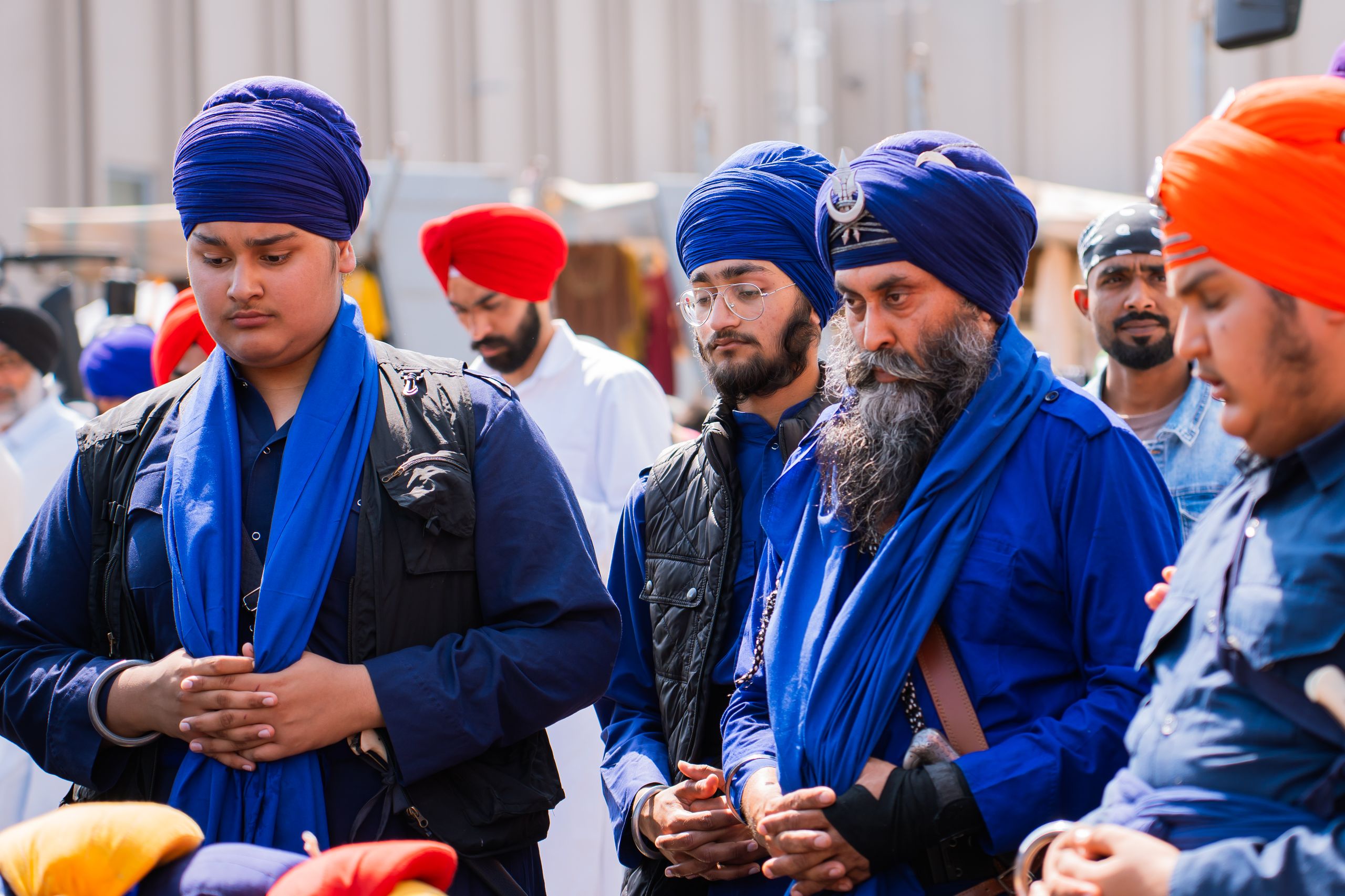
Sikhism is often misunderstood because many people know too little about it. Some assume Sikhs are Muslims because many Sikh men wear turbans. Others assume Sikhism is a branch of Hinduism because it began in South Asia. Both assumptions are wrong.
Sikhism is a distinct religion with its own gurus, scripture, practices, history, and community life. Its tradition began around Guru Nanak, whose teachings shaped a community with strong monotheistic beliefs, service, equality, and devotion, as explained in this introduction to Sikhism. The confusion is not harmless. Ignorance about Sikh identity has fueled discrimination, harassment, and violence, especially when people judge a stranger’s faith from appearance alone.
Catholics worship Mary
This myth is common among people who know Catholicism mainly from the outside. Statues, prayers, feast days, rosaries, candles, and images of Mary can look confusing to people from other Christian traditions. Some assume Catholics worship Mary the way they worship God.
Catholic teaching distinguishes between worship and veneration. The honor given to Mary and the saints is called veneration, while worship belongs to God alone, as Catholic teaching on Mary and the saints explains. People can agree or disagree with Catholic devotion, but calling it Mary worship misstates what Catholics say they believe.
Religion and science are always enemies.
Arguments about evolution, climate change, medicine, gender, and public policy make it easy to imagine religion and science as permanent enemies. Some religious groups do reject certain scientific claims, and those conflicts deserve honest criticism. But the broader picture is more complicated than a shouting match between faith and facts.
Many religious people work as doctors, engineers, nurses, researchers, professors, and scientists. Many religious institutions have also built hospitals, schools, universities, and humanitarian systems. The real tension is not always religion versus science. Often, it is authority versus evidence, interpretation versus discovery, or politics using religion as a shield. A serious conversation needs more precision than the slogan that believers simply reject knowledge.
Women experience every religion the same way.
People often talk about women and religion as though every faith tradition tells the same story. That is too simple. Women have faced restriction, exclusion, silence, and control inside many religious communities, and those realities should not be softened. But women have also taught, led, resisted, organized, preserved, interpreted, healed, and reshaped religious life from within.
The myth fails because it reduces women of faith to symbols rather than people. Some women experience religion as pressure. Others experience it as identity, scholarship, comfort, leadership, service, family, and strength.
The harder question is not whether religion is automatically oppressive or automatically empowering. The harder question is who gets authority, who gets heard, and who gets to define what faith looks like in real life?