A diplomatic opening may be forming along one of the Middle East’s most contested frontiers, but Damascus says one red line will not move.
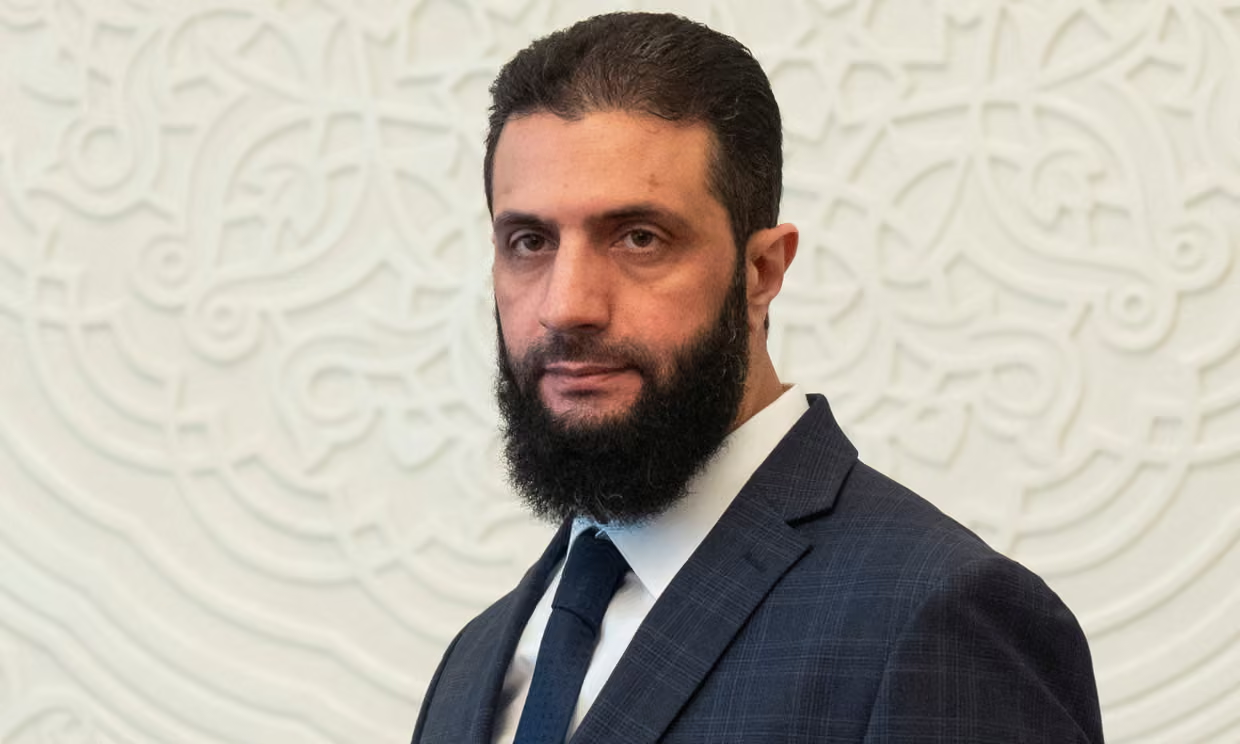
Syrian President Ahmed al-Sharaa said his government is seeking a security agreement with Israel that could eventually pave the way for comprehensive peace. However, he insisted that Syria would not surrender its claim to the Golan Heights, the strategic plateau Israel captured during the 1967 Six-Day War and annexed in 1981.
Al-Sharaa made the remarks in an Al Jazeera interview aired Sunday, July 26. He said several countries were involved in the effort and that Damascus wanted international pressure to encourage a more balanced Israeli policy toward Syria.
“We are avoiding getting into confrontations,” he said.
A security deal is not yet a peace treaty.
The distinction matters. Al-Sharaa did not announce a finished agreement or say Syria and Israel were about to establish normal diplomatic relations. He presented a security arrangement as a first step, designed to reduce military friction and create space for a larger political settlement.
That careful wording reflects Syria’s difficult position. The country is trying to rebuild after nearly 14 years of war, restore damaged institutions and repair relations with governments that kept Damascus isolated during Bashar al-Assad’s rule. Another direct conflict would deepen the strain on a nation already facing major economic and humanitarian pressures.
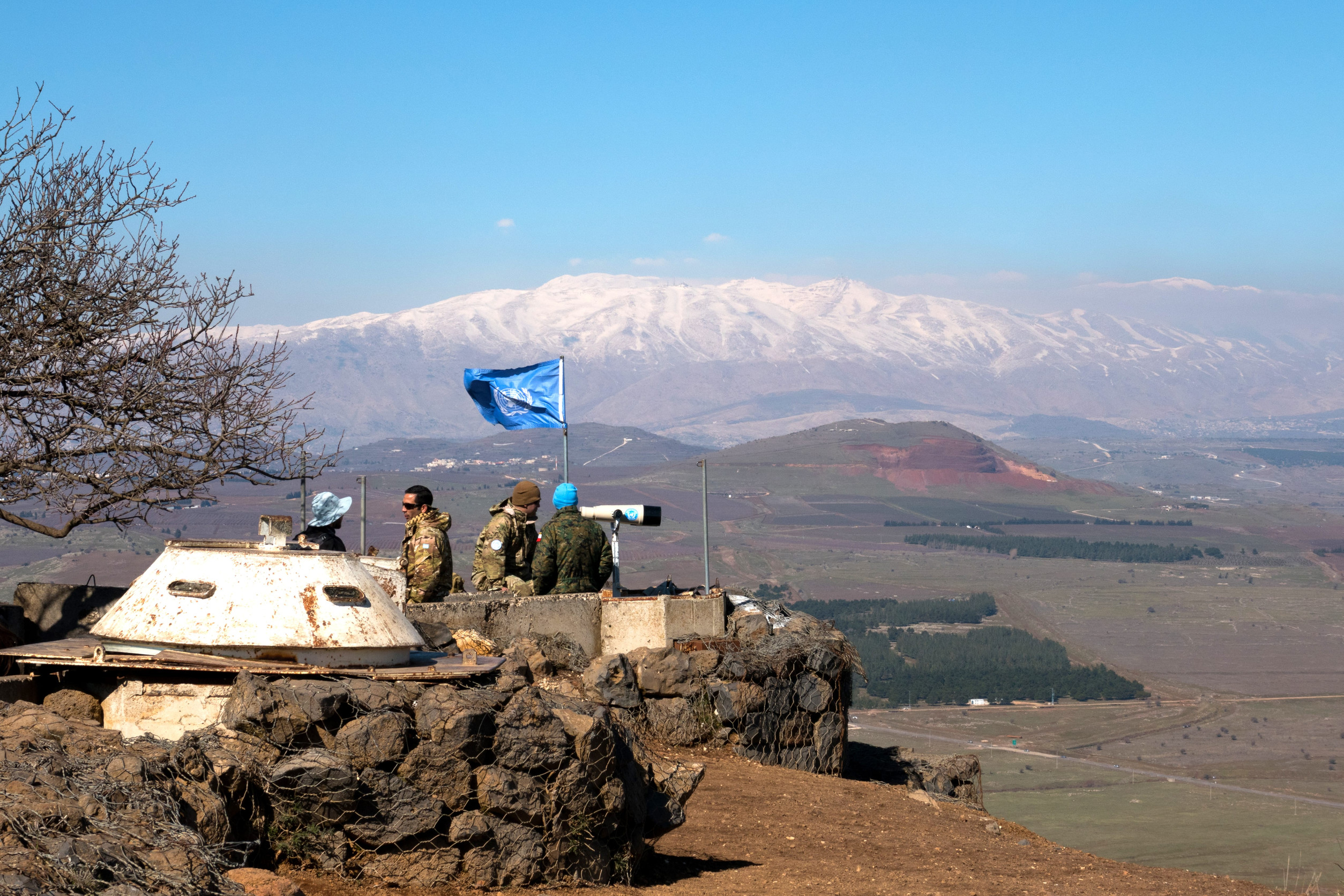
Israel, meanwhile, remains focused on threats near its northern border. After Assad was overthrown by rebel forces led by al-Sharaa in December 2024, Israeli troops moved into a United Nations-monitored demilitarized zone inside Syria. They took positions on the Syrian side of Mount Hermon.
Israel has said its operations are intended to stop hostile forces from establishing themselves near the border. It has also described some actions in southern Syria as efforts to protect the Druze minority. Damascus views the troop movements and airstrikes as violations of Syrian sovereignty.
The reports reviewed did not include an immediate Israeli response to al-Sharaa’s latest proposal. That leaves a crucial question open: whether Israel will accept a negotiated security framework or insist on keeping military positions seized after Assad’s fall.
The Golan Heights remains the hardest obstacle.
The Golan Heights is not simply another item on a diplomatic checklist. It is the issue most likely to determine whether security talks can grow into peace or stall at the border.
Israel captured most of the territory from Syria in 1967 and extended its laws and administration there in 1981. The United Nations Security Council responded with Resolution 497, declaring the move “null and void and without international legal effect.” Most of the international community still considers the area occupied Syrian territory.
For Israel, the plateau provides strategic depth, high ground, water resources and a buffer from instability inside Syria. For Damascus, recovering the territory has remained a central national demand across governments and generations.
Al-Sharaa’s formula tries to hold both realities at once: negotiate practical security guarantees now while refusing to abandon Syria’s territorial claim. A limited agreement could address troop movements, border monitoring, detentions and the future of the 1974 disengagement lines. Any final peace settlement, however, would eventually have to confront sovereignty over the Golan.
UN pressure strengthens Damascus’ argument.
Al-Sharaa’s remarks came as United Nations Secretary-General António Guterres visited Syria, the first trip by a serving UN chief to the country since 2009. The timing gave Damascus a significant international backdrop for its claim that regional security must respect Syrian sovereignty.
Guterres called for respect for Syria’s independence, unity and territorial integrity. He also condemned Israel’s continuing violations of the 1974 Disengagement of Forces Agreement and said the Golan Heights were Syrian territory.
The 1974 agreement created a separation zone monitored by the United Nations Disengagement Observer Force after the 1973 Arab-Israeli war. For decades, it helped keep the Syrian-Israeli frontier comparatively quiet, even though the two countries never signed a peace treaty.
Tensions have risen since late 2024. Reuters reported that Israeli forces entered strategic areas inside Syria after Assad’s government collapsed, while the Israeli military carried out strikes and detained people. On the same Sunday as al-Sharaa’s interview, Syria’s state news agency SANA said Israeli shelling destroyed an electrical transformer in Maariyah, cutting power to homes.
Those incidents explain why Damascus is pursuing an agreement now. Al-Sharaa is trying to replace an unpredictable military contest with rules, outside guarantees and diplomacy. His message is pragmatic, but not conciliatory at any price.
A security deal could lower tensions and give Syria more room to rebuild. It could also become the first serious bridge toward peace in decades. Still, the Golan Heights remains the test. Al-Sharaa has opened the door to negotiation, but he has made clear that Syria does not intend to walk through it by leaving its territorial claim behind.