A reader who had just moved to a new city for a new job, and who does not yet have a working kitchen, told Miss Manners that her sister asked her to bring the fresh turkey to the sister’s Thanksgiving dinner. The reader said she felt she was being used to cover the cost of the meal, and Miss Manners agreed the request went too far, calling it unreasonable.
The letter ran in the syndicated Miss Manners column on Nov. 21, 2026, five days before Thanksgiving, under a headline making the point that the answer to a guest’s offer to bring something is never the turkey.

A New Job, No Kitchen and a Turkey Request
According to the column, written by Judith Martin with her children Nicholas Ivor Martin and Jacobina Martin, the reader explained that she had recently relocated and started a new job. Without a kitchen of her own, she could not host anything this year. Her sister, who is hosting the family’s Thanksgiving, responded by asking her to bring a fresh turkey.
The reader wrote that she felt she was “being used to subsidize the cost of the meal,” and asked Miss Manners how to answer. The turkey is usually the most expensive item on the Thanksgiving table and the one that takes the most planning, from ordering a fresh bird to finding space to store it and hours of oven time to roast it.
Cost sits at the center of the reader’s complaint. The American Farm Bureau Federation’s 2026 Thanksgiving dinner cost survey prices a classic dinner for 10 every year, and the turkey is the single biggest item in it. Families looking to keep costs down have options, including the Thanksgiving meal bundles Walmart, Aldi, Lidl and Target sell for $30 to $38.74, but those decisions belong to the host.
Holiday hosts have long leaned on guests to fill out the menu, but there are limits. Old-fashioned manners held that the host supplies the centerpiece of the meal, one of several old-school etiquette rules that have disappeared in many households. Guests, meanwhile, are expected to offer help, as covered in the simple etiquette tips for being the perfect houseguest and the Thanksgiving guest manners the Emily Post Institute still recommends.
Miss Manners Says the Request Is Unreasonable
Miss Manners did not hedge. She answered that yes, the sister’s request is unreasonable. Her advice was to decline graciously: apologize, explain that she does not have the means to provide a turkey this year, and say she hopes to host the family herself next year.
Just as important, Miss Manners said the reader should not offer to bring something else in place of the turkey. Offering a substitute could open a negotiation the reader is not obligated to have, and the column’s answer was a clean, polite no.
The column’s headline sums up the rule in one line: when a guest asks what to bring, the answer is never the main course. A side dish, a pie, a bottle of wine or a bag of ice is a reasonable request. The centerpiece of the meal is the host’s job. The whole custom of guests carrying dishes to someone else’s holiday table is itself one of the odd American traditions that confuse the rest of the world.

Why the Turkey Is the Host’s Job
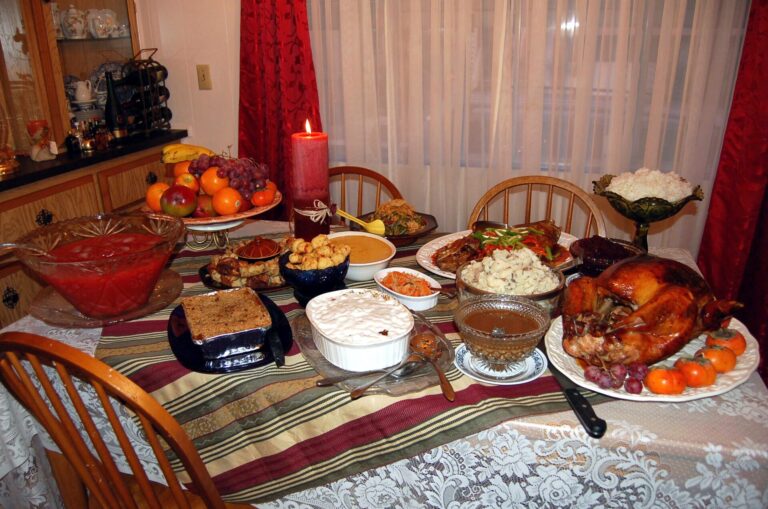
The bird has been the centerpiece of the American holiday table for generations, and its history is laid out in the encyclopedia entry on turkey as food. Because it anchors the meal, the turkey traditionally comes from whoever opens their home, while guests round out the table with sides and desserts. That division of labor is part of what makes the Thanksgiving dinner a shared effort.
Asking a guest to supply the main course also puts that guest in the awkward position of handling the most perishable part of the meal. A fresh bird has to be picked up close to the holiday and kept cold, and for someone without a kitchen, that is no small favor.
How Families Can Avoid the Same Standoff
The simplest fix is to talk about the menu early and in specifics. A host who needs help can ask guests to choose from a list of sides, desserts and drinks, and a guest who cannot cook this year can offer something that requires no kitchen at all, such as store-bought rolls, a dessert from a bakery or help with setup and cleanup.
Miss Manners’ column is part of a long run of etiquette advice from Judith Martin, who has written the column since 1978. Her answer to this reader follows a simple principle: a guest’s contribution should be a kindness, not a bill.
For the reader, the path forward is a short, warm reply to her sister and a plan to return the favor next year, once she has a kitchen of her own. With Thanksgiving on Thursday, Nov. 26, that conversation is best had sooner rather than later, so the host has time to buy the turkey herself.
Plenty of families split the holiday differently, with relatives taking turns hosting from year to year or chipping in cash toward the groceries. Those arrangements work when everyone agrees to them in advance. What Miss Manners objected to was a host shifting the biggest expense of the day onto a guest who had already explained that she could not host this year.
This article was produced with AI assistance and edited for accuracy against the sources linked above.
Image: Mark Miller – CC BY-SA 4.0/Wikimedia Commons