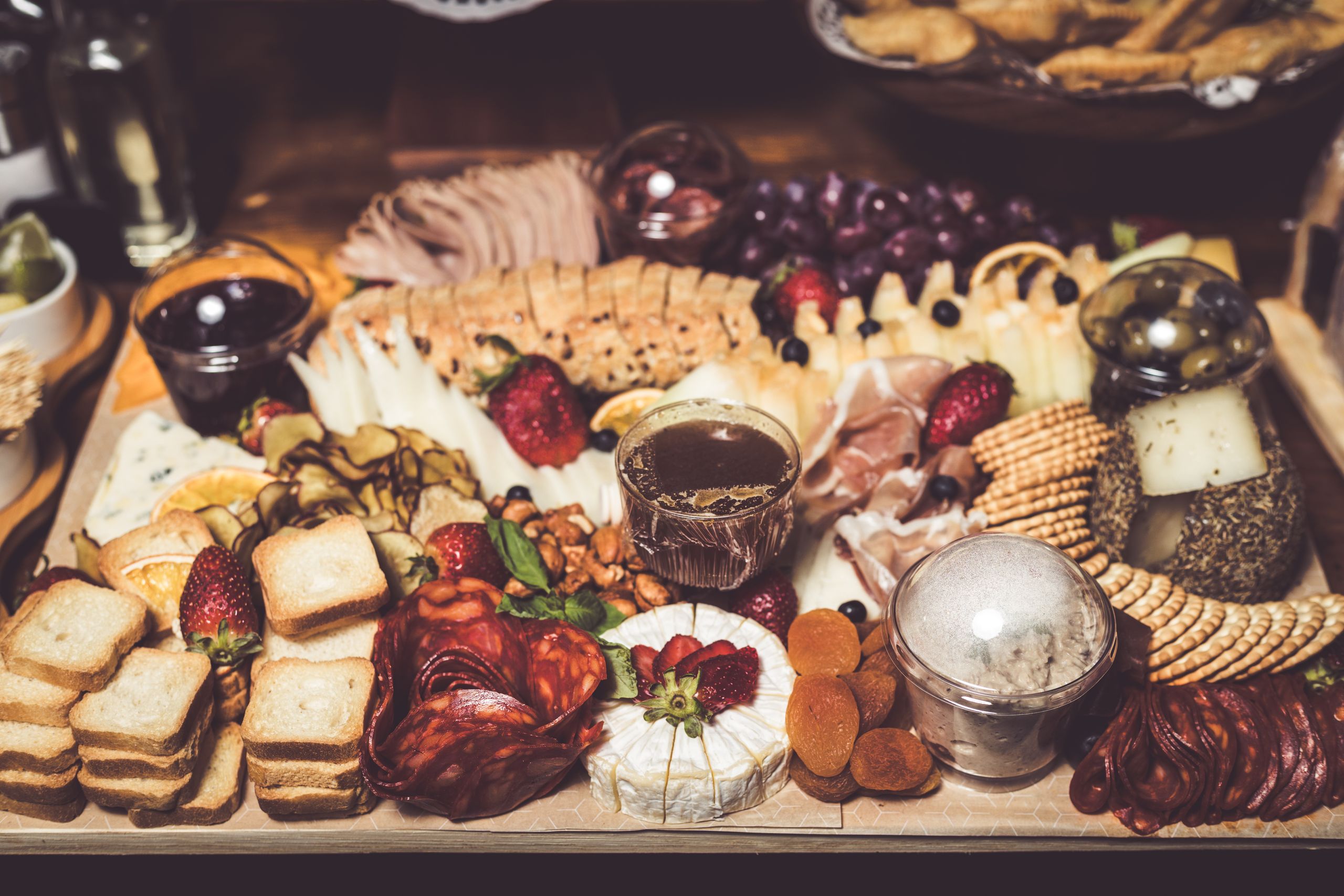
The charcuterie board has become the default holiday party opener: a big wooden slab of salami, cheese, crackers, grapes and a little pot of jam that guests graze on for hours. That last part, the hours, is where the trouble starts.
Extension food safety specialists say a holiday charcuterie board should never sit out past 2 hours total, or past 1 hour when the room is above 90°F, and leftovers from the board should be used within 1 to 2 days. Here is how that plays out on party day, step by step.

Never Leave the Board Out Past 2 Hours
The core rule comes from Nebraska Extension’s charcuterie guide, written by Cindy Brison. Cut produce, cheeses and charcuterie meats should not stay at room temperature for more than 2 hours in total, and the limit drops to 1 hour when the temperature is above 90°F. Once the board has been out and picked over, leftovers need to go in the refrigerator or in the trash.
The 2-hour mark lines up with the federal “danger zone” guidance described in the Wikipedia overview of the danger zone, which notes that the USDA’s Food Safety and Inspection Service says food left in that temperature range for more than 2 hours should not be eaten. A warm kitchen packed with guests, a fireplace or a sunny window can all push a room toward the stricter 1-hour limit.
The word itself comes from French cooking: charcuterie originally meant prepared meat products such as bacon, ham, sausage and pâtés. The modern American board, piled with cheese, fruit and crackers as well, has become a party fixture alongside the other odd American traditions that confuse the rest of the world, and it often anchors the snack table during long evenings of Christmas party games.
The fix is simple: set a timer. NDSU Extension’s charcuterie guide suggests exactly that, a phone timer, so meat and cheese are eaten or back in the refrigerator within 2 hours of serving. Hosts juggling a full holiday schedule can find more ideas for pacing the season in this piece on keeping the holiday pace manageable.
Never Build It Hours Early and Leave It on the Counter
Building the board ahead is fine; leaving it out while the house fills up is not. K-State food scientist Karen Blakeslee, in a Dec. 19, 2025 holiday tips column, says to wrap the finished board in plastic wrap and keep it in the refrigerator until serving time. NDSU’s guide says the same: a board can be made a few hours ahead, covered and chilled.
That means clearing a full shelf in the refrigerator before the party, which is a good reason to take stock of what is already in there. This list of 20 essential items to store in the refrigerator is a useful reminder of what can stay and what can be moved to make room. Hosts already prepping the house can work through these 6 places in the house to clear before guests arrive at the same time.
Never Let Guests Share One Knife or Dip Spoon
Nebraska Extension asks for a separate serving utensil for each item, plus spoons for dips and tongs or toothpicks so guests are not picking food off the board with their fingers. Dips and spreads belong in small containers, and they should be replaced at least every 2 hours, with the containers washed in between. Blakeslee also recommends putting out several utensils so guests can serve themselves without touching the food.
Butter boards and cream cheese boards get a special note from Nebraska: if a wooden board is used, keep the spread in a container or on a sheet of parchment paper. Small individual dishes also cut down on double dipping, one of those quietly awkward party moments covered in these 15 simple etiquette tips for houseguests and in these 12 rules for holiday houseguests.
Never Use the Raw-Meat Cutting Board
Nebraska Extension suggests a designated board for charcuterie, not the one used to cut up raw meat or poultry. Worn boards with deep grooves that are hard to clean should be thrown out. Plastic boards are easier to clean, the guide says, and ceramic plates and decorative platters work well too.
For cleanup, the same guide points to USDA advice: wash cutting boards with hot, soapy water after each use, rinse and air dry. Both wooden and plastic boards can be sanitized with 1 tablespoon of unscented liquid chlorine bleach per gallon of water, left to stand for several minutes, then rinsed.
Never Refill a Picked-Over Board
Rather than piling fresh salami on top of slices that have been out for 90 minutes, Nebraska Extension recommends keeping “refill” items such as sliced meats and cheeses in the refrigerator and swapping in a small, fresh board when the first one runs low. Cut fruit and vegetables should be kept cold until used and replaced every 2 hours.
Planning the right amount helps, too. Blakeslee’s column passes along guidelines from Cook’s Illustrated of 2 to 3 ounces of meat, 4 to 6 ounces of crackers or bread and 1/2 cup of dip per person, which keeps the board from becoming a mountain of leftovers.
Use Board Leftovers Within 1 to 2 Days
When the party ends, anything that stayed within the time limit can be saved. Blakeslee says to put leftovers in storage containers, or cover small dishes such as dips with plastic wrap, then refrigerate and use them within 1 to 2 days. That is a tighter window than the 3 to 4 days K-State gives for general holiday leftovers in its guide to safe leftovers, so board scraps are best turned into the next day’s lunch rather than saved for the weekend.
Anything that sat out past 2 hours, or past 1 hour in a hot room, goes in the trash. It is an easy call to make once the timer has already gone off.
This article was produced with AI assistance and edited for accuracy against the sources linked above.