Hillary Clinton has never been one to tap gently on the glass when she thinks American democracy is in danger. This week, she picked up the hammer.
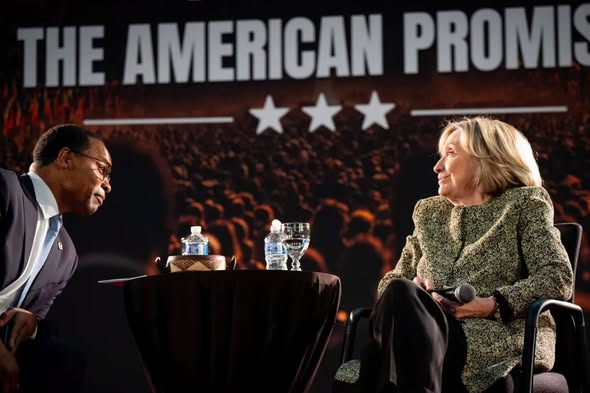
In a pointed interview with Democracy Docket founder Marc Elias, the former secretary of state and 2016 Democratic presidential nominee accused President Donald Trump and his Republican Party of pushing new voting restrictions because, in her view, they fear open competition at the ballot box. Her blunt line landed like a political grenade: “[Trump] can’t win a fair fight and his Republican Party, which has become a cult answering only to him, can’t win a fair fight,” Clinton said.
The target of her anger is the SAVE America Act, a Republican-backed voting bill that has become one of Trump’s loudest demands in Congress. Supporters sell it as a common-sense election security measure. Critics see something much darker: a paperwork wall placed in front of eligible voters, especially those least likely to have passports, birth certificates, updated IDs, or the time to navigate another layer of bureaucracy.
A voting fight dressed as election security
The White House describes the SAVE America Act as a bill that would require valid ID before registering to vote in federal elections, proof of citizenship, and major limits on mail-in ballots, except in cases involving illness, disability, military service, or travel. The administration says the purpose is simple: only American citizens should decide American elections.
That argument has real political power. Voter ID laws often sound clean and uncomplicated in a slogan. Show who you are. Prove you are eligible. Protect the vote. Who could object?
But the fight is not really about slogans. It is about what happens when that slogan becomes a nationwide rulebook. The bill’s text says applicants must present documentary proof of U.S. citizenship, such as a passport, certain REAL ID documents that indicate citizenship, military records, birth certificates, naturalization certificates, or similar documents.
For millions of Americans, that is not a small ask. It can mean finding old records, replacing lost documents, paying fees, taking time off work, traveling to government offices, or untangling name changes after marriage, divorce, adoption, or clerical errors. Voting rights groups argue that the burden would fall hardest on young voters, low-income voters, rural residents, elderly citizens, naturalized citizens, and married women whose documents do not perfectly match their current names.
The Brennan Center for Justice estimates that about 21 million American citizens lack ready access to documents such as passports or birth certificates, warning that the bill could block eligible voters from participating if it becomes law.
The Capitol chaos behind the bill

Clinton’s comments came as the SAVE America Act created fresh turmoil on Capitol Hill. Republican hardliners recently blocked action on the annual National Defense Authorization Act, demanding that Trump’s voting legislation be attached to the defense bill. According to Reuters, the procedural vote failed 224-198 after more than a dozen Trump-aligned Republicans broke with leadership, forcing House Republicans to send lawmakers home early for the July 4 break.
That is what makes this fight bigger than one voting bill. It has started swallowing other legislation.
Speaker Mike Johnson tried to manage the rebellion by offering procedural alternatives, but the holdouts wanted stronger guarantees. Rep. Anna Paulina Luna told reporters she would support the rule only if her amendment requiring voter ID and proof of citizenship were included in the text of the defense bill.
The problem for Republicans is the Senate. The party holds a narrow majority, but Senate Republicans have acknowledged they lack the 60 votes needed to overcome the filibuster and pass the measure under normal rules. Reuters reported that they also lack the votes needed to eliminate the filibuster.
So the bill sits in a strange place: powerful enough to paralyze the House, but not powerful enough to become law easily.
Clinton turns the bill into a moral argument.
Clinton framed the issue not as a technical dispute about election administration, but as a moral battle over who gets to participate in democracy. “It’s ridiculous that we would be looking at ways of limiting voters,” she said, adding that Republicans were doing so because “that’s the only way they can win.”
Republicans reject that framing. They argue the SAVE America Act protects election integrity, restores public trust, and ensures that noncitizens cannot register or vote in federal elections. The White House has urged both parties to support the measure, calling proof-of-citizenship and voter ID requirements basic protections.
But critics counter that noncitizen voting is already illegal and rare. PBS NewsHour’s PolitiFact analysis noted that the House passed the bill with Trump’s strong support after years of exaggerated claims about noncitizen voting, which it said rarely occurs.
That gap between fear and evidence is the heart of the argument. Republicans say they are closing a loophole before it becomes a crisis. Democrats say Republicans are inventing a crisis to justify closing the door on lawful voters.
For Clinton, the answer is obvious. She sees the SAVE America Act as part of a larger conservative strategy: reshape voting rules, weaken voting protections, and make participation harder in the name of security. Whether voters agree with her or not, her attack captured the emotional center of the Democratic response.
This is no longer just a fight over IDs, documents, or registration forms. It is a fight over the meaning of a fair election. Is fairness about tougher gates before a citizen can vote? Or is fairness about making sure eligible citizens are not turned away by paperwork they never expected to need?
That question is now sitting in the middle of Congress like a lit match.
And Clinton, never shy about naming the fire, is telling Democrats exactly what she thinks they are watching: not election protection, but election control.