When the lights go out during a cold snap, the first thought in many kitchens is the refrigerator: the milk, the leftovers and, this week, a turkey waiting for Thursday. For households with a portable generator, the instinct is to wheel it as close to the fridge as the cord will reach.
That is exactly the move federal safety officials warn against. A generator running the fridge in an outage belongs outside, at least 20 feet from any doors, windows or vents, the CDC says. The 20-foot rule is short, but it is the one generator number worth memorizing before the next storm.

Why 20 Feet Matters
The rule comes straight from the CDC’s generator safety guidance, which says to keep a generator outside and at least 20 feet away from any doors, windows or vents. A generator parked under a kitchen window or next to a back door fails that test even if it is technically outdoors.
The reason is the exhaust. Every gasoline generator gives off carbon monoxide, which the CDC describes as an odorless, colorless gas that “kills without warning,” and the agency names portable generators among the common household sources. Because nobody can see or smell it, a generator that seems to be running fine can still send it drifting through an open window.
Holiday weeks make the temptation stronger. With a crowded house and a fridge packed for the Thanksgiving meal, one of the odd American traditions that confuse the rest of the world, the pressure to keep everything cold can push safety down the list. That rule belongs right next to the other basics in this guide to things never to do when home alone in a winter power outage.
Never in the Garage, Even With the Door Open
The CDC’s generator safety fact sheet is blunt about it: never use a generator inside a home or garage, even if doors and windows are open. Only use one outside, more than 20 feet away from the home, doors and windows. The same fact sheet says carbon monoxide claims the lives of hundreds of people every year.
The garage is the most common temptation because it is close to the kitchen, dry and out of the weather. An open garage door does not change the answer. The CDC also recommends battery-operated or battery back-up carbon monoxide detectors near every sleeping area, checked regularly, a sensible addition to any outage kit along with fuel kept according to these rules for handling and storing gasoline.
Anyone who has run a generator at a campsite will recognize the logic from lists of common mistakes every camper should avoid: fuel-burning equipment stays well away from where people sleep and eat.
How Long Food Lasts Without Power
The good news is that a closed refrigerator buys time. The CDC’s food safety guidance for emergencies says that if the doors stay shut, food stays safe for up to 4 hours in a refrigerator, 48 hours in a full freezer and 24 hours in a half-full freezer. More detail on those clocks is in this breakdown of how many hours a fridge and freezer keep food cold.
That means there is no need to rush a generator into a dangerous spot in the first minutes of an outage. There is time to read the manual, check the fuel and set the unit up 20 feet out. A household that plans for these moments, the same way people build an emergency fund before they need it, can make the whole process calmer.
Keep the Cold In While the Generator Runs
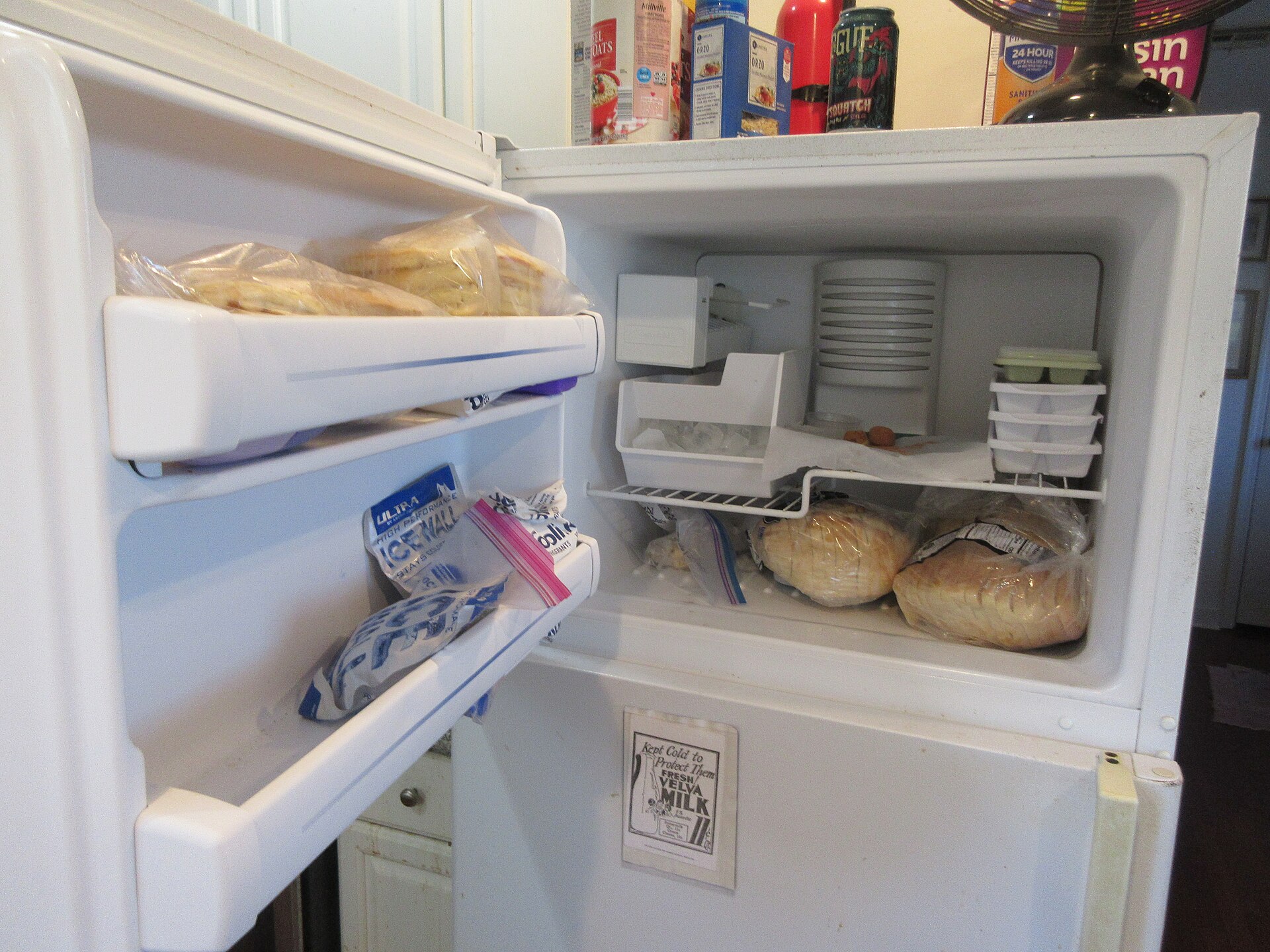
A generator does not make it fine to open the fridge every few minutes. The Food and Drug Administration recommends keeping refrigerator and freezer doors closed as much as possible and keeping appliance thermometers inside. The refrigerator should read 40°F or below and the freezer 0°F or below.
If the power has been out for 4 hours and there is no generator, the CDC suggests moving refrigerated perishables into a cooler with ice or frozen gel packs to hold them at 40°F or below. The FDA adds that 50 pounds of dry ice should keep an 18-cubic-foot, fully stocked freezer cold for 2 days, and it suggests knowing ahead of time where dry ice and block ice can be bought locally.
The FDA’s rule for afterward is firm: refrigerated perishable food such as meat, poultry, seafood, milk, eggs or leftovers that sat above 40°F for 4 hours or more should be thrown out. A thermometer reading, not a sniff test, is what decides.
A Short Generator Checklist for the Kitchen
Put together, the agency guidance comes down to a handful of steps. Set the generator outdoors, at least 20 feet from doors, windows and vents. Never run it in the garage or anywhere inside the home, even with the doors open. Install battery-operated or battery back-up carbon monoxide detectors near sleeping areas. Keep the refrigerator and freezer doors shut, keep thermometers in both, and check them before deciding what to keep.
It also helps to think about the timing of a holiday meal. A turkey thawing in the fridge, a pie waiting for dessert and a shelf of side dishes all depend on that 40°F line. A household that knows the 4-hour and 48-hour numbers can plan which items to cook first if the power stays off.
A holiday week outage is stressful enough, especially with a big meal on the calendar. Following the 20-foot rule keeps the turkey cold and the kitchen safe at the same time.
This article was produced with AI assistance and edited for accuracy against the sources linked above.