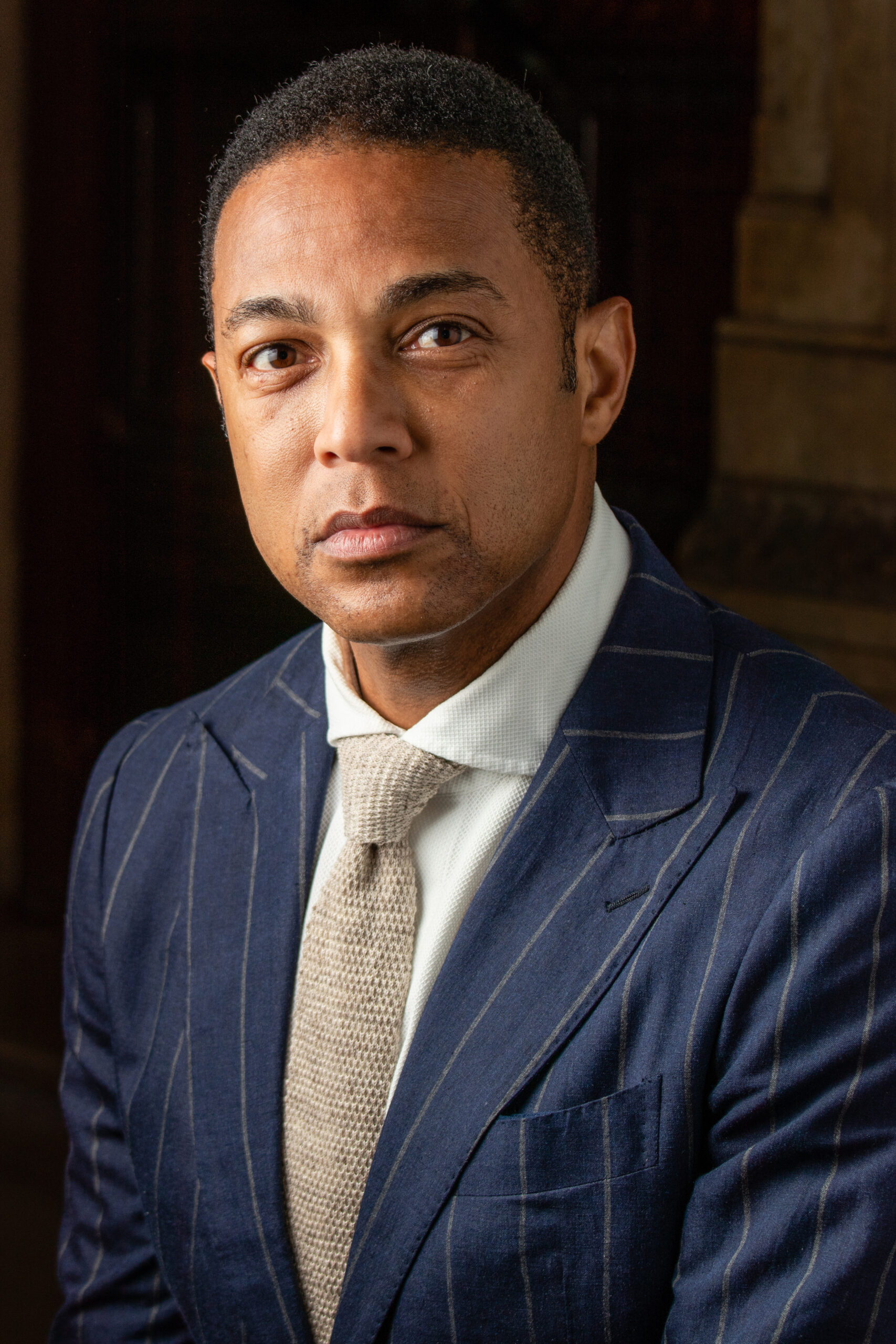
Don Lemon says he became a target of President Donald Trump and his administration before he ever faced criminal charges tied to a Minnesota church protest. Now, the former CNN anchor is asking a federal judge to dismiss the case, arguing that the government turned protected journalism into a criminal offense.
Lemon’s legal battle began after he covered an anti ICE protest at Cities Church in St. Paul, Minnesota, earlier this year. Prosecutors accuse him of taking part in a coordinated effort to disrupt a worship service, while Lemon says he was there as a journalist documenting a major political event.
The case has now expanded beyond one protest and one reporter. It has become a larger debate over press freedom, government power and whether journalists can face prosecution for covering controversial events from close range.
Don Lemon says his reporting was mistaken for criminal activity
Fuzheado, CC BY-SA 4.0, via Wikimedia Commons
Lemon’s attorneys filed a motion asking the court to dismiss the indictment, arguing that the charges violate the First Amendment. They claim the prosecution represents a form of vindictive action driven by years of public criticism from Trump and his allies.
His legal team says Lemon was not a protest organizer or participant. They argue he went to Cities Church to report on the demonstration, livestream the events and show viewers what was happening in real time.
The defense says journalists often work from the center of breaking news. Reporters regularly enter protests, political rallies and tense confrontations because their role is to document events that matter to the public.
Lemon’s lawyers argue that punishing journalists for being present during controversial events could create a chilling effect across the media industry. They say reporters may become afraid to cover important stories if proximity to wrongdoing is treated as evidence of participation.
“The law has long recognized that bearing witness is not the same as taking part,” Lemon’s attorneys argued in their filing. They maintain that covering an event does not automatically make a journalist responsible for the actions of people involved.
Prosecutors say Lemon crossed the line from reporter to participant
Federal prosecutors have offered a different account of what happened inside Cities Church. They argue Lemon was not simply observing the protest but was connected to a coordinated effort to interfere with a religious service.
The government describes the demonstration as a planned, takeover style protest. Prosecutors allege that Lemon knew the purpose of the event before arriving and became involved in conduct that contributed to the disruption.
Officials argue that a journalist’s profession does not automatically protect them from criminal charges. They say anyone who knowingly assists unlawful activity can be held responsible regardless of their occupation.
The central question in the case is whether Lemon was documenting the protest or helping advance it. The answer could determine whether the charges move forward or collapse before reaching trial.
Why the Trump connection is central to Lemon’s defense
A major part of Lemon’s argument focuses on his long history of public clashes with Trump. His attorneys claim the former president repeatedly criticized him before the Minnesota incident and that officials later pursued charges because of that hostility.
The defense points to statements from Trump and administration officials as evidence that Lemon had become a political target before prosecutors took action. They argue that the Justice Department should not be used to punish journalists whose coverage is unpopular with those in power.
The government has rejected that argument and maintains that the charges are based on Lemon’s alleged actions during the protest. Prosecutors argue that political disagreements and personal criticism do not change the facts of the case.
The judge must now determine whether Lemon’s claims meet the high legal standard required to dismiss a prosecution based on alleged improper motives. That decision could become one of the most important parts of the legal battle.
The FACE Act charge puts religious freedom and press freedom at the center
One of the most unusual parts of Lemon’s case involves the federal law prosecutors used. The charges include an allegation under the Freedom of Access to Clinic Entrances Act, commonly known as the FACE Act.
Many Americans recognize the FACE Act because of its use in disputes outside abortion clinics. However, the law also protects people from exercising religious freedom at places of worship.
Prosecutors say the Minnesota protest interfered with churchgoers’ ability to practice their faith. Lemon’s attorneys argue that applying the law in this situation creates serious First Amendment concerns.
The case places two constitutional protections against each other. The government has a responsibility to protect people from intimidation and disruption, while journalists have a right to gather information and report on public events.
The court’s decision could help define the boundary between observing unlawful conduct and participating in it. That distinction could affect how reporters cover protests across the country.
Lemon’s case faced questions before he was indicted
The legal controversy surrounding Lemon began before the indictment was issued. Earlier reviews raised questions about whether prosecutors had enough evidence at that stage to establish probable cause against him.
Those early concerns have become a key part of Lemon’s defense strategy. His attorneys argue that the government continued pursuing charges despite questions about whether his actions represented journalism rather than criminal involvement.
Prosecutors later presented the case to a grand jury, which returned an indictment against Lemon and other defendants. Lemon pleaded not guilty and has continued to maintain that he was acting as a journalist.
The competing views highlight the complexity of the case. One side sees a reporter covering a protest, while the other sees someone whose actions went beyond observation.
The bigger question: can journalists be punished for covering protests?
The Don Lemon case has attracted national attention because it touches on a difficult issue facing modern journalism. Reporters often enter unpredictable situations because the most important stories frequently happen where tensions are high.
Journalists cover protests, political movements, and confrontations because the public relies on them to document events. Some of the most significant moments in history have been captured because reporters were willing to stand close to the action.
However, prosecutors argue that the press cannot provide unlimited protection. They say journalists remain responsible if they personally participate in unlawful conduct.
The challenge for courts is deciding where reporting ends, and participation begins. That line becomes especially difficult when reporters know a protest may become disruptive but remain present to document what happens.
Why the Don Lemon case could have national consequences
The outcome of Lemon’s case could influence how journalists approach protests and political demonstrations in the future. News organizations frequently send reporters into tense situations because those moments often shape public conversations.
Press freedom advocates argue that journalists should not fear criminal charges simply because they are present during controversial events. They warn that aggressive prosecutions could discourage reporting on politically sensitive issues.
At the same time, legal experts recognize that reporters are not above the law. A journalist who actively participates in illegal conduct can still face consequences.
The court’s decision will likely focus on one key question. Was Don Lemon documenting a protest, or did prosecutors prove he became part of one?
What happens next in Don Lemon’s legal battle
The judge will now review Lemon’s request to dismiss the charges. The court could allow the case to continue, dismiss some charges, or reject the defense arguments entirely.
For Lemon, the decision could determine whether he faces a trial over his role in the Minnesota church protest. For journalists, the ruling could shape how reporters cover controversial events in the years ahead.
The case is ultimately about more than one journalist and one demonstration. It represents a larger national debate over press freedom, accountability and the difficult line between witnessing history and becoming part of it.