Every holiday baker knows the little brown bottle that lives on the spice shelf. It comes out for sugar cookies, eggnog and frosting, and then disappears behind the cinnamon until next December, often with no clue how long it has been open.
A pantry storage chart from K-State Research and Extension gives it a clear timeline. At 70°F, unopened vanilla keeps 2 years and opened vanilla keeps 12 months. Gelatin, the powder behind holiday molds and gelatin salads, keeps 18 months in its original container.

Where the Numbers Come From
The times come from Safe Food Storage: The Cupboard, a Kansas State University chart revised in June 2026 by Karen Blakeslee, an extension associate in the Department of Grain and Food Science. It lists storage times for dozens of shelf-stable foods at 70°F, a typical cupboard temperature, and the university’s Extension Food Safety program offers more guidance in the same vein.
K-State adapted the chart from the USDA’s FoodKeeper, the federal storage guide that also runs as a free app, along with University of Missouri and North Dakota State University materials. For bakers clearing out a crowded spice shelf before the cookie marathon, these kitchen organization ideas can help with the sorting.
Vanilla: 2 Years Unopened, 12 Months Opened
A sealed bottle of vanilla gets 2 years on the K-State chart. Once it is opened, the chart drops that to 12 months, and the reason is in its note: “Volatile oils escape.” The advice that goes with it is simple: keep it tightly closed. A bottle parked next to the burners is one of the things that don’t belong on a kitchen counter, since heat and light work against stored food.
Those volatile compounds are what give vanilla its flavor. Wikipedia’s entry on vanilla extract describes it as a solution made by soaking vanilla pods in ethanol and water. Its main flavor compound is vanillin, but pure extract carries many other compounds that create its deep, complex taste, while artificial vanilla flavor is typically just vanillin. In the U.S., the FDA requires pure vanilla extract to contain at least 35% alcohol and 100 grams of vanilla beans per liter.
The same entry notes that Malagasy, Mexican, Tahitian, Indonesian and Ugandan beans are the main varieties used today. The “Bourbon vanilla” label on many bottles refers to beans from the former Bourbon Islands, most commonly Madagascar, and has nothing to do with bourbon whiskey. Double- and triple-strength extracts exist too, though they are mostly sold for manufacturing and food service.
Losing that flavor to a loose cap is a waste of a bottle that does a lot of work in December. It turns up in many of the Christmas cookies families bake every December, and in plenty of cakes, like this guide to baking the perfect honey cake. Some of those family recipe cards are old enough to date back to the era of these slang words from the swinging ’60s.
Gelatin: 18 Months in Its Original Container
Gelatin is the long-lasting item in this group. K-State gives all types 18 months at 70°F, with one instruction: keep it in its original container.
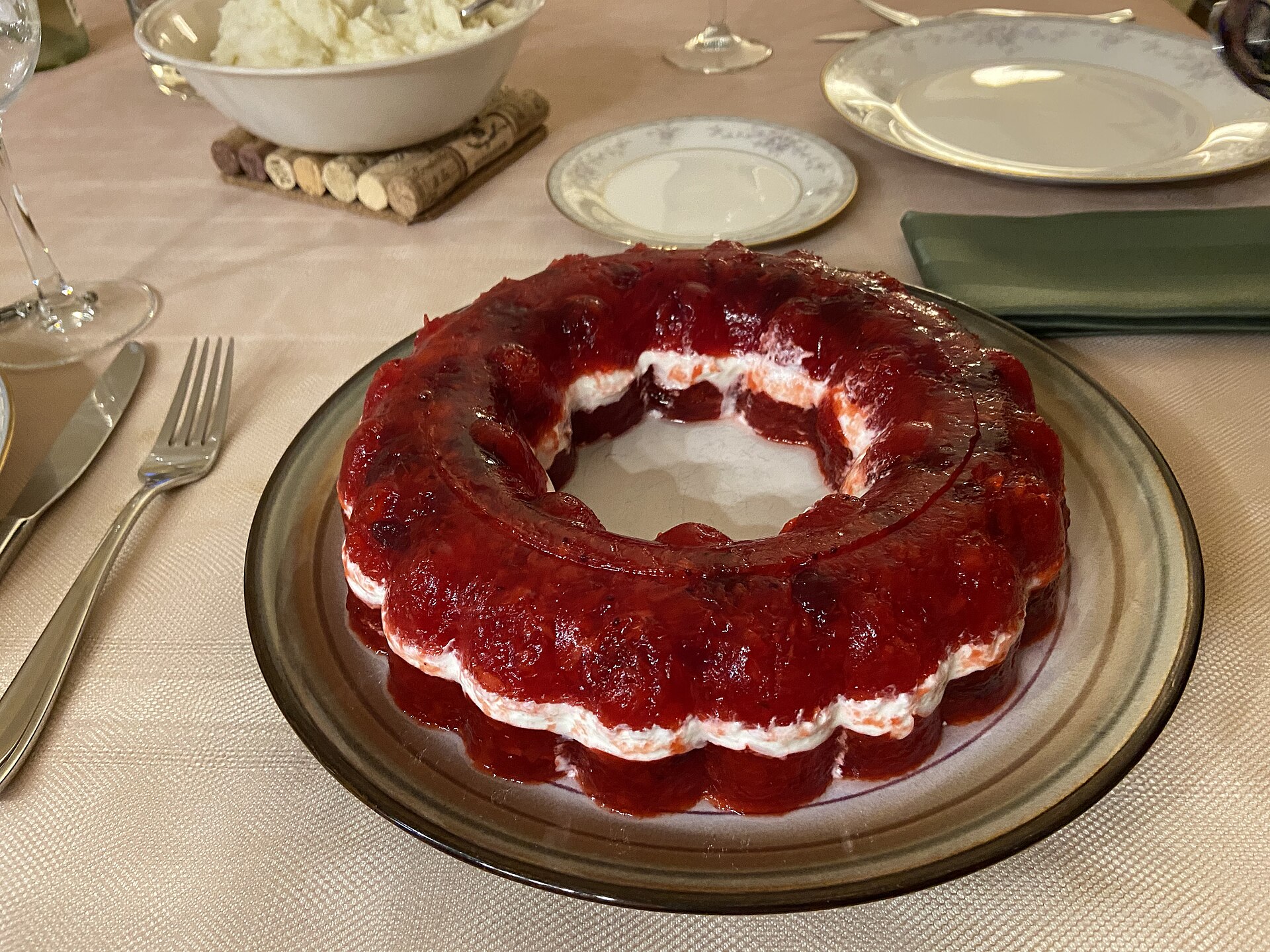
Wikipedia’s gelatin entry describes it as a translucent, colorless and flavorless ingredient that is brittle when dry and rubbery when moist, and it is sold for home cooks as a dry powder. Flavored gelatin dessert has a long American history. According to Wikipedia’s history of Jell-O, carpenter Pearle Bixby Wait trademarked the name in LeRoy, New York, in 1897, and he and his wife, May, added strawberry, raspberry, orange and lemon flavoring to granulated gelatin and sugar. Two years later, in 1899, Wait sold Jell-O to Orator Francis Woodward, whose Genesee Pure Food Company went on to produce it.
Molded gelatin salads still show up on some holiday tables, often made from a family recipe card that has been around for decades. An earlier Timeless Dishes piece explained why fresh pineapple, kiwi and papaya keep gelatin from setting.
Other Opened Extracts Get 12 Months, Too
Vanilla isn’t the only bottle on the shelf. The K-State chart gives other opened extracts the same 12 months, with the same warning about volatile oils escaping. That covers the almond, peppermint and lemon extracts that come out for holiday baking and then sit for most of the year.
A simple habit helps: write the date the bottle was opened on the label. Small bottles are easy to lose track of, and a date settles the question next season. Keeping them away from the stove and out of direct sunlight helps as well, in line with the chart’s advice to store pantry goods away from heat sources.
Quick Checks Before Holiday Baking
The chart’s general rules apply to the whole baking shelf: store food in a cool, dry, dark place away from heat sources, buy only what can be used, check dates and use the oldest products first. When in doubt, K-State says, throw it out.
For vanilla and other extracts, a quick sniff is the easiest test. A bottle that has been open well past 12 months and smells faint will give weaker flavor to a batch of cookies. For gelatin, look for a box that is dry, sealed and still in its original packaging, as the chart recommends.
With the 2-year, 12-month and 18-month windows in mind, a few minutes of checking now can save a last-minute store run when a recipe calls for a teaspoon of vanilla.
This article was produced with AI assistance and edited for accuracy against the sources linked above.