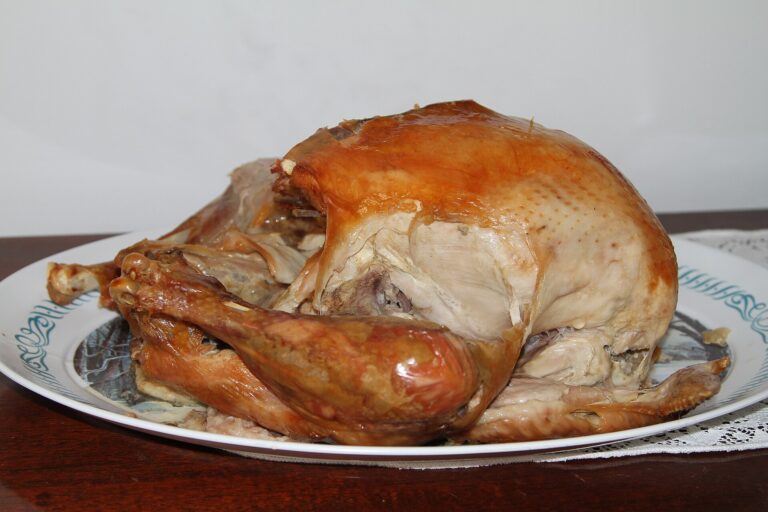
Sunita Advaney was 7 years old when she asked her immigrant parents about Thanksgiving, and the family responded by buying a turkey. Years later, the Advaney household was roasting two birds for the holiday, one of them seasoned like tandoori chicken. Across Indian American kitchens, the turkey now shares the table with biryani stuffing, matar paneer and cranberry chutneys.
The Advaneys’ story was one of several family accounts in an IANS feature published Nov. 24, 2026, on how Indian American families have made the holiday their own.

Two Turkeys, One of Them Tandoori
According to the IANS report carried by The Hans India, the Advaney family’s tradition began with that first turkey, bought after a 7-year-old’s question. Over time, the meal grew into two turkeys: one roasted the familiar American way and one with the bold spice rub of tandoori chicken, the yogurt-and-spice dish traditionally cooked in a clay oven.
Other families in the report took the idea further, serving tandoori turkey stuffed with biryani, the layered, spiced rice dish, along with boiled eggs. Some put matar paneer, a curry of peas and fresh cheese, right next to the cranberry sauce.
The pairing works in the kitchen as well as on the plate. A yogurt-and-spice marinade like the one used for tandoori dishes clings to turkey skin and browns deeply in a hot oven, and a rice-based stuffing holds up well inside a large bird. Food rules and customs differ widely from one country to the next, as the laws and rules about food in other countries show, and families who bring two food cultures together often end up with a holiday table that looks like neither one alone.
Blending a family’s own flavors into an American holiday is one of the things visitors notice most about the country, and it shows up among the things non-Americans can’t stop raving about after visiting the U.S. The turkey-centered feast itself remains one of the odd American traditions that confuse the rest of the world.
A First Turkey in 1979
Shirley Khemlani moved to New York in 1979, and her first Thanksgiving turkey was a challenge. She told IANS she had never seen a bird like it and that its sheer size intimidated her. Her story is a familiar one for many newcomers, for whom the giant roast turkey is the least familiar part of an American holiday.
Meena Patel took a different route. She prepared a vegetarian Thanksgiving spread for her Gujarati family, skipping the turkey entirely and building the meal around dishes that fit the family’s traditions. Gujarati cooking, known for its vegetable dishes balancing sweet, tangy and spiced flavors, lends itself to a harvest-season menu.
Holiday cooking for a crowd is a tradition that crosses every culture. In Georgia, a Rincon mother starts cooking at 5 a.m. on Thanksgiving to feed hundreds for free, and in Texas, a family cafe in El Paso’s Segundo Barrio serves free Thanksgiving dinner to anyone who walks in.

A Chef’s “Thanksgiving Meat and Nine”
Chef Maneet Chauhan, the Nashville restaurateur and television judge, described her own version in a 2019 interview with The Splendid Table, cited in the IANS report. She called it a “Thanksgiving meat and nine,” a play on Nashville’s meat-and-three lunch tradition. Her menu included turkey tikka masala, a vegetable pulao-biryani stuffing, a cranberry five-spice chutney and a sweet potato raita.
Each of those dishes keeps the shape of a classic Thanksgiving item while changing the flavor. The turkey stays, but in a spiced tomato-cream sauce. The stuffing becomes a fragrant rice dish. The cranberry sauce turns into a chutney, and the sweet potatoes, usually baked with marshmallows, become a cool yogurt side.
For home cooks curious about trying the idea, the swaps are simple to start with. A spice rub of cumin, coriander, paprika and garam masala can go on a turkey breast instead of a whole bird, a pot of vegetable pulao can sit beside the usual stuffing, and a jar of cranberry sauce can be stirred into a quick chutney with ginger and chili. None of it requires giving up the familiar dishes, only adding new ones next to them.
Food writer Priya Krishna described her family’s spread in a 2018 Bon Appétit essay, also cited by IANS: matar paneer, squash, chickpeas and puri, the puffed fried bread.
Community Feasts on Nov. 26
The holiday also extends beyond family tables. The IANS report noted that ISKCON of Houston is hosting a feast on Nov. 26, and ISKCON of New York City is holding a dinner at Govinda’s in Brooklyn with a menu of quinoa pulao, baked paneer kebab, vegetable quiche and cheesecake. In Jersey City, the New Jersey nonprofit Let’s Share a Meal held a seva, or service, drive on Nov. 14.
Those community dinners mirror what happens in homes. The meal keeps its basic outline, a big shared table and a harvest-season menu, while the dishes on it reflect the cooks who make them. For the Advaneys, that meant a second turkey with a tandoori rub. For other families, it is biryani in the bird, paneer beside the cranberries or a vegetarian spread with no turkey at all.
With Thanksgiving on Thursday, Nov. 26, those kitchens will be busy again, and the turkey may well come out of the oven smelling of cumin and garam masala as much as sage and thyme.
This article was produced with AI assistance and edited for accuracy against the sources linked above.
Image: pelican – CC BY-SA 2.0/Wikimedia Commons