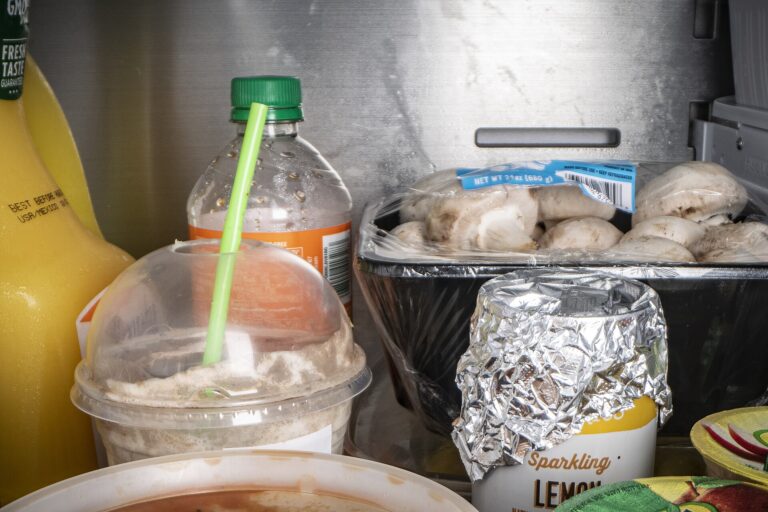
A crowded refrigerator is one of the first things to go wrong in a Thanksgiving kitchen, and professional organizer Amanda Wiss has a 6-step plan for clearing space before the turkey, the sides and the leftovers all need a shelf. Her first step is the most dramatic: take everything out.
Wiss, founder of the organizing company Urban Clarity, laid out the steps for The Pioneer Woman in a guide published Nov. 10, 2026, aimed at hosts who need room for a holiday’s worth of food.

Steps 1 and 2: Empty It and Toss What Does Not Belong
1. Take everything out. According to the guide by Lilly Blomquist, the reset starts by clearing the refrigerator completely so every item can be seen at once. The one rule while the fridge is empty: perishables should not sit at room temperature for more than two hours, so the job is best done in one focused session, with a cooler nearby for milk, meat and dairy.
2. Toss what is not needed. Wiss recommends discarding expired food, duplicates, nearly empty containers and condiments nobody in the house actually enjoys. The goal, she said, is to save the space for food that will actually be served. A door full of half-used sauces is one of the easiest places to free up room, and it is a good moment to check against a list of the essential items to keep in the refrigerator at all times.
Clearing out the fridge also makes room for the biggest item of the week. A frozen bird that is thawing needs a shelf of its own, and hosts running behind can use the cold-water method, which can thaw a still-frozen 16-pound turkey in about 8 hours with fresh water every 30 minutes.
Steps 3 and 4: Clean the Shelves and Sort by Category
3. Clean the appliance. With the shelves empty, Wiss suggests scrubbing shelves and drawers with a microfiber cloth and warm, soapy water, and using an old toothbrush for tight corners. She also calls out two spots that are easy to miss. “Don’t forget the door handles and the rubber gasket around the door,” she said.
4. Sort what stays. Before anything goes back in, group items by category, with condiments together, fresh produce together and so on. Sorting first makes it obvious how much space each category really needs. The same approach works in the pantry and cabinets, as in the clever storage hacks to maximize every inch of space.
Holiday cooking puts pressure on more than the fridge. Ovens fill up fast on Thanksgiving Day, which is why some hosts look to countertop appliances to free up the oven this Thanksgiving, and households with pets add another layer of prep, such as the steps veterinary toxicologists recommend before Thanksgiving guests arrive.

Step 5: Put Every Category in Its Place
5. Organize the interior. Wiss’s layout follows a top-to-bottom logic. Produce goes in the crisper drawers, condiments go in the door shelves, ready-to-eat foods go on the top shelf, dairy goes in the middle and raw meat goes on the bottom.
Keeping raw meat on the lowest shelf means any drips land below everything else rather than on foods that will not be cooked. The crisper drawer exists to hold fruits and vegetables at a different humidity than the rest of the fridge, which helps them stay fresh longer. And the door, which swings open dozens of times a day and tends to run a little warmer than the main shelves, is best kept for condiments that hold up to small temperature swings. The basic design of the home refrigerator, with its door bins, adjustable shelves and drawers, is built around exactly this kind of zoning.
Wiss also recommends leaving space between items so cold air can circulate, and reserving room for the Thanksgiving ingredients that have yet to arrive.
Step 6: Add Overflow Storage
6. Use a cooler and the freezer. For the overflow, Wiss suggests a cooler for beverages and for dishes waiting to go into the oven. Freezable ingredients, and recipes that can be made ahead and frozen, can move to the freezer to free up shelf space in the fridge.
A well-iced cooler can handle drinks for a crowd, which takes some of the biggest space hogs, such as soda bottles, sparkling water and juice, out of the refrigerator entirely. Hosts who need the cooler for food rather than drinks should keep it well stocked with ice and check it often.
The reset pays off again after the meal. A refrigerator that went into Thanksgiving with open shelves has room for leftovers in shallow, labeled containers, which cool faster and are easier to find later in the week. Writing the date on each lid also makes it simple to see what needs to be eaten first. Wiss’s approach reflects the broader practice of professional organizing, which approaches a kitchen as a set of zones with a clear home for every item, so the space stays usable even when it is full.
Taken together, the six steps take a full refrigerator back to an organized, half-empty starting point. With Thanksgiving on Thursday, Nov. 26, Wednesday is the last full day to do it, and the order Wiss lays out keeps the job manageable: empty, purge, clean, sort, organize and add overflow space, so the turkey, the sides and the leftovers all have somewhere to go.
This article was produced with AI assistance and edited for accuracy against the sources linked above.