Holiday baking season brings out the nuts: pecans for pie, walnuts for cookies, and a big can of mixed nuts for the snack bowl when relatives drop by. The trouble is that a can opened for one recipe often sits half-full in the cupboard until the next one comes around.
A sealed vacuum can of nuts is listed at 3 months in the cupboard, but once that can or any package of nuts is opened, the window drops to about 2 weeks. Nuts still in their shells do better, at 4 months unopened. Those times come from Kansas State University’s cupboard storage chart, revised in June 2026 and adapted from the USDA’s FoodKeeper guidance.

What the Chart Lists for Nuts
The Kansas State Research and Extension chart “Safe Food Storage: The Cupboard” gives three lines for nuts stored at 70 degrees. Nuts in the shell, unopened, keep 4 months. Nuts in a vacuum can, unopened, keep 3 months. Nuts in a package or can that has been opened keep 2 weeks.
The chart’s comments add three practical notes: refrigerate nuts after opening, freeze them for longer storage, and expect unsalted and blanched nuts to keep longer than salted ones. Kansas State says its times are adapted from the federal FoodKeeper app, which lists pantry, refrigerator and freezer times for hundreds of foods.
That 2-week window is the one most kitchens run into. A family that buys a big can of cashews for a holiday party and opens it on the first night has a short clock on the leftovers if the can stays in a warm cupboard. A little kitchen organization, such as a dedicated freezer bin for baking nuts, keeps those leftovers from getting lost behind the flour, and a day-by-day Thanksgiving prep plan makes it easier to open only what each recipe needs.
Why Nuts Go Stale So Fast Once Opened
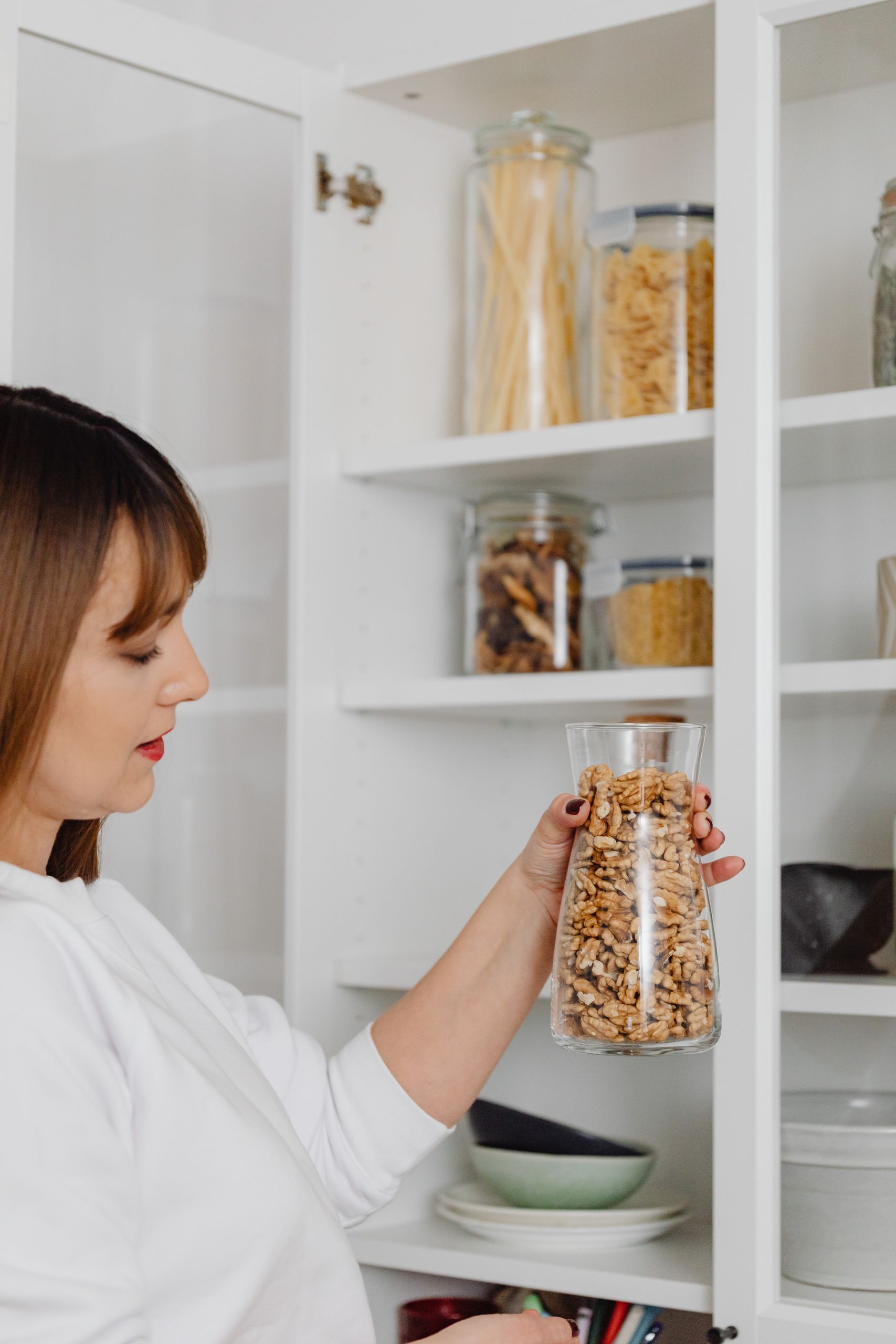
Nuts are rich in oils, and oils are the part that turns. The process is called rancidification, and it is the reason old nuts taste bitter, paint-like or soapy. Oxygen attacks the unsaturated fats in the oil, and heat and light speed that reaction along. Moisture can break the fats down in a different way.
A vacuum can holds most of that off by keeping air out. Once the seal is broken, every scoop lets in fresh oxygen, and a warm kitchen during a week of holiday cooking only adds to it. Cold slows the reaction, which is why the chart moves opened nuts to the refrigerator and points to the freezer for anything that needs to last.
The shell does the same job in a natural way. A walnut or pecan in its shell keeps the kernel sealed away from light and air, which is how in-shell nuts end up with the longest cupboard time on the chart at 4 months. That bowl of unshelled nuts and a nutcracker on the coffee table is one of those American holiday traditions with a practical side, and party nuts sit comfortably among the foods boomers loved growing up.
Salted Versus Unsalted, Plain Versus Blanched
The chart’s note that unsalted and blanched nuts keep longer than salted ones is useful for bakers who stock up. Most holiday recipes call for plain nuts anyway, from pecan pie, one of the pies that show up on Thanksgiving tables, to the walnut and almond cookies on a December cookie tray.
Blanching is the step where nuts such as almonds are briefly scalded so their skins slip off. Blanched almonds are the pale, smooth kind used in many cookie recipes and for slivered or sliced almonds. Salted cocktail nuts are better saved for the snack bowl, where a crowd tends to finish them quickly.
Where the Canned Nut Came From
The canned nut is a familiar part of American snacking. Planters was founded in 1906 in Wilkes-Barre, Pennsylvania, by Italian immigrant Amedeo Obici and Mario Peruzzi, and its Mr. Peanut mascot dates to 1916, when a schoolboy named Antonio Gentile drew him for a company contest. Hormel Foods has owned the brand since 2021, after buying it from Kraft Heinz for $3.35 billion.
For generations, a can of mixed nuts or cocktail peanuts was a standard party offering, right alongside the onion dip. Holiday hosts still tend to buy them in the biggest size, which is exactly when the opened-can clock matters most.
A Simple Plan for Holiday Nuts
The chart’s times point to a straightforward routine. Buy sealed cans and bags close to when they will be used, or buy in-shell nuts if there is time to crack them. Once a can or bag is open, plan on about 2 weeks in the cupboard, or move the rest to a tightly closed container in the refrigerator. For baking nuts bought in bulk, the freezer is the chart’s answer for longer storage, and pulling out only what each recipe needs keeps the rest cold. Labeling each bag with the date it went into the freezer makes the next baking weekend easier.
A quick taste test settles the rest. Nuts that smell like old oil, paint or crayons have turned, and they will carry that flavor straight into a pie or cookie. Those belong in the trash rather than the batter.
The same Kansas State chart lists peanut butter at 6 to 12 months unopened and 2 to 3 months opened, and canned or packaged shredded coconut at 12 months unopened, so the rest of the baking shelf runs on a slower clock. For anyone sizing up how much to buy, this site’s look at foods not worth buying in bulk puts nuts on that list for small households.
This article was produced with AI assistance and edited for accuracy against the sources linked above.