A group of men outside a women-only Pilates studio in St. Louis Park, Minnesota, recently filmed women exercising through the windows. Participants stacked boxes against the glass, paused the class for about 15 minutes and filmed the men in return. A TikTok video posted by one of the women later passed 6.3 million views.
The men were on a public grassy median, and a University of Minnesota law professor said their recording was legal. The studio owner said they were trying to get a reaction from the women. The participants became unwilling cast members in a scene built around their discomfort.
The practice is commonly described as First Amendment auditing. Critics sometimes use frauditing as a label for audits they believe are deliberately manufactured to provoke confrontation. The bigger question is what happens when testing constitutional rights becomes a content strategy in which strangers’ frustration is the product.
The reaction is part of the business model
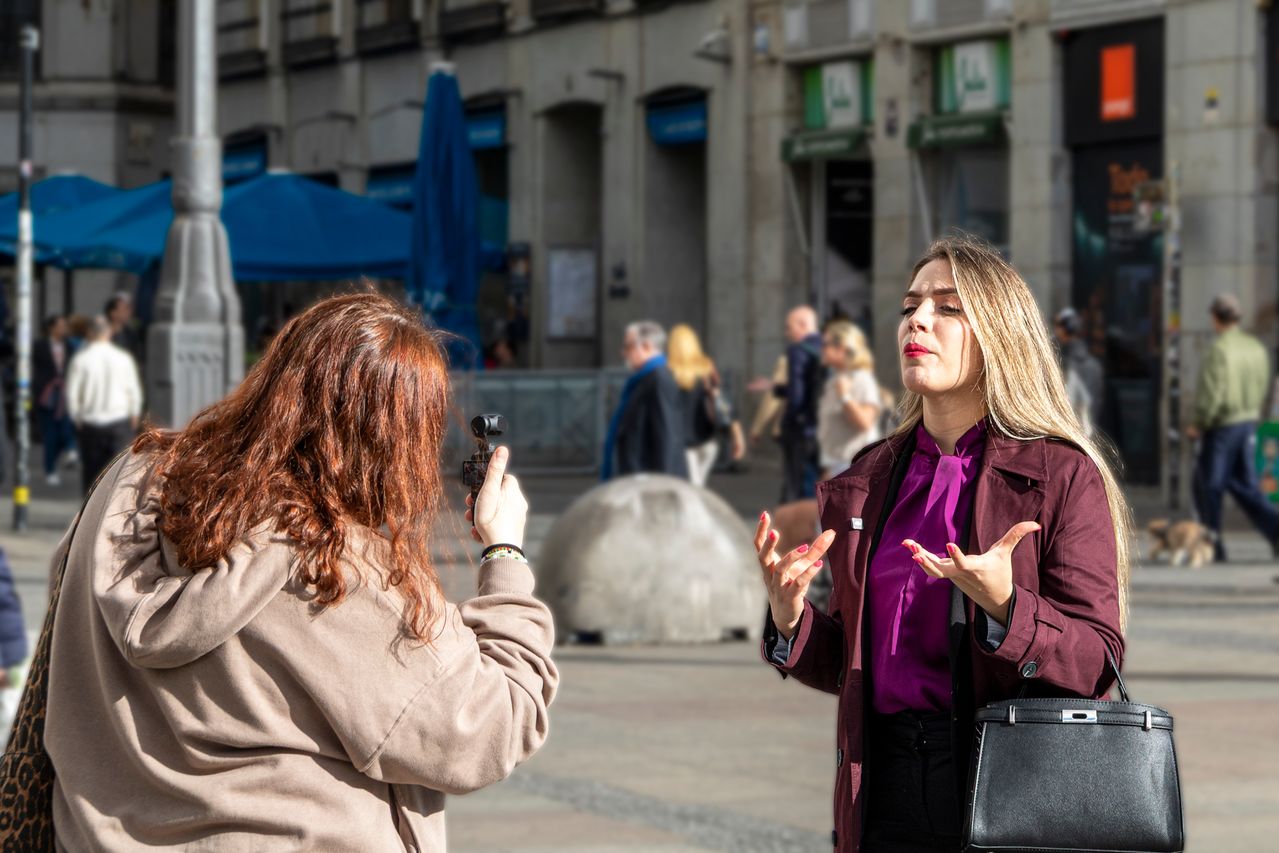
First Amendment audits generally involve recording government employees, police officers or public facilities to test whether officials respect the right to film in public. The footage is often posted online, with confrontation treated as evidence that an institution failed the test. The format can expose genuine misconduct, particularly when officials try to suppress lawful recording.
But the incentives can turn ugly when a creator needs an argument to make a video worth watching. In an entry updated November 18, 2026, John R. Vile, a political science professor and dean at Middle Tennessee State University, wrote that auditors can monetize adverse responses through social media. He also identified an incentive to use provocative language to produce viral reactions.
A creator can frame an encounter as a constitutional lesson while the title, thumbnail and edit sell something else: an employee losing patience, a customer feeling exposed or a stranger looking uncomfortable. The person being filmed may become the entertainment despite having no interest in participating.
The imbalance is obvious. The creator controls the camera, selects the footage and can potentially earn from views, donations or merchandise. The person caught in the frame may have to explain the video to family, coworkers or an online audience that knows nothing about the encounter. One person gets content; the other inherits the exposure.
The First Amendment is real, but it has boundaries
Dismissing every public filming encounter as harassment would be legally careless. Recording public officials can preserve evidence of misconduct, and documenting government activity is an important check on public power. The First Amendment protects recording in many public spaces, including sidewalks and parks, although rules differ in nonpublic government areas and on private property.
The Freedom Forum’s guide to First Amendment audits, updated in June 2026, explains that people generally may record officials and employees in public spaces without consent. It also says auditors have no blanket right to film inside private offices or restricted government areas. Public agencies can impose reasonable time, place and manner restrictions, while private businesses can set access rules.
The Minnesota studio incident exposes a gap between legality and decency. The men filmed from a public area, and the university professor told the Star Tribune that the conduct was legal. Yet the women were exercising in a women-only studio, not volunteering to become a backdrop for an online experiment. A legal right to record does not automatically make every use of that right considerate or responsible.
That distinction matters. People should be able to film police officers and public employees without intimidation. They should also be able to criticize creators who turn ordinary people into unwilling characters in monetized confrontations.
A court case shows where the line can become serious
In November 2025, the Indiana Court of Appeals upheld stalking and harassment convictions against Craig Robert Hendry, a YouTube creator who filmed confrontational interactions at Clinton City Hall. The court said Hendry posted the mayor’s office phone number with a video, after which the office received hundreds of threatening calls and voicemails. The record also described him banging on an employee’s closed office door, filming her through closed blinds and later following her to her car.
Hendry had more than 65,000 subscribers across his YouTube channels and earned money through video views, donations and merchandise. The court rejected his argument that the conduct was protected by the First Amendment and affirmed the convictions.
The case does not prove that every auditor is a stalker. It does establish that invoking constitutional freedom does not erase the consequences of conduct that crosses into stalking or harassment. A camera is not a legal force field.
Viewers are part of the incentive
The audience helps keep this format profitable. Outrage travels well online. A calm exchange about public access may attract little attention; a worker arguing with a stranger or a woman covering a studio window can become a clip people share, mock and debate.
Creators are responsible for their choices, but the audience supplies the market. Every replay, comment and share can reward a format built around provoking reactions. Viewers who claim to dislike the behavior may still help it spread when they circulate humiliating footage.
There is a legitimate public interest in recording government power. There is far less public value in treating a stranger’s embarrassment as a trophy. When the intended payoff is a distressed reaction, the content can become less about protecting free expression and more about exploiting whoever happens to stand in front of the lens.
The right to film deserves protection, as do public scrutiny and accountability. Creators should be judged by what they do with that right, and audiences should stop treating every confrontation as civic courage simply because someone is holding a phone.