By mid-November, holiday cookie tins and seafood orders start showing up on grocery lists across the country. Most families think of their Christmas menu as simply what everyone eats, until they travel a few states over and find a completely different spread on the table.
Three Christmas food traditions in particular stay rooted in their own corner of the U.S.: New Mexico’s anise-scented biscochitos, the late-night réveillon dinners of New Orleans and the Italian American Feast of the Seven Fishes. Each grew out of a specific community and a specific history, and each is still easier to find at home than anywhere else.

1. New Mexico’s Biscochitos
The biscochito, also spelled bizcochito, is a crisp cookie made with lard and flavored with sugar, cinnamon and anise. According to the Wikipedia entry on the biscochito, the dough is rolled thin and cut into shapes such as a fleur-de-lis, a cross, a star or a circle, and the cookies are usually served with coffee.
The cookie developed in New Mexico over centuries, going back to the first Spanish colonists of Santa Fe de Nuevo México. It turns up at weddings, baptisms and religious holidays, and most often at Christmas. In 1989, New Mexico made the biscochito its official state cookie, making it the first U.S. state to name one. Only two other states, Massachusetts and Alabama, have since followed with state cookies of their own.
The cookie sits within a wider holiday table. The Wikipedia entry on New Mexican cuisine calls posole one of the most important Christmas traditions for New Mexicans, and it notes that ordering “Christmas” at a restaurant means asking for both red and green chile, a custom that dates to the 1980s. Outside the state, biscochitos rarely appear in grocery bakeries, which makes them one of those regional habits, like many of the odd American traditions that confuse the rest of the world, that surprise visitors.
2. New Orleans’ Réveillon
The word réveillon comes from the French for “waking,” a nod to a long dinner that kept guests up late into the night. According to the Wikipedia entry on réveillon, the term first appears in 18th-century France, and the tradition is still observed in New Orleans because of the city’s French-Creole heritage, with some local restaurants offering special réveillon menus on Christmas Eve.
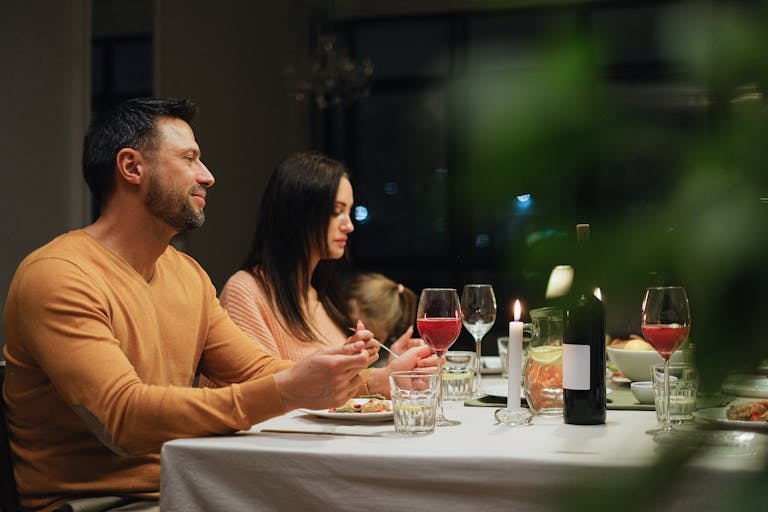
The Louisiana encyclopedia 64 Parishes traces the New Orleans version to the 19th century. In its entry on the réveillon, it explains that Creole families who had followed the Church’s Christmas Eve rules came home from Midnight Mass to a late-night feast that could include gumbo, roast meats, dressings, seafood, desserts, wine and eggnog. Many families paired a second réveillon with New Year’s Eve.
The custom faded, and by the 1920s most home kitchens had adopted more general American holiday habits. 64 Parishes says French Quarter Festivals, Inc. helped revive it for the 1986 season, when 15 restaurants offered three weeks of prix-fixe “Creole Christmas” menus priced from $5 to $35. By 2023, nearly 50 restaurants offered réveillon dinners. For anyone who grew up with mail-order catalogs and holiday rituals of the past, such as the habits in these things kids did with the Sears Wish Book before Christmas, the réveillon is a reminder of how a nearly lost custom can return.

3. The Feast of the Seven Fishes
The Feast of the Seven Fishes is an Italian American Christmas Eve meal built around seafood, often called la Vigilia. According to the Wikipedia entry on the Feast of the Seven Fishes, the dinner usually includes seven or 13 fish dishes, though some families do not count. Common dishes include baccalà, or salted cod, fried smelts, calamari, shrimp, clams, mussels, eel, whiting, anchovies and linguine with seafood sauce.
The meal comes from the Roman Catholic practice of avoiding meat on the eve of a feast day, so observant families ate fish instead, often fried in oil. The custom is documented in Calabria in Southern Italy, and it arrived in the U.S. with the peak of Italian immigration, roughly from the 1880s to the 1930s. It remains most common in cities of the Northeast and the Upper Midwest.
No one agrees on why the number is seven. Some point to the seven sacraments of the Catholic Church, others to the seven hills of Rome. Whatever the reason, the meal stretches over several hours, and families who host it often build the evening around the table, sometimes with a round of Christmas party games between courses.
Why These Traditions Stay Close to Home
All three traditions share a few traits. Each is tied to a particular community: Spanish colonial New Mexico, French-Creole New Orleans and Southern Italian immigrant neighborhoods. Each is also tied to a religious calendar, whether through Christmas baking, a meal after Midnight Mass or a meatless Christmas Eve.
They also rely on ingredients and know-how that travel unevenly. Lard-based cookie dough and anise are pantry staples in many New Mexico kitchens but less common elsewhere. A full réveillon menu leans on Creole cooking traditions that local restaurants still keep alive. And a seven-fish dinner depends on a good fishmonger and a family willing to spend all day at the stove.
That is part of their charm. Families who keep these customs often see them as a link to grandparents and older generations, much like the folks who love sourcing vintage Christmas decorations or those described in this list of zodiac signs said to be the most nostalgic around the holidays.
Bringing a Taste of Each to a New Table
For households outside these regions, each tradition can be borrowed in a small way. A batch of anise and cinnamon biscochitos can join a cookie exchange. A late Christmas Eve supper after a church service echoes the old réveillon. And even two or three seafood dishes can nod to la Vigilia without committing to all seven.
Whether the table holds biscochitos, a Creole réveillon menu or a parade of fish, the meal carries the story of the people who brought it there, which is exactly why these 3 traditions are still worth seeking out where they began.
This article was produced with AI assistance and edited for accuracy against the sources linked above.