North Dakota State University Extension lists 6 recommended pantry storage times in its FN1468 publication, reviewed in June 2025. They run from home-canned food at 1 year, counted from the canning date, to low-acid canned goods at 2 to 5 years.
The same chart covers high-acid cans, cereals, baking powder and boxed mixes, so a single shelf check can sort most of a pantry. Each limit is a recommendation for best quality, and the publication says a “best if used by” date refers to quality, not safety.

The 6 Time Limits, One by One
The first limit is for home-canned food, which NDSU says to keep about 1 year from the canning date. The second is for high-acid canned foods, such as tomatoes and other fruit, which the publication gives as up to 18 months. The third is for low-acid canned foods, such as meat and vegetables, at 2 to 5 years.
The fourth limit covers cereals and cook-before-eating items such as oatmeal: 6 to 12 months unopened and about 3 months after opening. The fifth is baking powder, at 6 months unopened and about 3 months after opening. The sixth is cake, brownie and bread mixes, at 12 to 18 months unopened.
NDSU’s companion page, Questions and Answers About Storing Canned and Packaged Food, repeats the same list. A cupboard sorted by these 6 limits is also a chance to rethink the shelf itself, and a list of things that should not be displayed on open kitchen shelves is one place to start.
Which Foods Count as High-Acid or Low-Acid
The Clemson Home and Garden Information Center puts examples under each label. In its factsheet on canned goods, high-acid foods include juices, tomatoes, grapefruit, apple products, mixed fruit, berries, pickles, sauerkraut and vinegar-based products, with about 12 to 18 months of storage. Low-acid foods include meat, poultry, vegetable soups other than tomato, spaghetti products, potatoes, corn, carrots, beans, beets, peas and pumpkin, with about 2 to 5 years.
Wikipedia’s entry on canning explains the split. It says canning seals food in airtight containers such as jars or cans, with a shelf life typically of one to five years, and that high-acid foods, defined as those with a pH below 4.6, include fruits and pickled vegetables, while most vegetables, meat, seafood, poultry and dairy are low-acid.
The two Extension sources line up on the numbers, though Clemson says high-acid cans last about 12 to 18 months while NDSU says up to 18 months. Either way, the ceiling for tomatoes and fruit is 18 months, while low-acid cans such as beans run longer.
A freezer can take the pressure off the clock for a harvest or a bulk buy, as in a guide to freezing fresh green beans, and a guide to clever storage hacks to maximize every inch of space covers shelf space.
Where the Pantry Shelf Should Be
NDSU says canned and dry goods belong in a cool, dry place, away from the stove, the area under the sink and extreme temperatures. Clemson puts numbers on that: the best range is 50 to 70 degrees Fahrenheit, shelf life drops noticeably above 75 degrees, and cans should stay away from hot pipes, ranges, furnaces and direct sunlight. It adds that cans should stay dry, since rust can cause leaks.
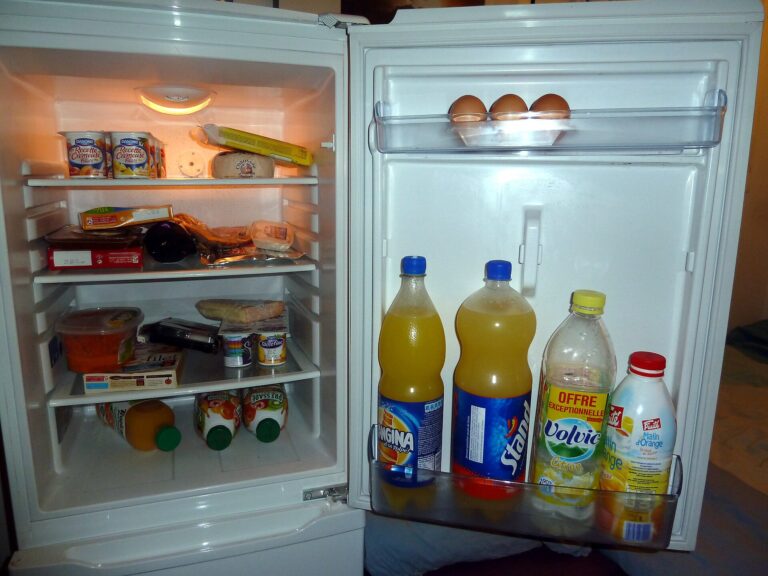
A kitchen cupboard beside the oven is a poor fit by that standard. A list of things never to store under the kitchen sink and a list of essential items to store in the refrigerator both bear on where food can live instead.

Rotating Stock and Reading the Dates
NDSU advises rotating stock so older items get used first and writing the purchase date on packages. Both Extension pages stress that package dates refer to quality. Clemson says commercially canned food in an intact can may stay safe past its date, though flavor and color can decline, and that the “use by” date is the manufacturer’s recommended last date for peak quality.
Clemson also lists how long opened canned food keeps once it is moved to a covered glass or plastic container in the refrigerator: meat, seafood and poultry 2 days, vegetables 3 days, tomato sauce and fruit 5 to 7 days, and pickles and olives 1 to 2 months. NDSU adds a general food-handling rule: perishable food that has sat between 40 and 140 degrees Fahrenheit for more than two hours should be discarded, even if it looks and smells fine.
What to Set Aside Instead of Keeping
NDSU’s publication also names cans that should not stay in the pantry. It says to avoid cans with sharp dents, especially in the seam, and cans that are leaking or bulging. It also says to avoid canned food with a foul odor or any container that spurts liquid when opened. Clemson says that when opening a can, a spurt of liquid, an off odor or mold are reasons to discard the food rather than taste it.
For home-canned food, the National Center for Home Food Preservation, hosted by the University of Georgia and funded by the USDA, publishes guides to canning, pickling, freezing, drying and storing. The center is a starting point for anyone checking how a jar was processed before deciding how long it can stay on the shelf.
The headline figures, 1 year for home-canned food and up to 5 years for low-acid cans, set the short and long ends of NDSU’s canned-food range. The other limits, for cereals, baking powder and mixes, cover the dry goods that share the same shelf.
This article was produced with AI assistance and edited for accuracy against the sources linked above.
Image: Teunie – CC BY-SA 3.0/Wikimedia Commons