Customs and Border Protection says travelers who fail to declare prohibited agricultural products can face penalties starting at $500 for personal importations. The agency repeated the reminder on October 30, 2026, ahead of Día de los Muertos, NBC 7 San Diego reported. Six fruits from the list the agency named are covered here, from oranges to pomegranates.
The warning came as border communities prepared for the holiday, observed Nov. 1-2. The agency’s own rule of thumb, as quoted in that report, is short: “when in doubt, declare all items.” Penalties for commercial importations run as high as $250,000, according to the same report.

1. Oranges and Their Citrus Cousins
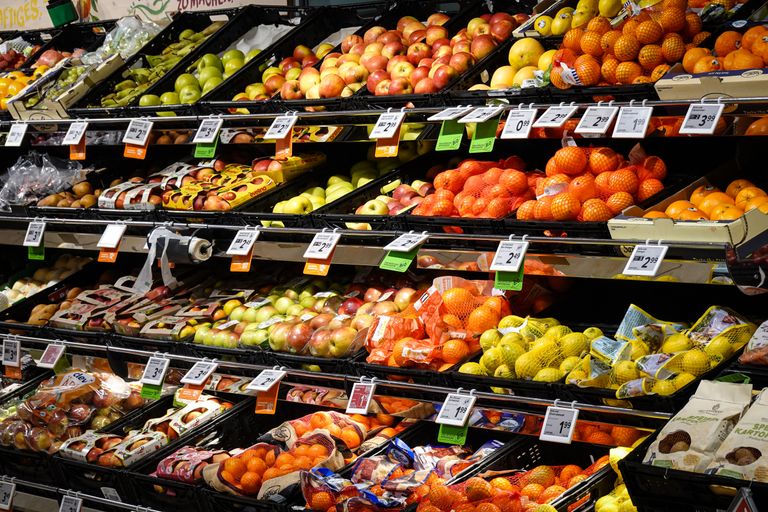
Oranges head the list of fruits the agency named. Tangerines, sour oranges and sweet limes, which the report lists after grapefruit, are close citrus relatives and are grouped with oranges here. The sweet orange is a hybrid of the pomelo and the mandarin that originated in a region spanning Southern China, Northeast India and Myanmar, Wikipedia notes, and it is now grown worldwide, with Brazil producing 23% of the 2024 total.
Citrus carries extra weight in the agency’s reminder. Orange jasmine, also called Murraya, can carry the Asian citrus psyllid, a small insect capable of spreading citrus greening. Since researchers first detected the problem in Florida in 2005, it has remained incurable and has been able to kill citrus trees and cut production, the agency said.
2. Grapefruit
Grapefruit is the second fruit the report names, and it has a short family tree. It originated in Barbados in the 18th century as an accidental cross between the sweet orange and the pomelo, according to Wikipedia, and it is a citrus hybrid with segmented flesh that ranges from pale yellow to dark red.
Food rules differ from country to country, and Frenz Hub has a post titled laws and rules about food in other countries. A fruit that is everywhere on a breakfast table at home can fall under a separate rule when it crosses a border.
3. Guavas
Guavas are also on the agency’s list. The common guava is native to Mexico, Central America, the Caribbean and northern South America, Wikipedia’s guava entry says, and archaeological sites in Peru yielded evidence of guava cultivation as early as 2500 BC.
That matters for the Día de los Muertos setting of the warning, because guava is a familiar flavor across Latin American kitchens. In Mexico and other Latin American countries, agua fresca is often made with guava, and in Cuba the fruit fills pastelitos de guayaba, the same entry notes. A fruit that is a home-kitchen staple in one country is still listed as prohibited at a U.S. crossing.
4. Mangoes
Mangoes are on the list too. The tree originated between the northeastern Indian subcontinent and Myanmar and has been cultivated in South and Southeast Asia since ancient times, Wikipedia reports. The Spanish Empire carried mangoes from the Philippines to western Mexico on the Manila galleons from at least the 16th century.
A mango picked up at a roadside stand or a market abroad can feel like an ordinary souvenir, but the agency’s list names mangoes, and the penalty starts at $500 for a personal importation that goes undeclared. Frenz Hub has a post titled best travel accessories.
5. Peaches
Peaches are on the list as well. Wikipedia says peaches were first domesticated and cultivated in China during the Neolithic period, and Spanish explorers brought them to the Americas in the 16th century. American farmers did not begin commercial production until the 19th century in states including Maryland, Delaware and Georgia, the same entry states.
The peach is also a reminder that the list is not limited to exotic fruit. Fruit that fills a summer cobbler is on the same list as guavas, and the agency lists each one by name at the border. With Thanksgiving trips close, a sister site has a post titled things never to do before leaving home for Thanksgiving travel.

6. Pomegranates
Pomegranates close out the list of fruits. The pomegranate is native to Iran and was first domesticated by ancient Iranians on the Iranian plateau about 5,000 years ago, Wikipedia’s pomegranate entry says. Spanish settlers introduced it to California in 1769.
In Mexico, pomegranate seeds adorn the traditional dish chiles en nogada, where the red seeds echo the colors of the Mexican flag alongside the green of the poblano pepper and the white of the nogada sauce. A fall market stall abroad can make the fruit tempting to pack, which is exactly the situation the agency’s reminder describes. A sister site has a post titled things never to post on social media before a holiday trip.
Plants That Share the Warning
Fruit was not the only item in the Oct. 30 reminder. The agency admits the orange and yellow marigolds used on Día de los Muertos altars only as cut flowers, and travelers must not import them for propagation or planting. Tomato and pepper plants from Mexico are also prohibited because they may carry tomato brown rugose fruit virus, which can cause significant damage to domestic crops. Frenz Hub also has a post titled travel blunders that turn a vacation into an unnecessary stress fest.
Marigolds are known as cempasúchil, and the flowers are common on ofrendas that also hold favorite foods of the departed, such as pan de muerto and sugar skulls, Wikipedia’s Day of the Dead entry explains. The holiday is built around food and flowers, which is why the warning arrived when it did.
What the Agency Wants Declared
The agency said declaring agricultural items helps protect American farms, gardens and communities. Its message for the holiday was to bring memories and traditions along but leave prohibited plants and produce behind.
A Short Reality Check
None of this means every piece of fruit is barred forever. The agency’s list is described in the report as including these fruits, and the rule of thumb is to declare everything. Declaring is the step that keeps a traveler on the right side of the $500 figure.
This article was produced with AI assistance and edited for accuracy against the sources linked above.