In 1912, Louis Camille Maillard published a paper describing what happens when amino acids and sugars meet at high temperatures, according to Wikipedia’s entry on the Maillard reaction. The browning he described is behind the crust on a loaf, the sear on a steak and the roasted smell of a coffee shop.
Nine everyday foods owe much of their flavor and color to that reaction, and the list runs from a seared steak to roasted peanuts. Each is covered below, along with the one caveat that keeps the word from being applied to everything brown.

1. Seared Steak
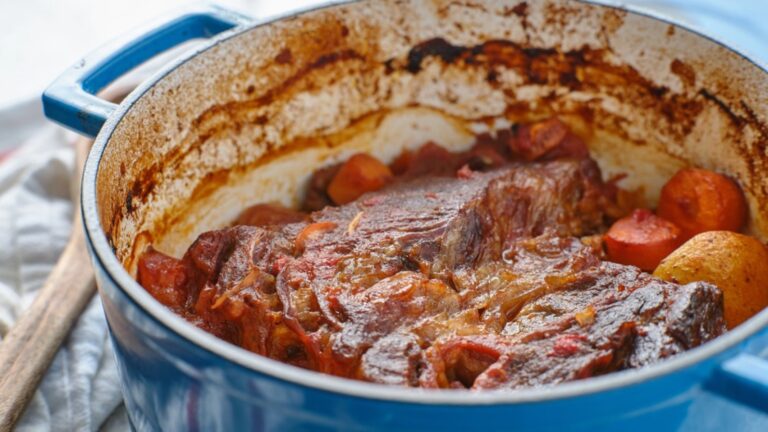
Texas A&M AgriLife Today’s March 31, 2026 article cites food scientist Rebecca Creasy Buckley of the Department of Food Science and Technology, whose explanation is that proteins, built from amino acids, interact with reducing sugars under heat. Heat turns that meeting into brown pigments called melanoidins plus aroma compounds, and steak is the article’s lead example: the outside browns and develops flavor.
Wikipedia adds that the browning of meat when seared or grilled is complex and happens mostly by Maillard browning, with contributions from other chemical reactions. Grill marks on a steak get the same credit in the Illinois Extension piece on the topic.
The kitchen tools matter too. Frenzhub’s guide to tips for perfect BBQ with a smoker grill combo and craftingyourhome.com’s list of kitchen appliances that changed how American families cooked cover gear for high-heat cooking.
2. Fried Onions
Wikipedia says the Maillard reaction is responsible for the browning and the umami taste in fried onions. It adds that the reaction can produce hundreds of different flavor compounds depending on the food, the temperature, the cooking time and the presence of air. A pan of onions that moves from pale to golden is the reaction in action.
Wikipedia also draws a line between two look-alikes. Its entry on caramelization says that unlike the Maillard reaction, which involves amino acids, caramelization is the pyrolysis of certain sugars, and that the two may sometimes cause browning in the same foods.
3. Roasted Coffee
Coffee roasting is on Wikipedia’s list of Maillard examples, and the University of Illinois Extension article names roasted coffee among its examples. The AgriLife piece includes roasted grains in coffee and beer.
For a morning routine that leans on a good cup, Frenzhub has a list of creative coffee bar ideas.
4. Bread Crust
Wikipedia says the reaction contributes to the darkened crust of baked goods. AgriLife Today’s article names bread as the place where the reaction builds crust aroma.
A related compound, 6-acetyl-2,3,4,5-tetrahydropyridine, is responsible for the biscuit or cracker-like flavor in baked goods such as bread, popcorn and tortilla products, according to Wikipedia. The toast on the breakfast table appears in the Illinois Extension list as well.

5. French Fries
The golden-brown color of French fries and other crisps is on Wikipedia’s list. Illinois Extension makes a related point about potatoes: roasted potatoes taste very different from boiled or mashed ones.
Its explanation is water, and it notes that roasted broccoli takes on a sweeter flavor. Dry-heat methods such as roasting evaporate water and reach higher temperatures, while boiling and steaming use lower temperatures and leave more water in the food, so the reaction does not take place in the same way.
6. Beer and Malt Whiskey
Wikipedia lists the browning of malted barley, as found in malt whiskey and beer. AgriLife Today also names roasted grains such as those in beer or coffee as Maillard foods.
Baked goods are another place to see it, and craftingyourhome.com has a seasonal list of Christmas cookies families bake every December that share the same golden edges.
7. Dulce de Leche
Wikipedia’s entry on dulce de leche describes it as a confection made by heating sugar and milk over several hours, with its rich flavor and color from non-enzymatic browning. The Maillard entry lists dulce de leche and dried and condensed milk together.
The spoonable sauce shows that the reaction is not limited to meat and bread. Milk and sugar are enough, and the same entry lists dried fruit and champagne aging in the bottle as other places the reaction shows up.
8. Toasted Marshmallows
Toasted marshmallows are named among Maillard foods on Wikipedia, and the campfire version needs nothing more than a stick and a flame.
The campfire is not the only route, and the holiday oven is another. Frenzhub’s comparison of COSORI versus Ninja air fryer versus Ninja flip toaster oven looks at ways to free the oven for holiday cooking.
9. Roasted Peanuts
The list on Wikipedia ends with roasted peanuts, alongside chocolate and black garlic.
Wikipedia notes that, after Maillard’s 1912 paper, in 1953 John E. Hodge, a chemist with the U.S. Department of Agriculture, established the mechanism. Wikipedia also quotes Nobel Prize winner Jean-Marie Lehn calling it by far the most widely practiced chemical reaction in the world.
One caveat closes the list. Caramel sauce and the top of a crème brûlée get their browning from sugar alone, so they belong to caramelization, a separate process. The nine foods above are the ones where proteins and sugars work together.
The everyday takeaway from Illinois Extension is simple: the reaction is affected by heat, moisture and time, and dry-heat cooking such as roasting, toasting and grilling is where it shows up, while a pot of boiling water works against it. That is why the same potato tastes so different roasted than boiled, and why a dry pan and a hot oven do most of the work in the nine foods above.
This article was produced with AI assistance and edited for accuracy against the sources linked above.
Image: Daniel Schwen – CC BY 3.0/Wikimedia Commons