Imagine opening your mailbox, sorting through the usual bills and advertisements, and finding something unexpected: a refund check connected to Walmart.
Before you start celebrating, there’s an important catch. This isn’t a refund for that sweater you returned, your weekly grocery run, or your Walmart+ membership.
The Federal Trade Commission (FTC) announced on October 15, 2026, that it was sending more than $9.8 million in refund checks to 65,022 consumers affected by alleged fraud involving Walmart’s money-transfer services.
And if you think you might qualify, there are a few things worth checking before you start watching the mailbox.
Why Is Walmart Connected to Millions in Refunds?
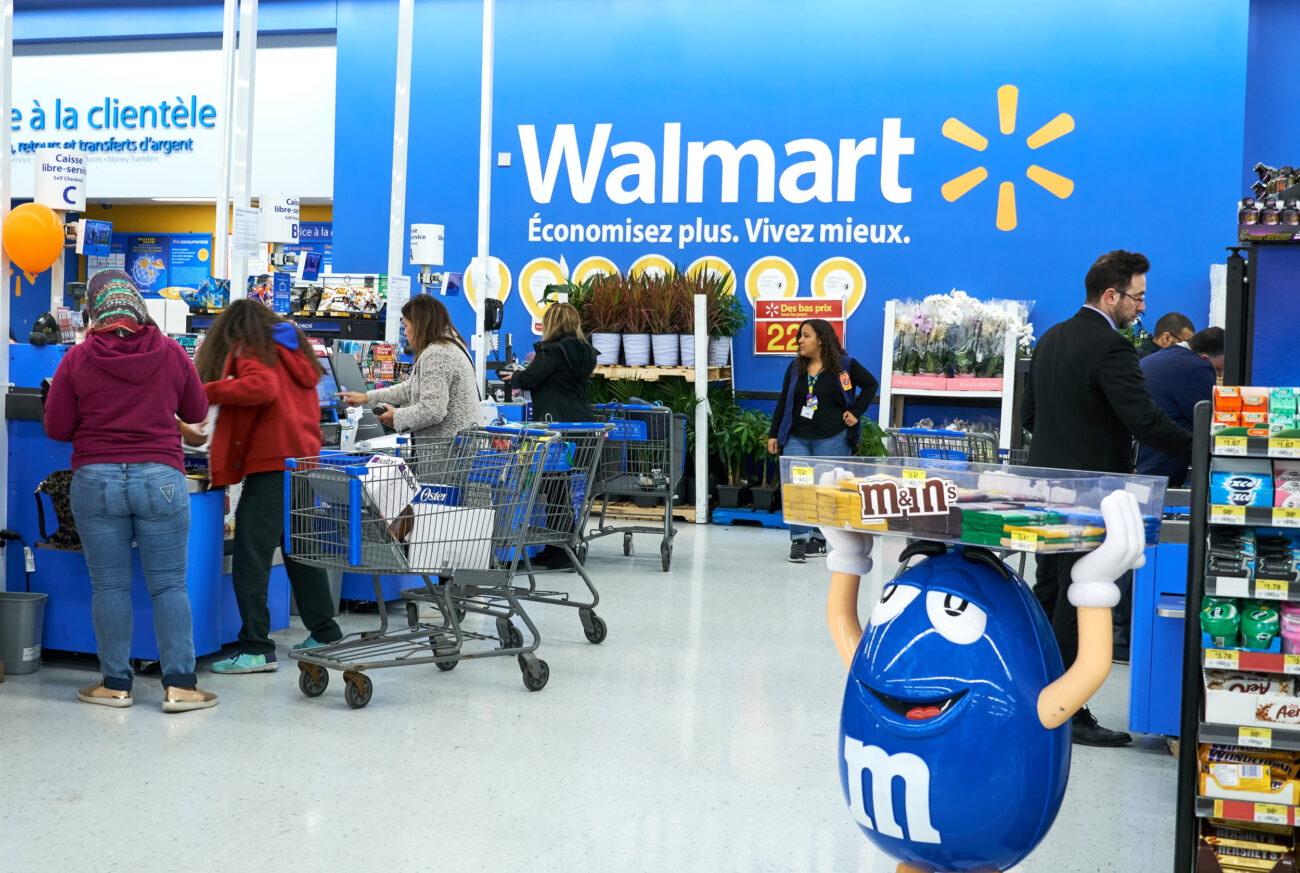
The story starts with something far more serious than an incorrect price at checkout.
For years, Walmart offered in-store money-transfer services through companies including MoneyGram, Western Union, and Ria. These services allowed customers to send money to other people, sometimes across long distances.
Unfortunately, scammers allegedly found ways to take advantage of those transactions.
According to the FTC, Walmart failed to put effective safeguards in place to prevent fraudulent transfers. The agency also alleged that the retailer didn’t adequately train employees or warn customers about potential scams.
The FTC sued Walmart in June 2022, alleging that consumers had lost hundreds of millions of dollars through fraudulent transfers involving the company’s services.
In June 2025, Walmart agreed to a $10 million settlement. The company did not admit the allegations but agreed to resolve the lawsuit and continue efforts to prevent fraudulent transfers.
Now, some of that settlement money is making its way back to affected consumers.
Who Actually Qualifies for a Walmart Refund?
Here’s where things get interesting.
You don’t qualify simply because you’ve shopped at Walmart. Even if you’ve been a loyal customer for decades, that alone won’t put a check in your mailbox.
According to the FTC, the payments are intended for people who completed eligible money transfers at Walmart between January 2015 and December 2024.
That means your situation might be relevant if you used Walmart’s money-transfer services during that period and were affected by fraud.
However, not every money transfer qualifies.
The FTC hasn’t published every detail of its recipient-selection process on the public refund page. So, simply remembering that you sent money through Walmart isn’t proof that you’re entitled to a payment.
The current distribution also isn’t advertised as an open application program. The agency is sending checks to identified recipients rather than asking everyone to submit a new claim.
How Much Money Could You Receive?
Naturally, this is probably the question everyone wants answered first.
The FTC confirmed that more than $9.8 million is being distributed among 65,022 consumers.
That works out to roughly $150 per recipient when you divide the total distribution by the number of recipients. But don’t rush to write that number into your holiday shopping budget.
That figure is only an approximate average, not a guaranteed refund amount.
Individual payments may differ depending on the circumstances of each qualifying consumer.
The exact formula used to calculate these Walmart refunds hasn’t been publicly detailed on the FTC’s refund page.
And here’s another important detail: receiving a check doesn’t necessarily mean getting back every dollar lost to a scam.
The settlement fund is limited, so consumers shouldn’t assume that their payments will fully replace their losses.
Still, for someone who previously lost money, even a partial refund may be welcome news.
When Are the Walmart Refund Checks Arriving?
The FTC officially announced the distribution on October 15, 2026.
By October 21, the Detroit Free Press was reporting that some consumers were already seeing checks arrive in their mailboxes.
But what about everyone else?
As of November 13, 2026, the FTC’s published information doesn’t establish a specific date by which every check should have arrived.
It also doesn’t confirm that all checks have been delivered or announce a separate November payment round.
So, if you believe you qualify but haven’t received anything, don’t automatically assume your check is lost. You may need to verify whether you’re included in the distribution.
And if a check does arrive, don’t leave it sitting on the kitchen counter with the unopened mail.
The FTC instructs recipients to cash their checks within 90 days, as indicated on the check.
How to Check Whether Your Refund Is Coming
Wondering whether your name is on the payment list?
The best place to start is the FTC, not a random social media post promising to unlock your Walmart refund.
Visit the agency’s official Walmart Refunds page to review the program information.
For questions about an individual payment, contact Rust Consulting, the company administering the distribution.
Official refund administrator: 1-833-472-1990
You can ask the administrator about your potential eligibility, whether a payment was issued, or what to do if your mailing address has changed.
Keep in mind that the FTC hasn’t advertised a public Walmart-specific online portal where everyone can enter their information and instantly see a payment status.
If you encounter a website making that promise, verify it carefully before sharing personal information.
What Happens If Your Check Never Shows Up?
Maybe you’ve moved since making the original transfer. Perhaps you believe you qualify, but your mailbox remains stubbornly empty.
The first step is contacting Rust Consulting at the official number.
Ask whether a payment was issued and what procedure applies if your address is incorrect or your check is missing.
The FTC’s general refund guidance explains that some expired or undelivered payments may be reissued when money remains available.
However, that doesn’t guarantee a replacement check in every Walmart case.
Your best option is to get instructions directly from the administrator rather than guessing what happened to your payment.
Watch Out for Fake Walmart Refund Messages
Whenever real money is being distributed, scammers may try to get involved.
And the irony of someone using a fraud-related refund to commit another scam should be lost on absolutely nobody.
The FTC warns that scammers impersonate the agency to trick consumers.
Here’s the golden rule: You should never have to pay money to receive an FTC refund.
The agency also says it doesn’t require consumers to provide bank-account information to receive these payments.
Be suspicious if someone contacts you demanding a processing fee, requesting gift cards, or claiming you must transfer money before your refund can be released.
The announced Walmart distribution involves mailed checks, not a surprise PayPal or Zelle payment requiring you to click an unfamiliar link.
If something seems suspicious, verify it using the FTC’s official website. You can also report suspected fraud through the agency’s ReportFraud website.
The Bottom Line
The Walmart refund checks are real, and thousands of consumers are included in the FTC’s $9.8 million distribution.
But these aren’t automatic refunds for ordinary Walmart purchases. They’re payments connected to eligible money transfers and alleged fraud involving the retailer’s services.
If you think you may qualify, check the FTC’s official information and contact Rust Consulting with questions.
And if that unexpected check has already landed in your mailbox, pay attention to the cashing deadline.
After all, a refund sitting forgotten in a drawer isn’t doing your wallet much good.